Build the year around your real calendar
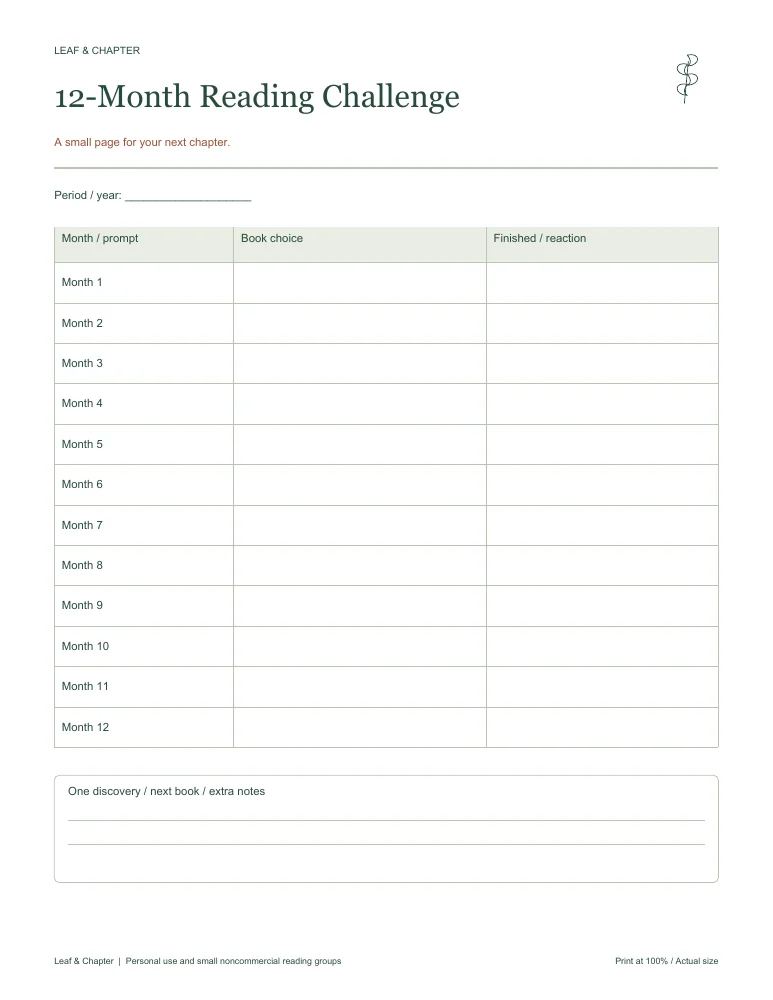
Before choosing titles, look at the months that are usually busy. Give those months a short book, a reread, or a format that already fits your routine. Save a longer or less familiar choice for a quieter stretch. Write the starting month in the first space and continue from there. Starting in September is just as useful as starting in January. An undated sheet makes the plan portable, so a delayed book does not require a new printable or an entirely new challenge.
Give each month a direction rather than a deadline
Use a prompt such as a new author, a different setting, a recommendation, or a book already on your shelf. The prompt narrows the choice without deciding everything for you. If monthly deadlines tend to make reading feel rushed, treat the spaces as twelve stages instead. A stage can last several weeks or several months. Put a small note at the top explaining your approach. That keeps a slow start from looking like an unfinished obligation when you return to the page later.
Choose the next book and one backup
It is tempting to fill all twelve spaces immediately, especially when the blank page looks so orderly. Try planning only the first two or three. Add a backup for a library hold that might arrive late or a book you may not enjoy. You can write a title in pencil and include where you will get it, such as your shelf or the library. This practical detail prevents a good idea from becoming a hunt for an unavailable edition. Leave the remaining months open for discoveries.
Vary the experience without forcing variety
Think about length, format, pace, and subject as well as genre. A quiet memoir can feel different from a fast mystery even when both are familiar choices. An audiobook may fit a commuting month, while a collection of essays can work when you have shorter reading windows. You do not need equal numbers of every category. Choose enough variety to make the year interesting, then keep a few comfortable options. A useful challenge balances curiosity with the books you reliably want to pick up.
Record more than a completed title
When you finish a monthly choice, add the title, the completion date, and a few words about the experience. Try a specific note such as strong setting, thoughtful ending, or not my favorite narrator. You can include a question you would like to discuss or another author you want to try. These details make the finished sheet more useful than a count alone. If you stop reading a book, record that decision too. You may discover that a particular kind of prompt needs a better replacement.
Reset the plan without restarting the year
If you fall behind the schedule, do not squeeze three books into a week just to make the page neat. Move the remaining prompts forward, skip one, or turn the plan into a twelve-book challenge. You can also mark a month as an open choice when a new release or a borrowed book catches your attention. The structure is there to reduce indecision, not to take priority over the reading itself. At the end, look for the choices you would happily repeat in a future challenge.
Keep the printable close to the books
Print one page in the paper size you use and check that the writing spaces remain inside the print margins. Pencil makes changes easy. Store the challenge with your reading journal or attach it to the inside of a folder that holds your book notes. If you share the challenge with friends, keep individual sheets rather than a competitive scoreboard. A brief monthly conversation about discoveries can give the plan a little momentum without comparing totals or expecting everyone to finish on the same day.
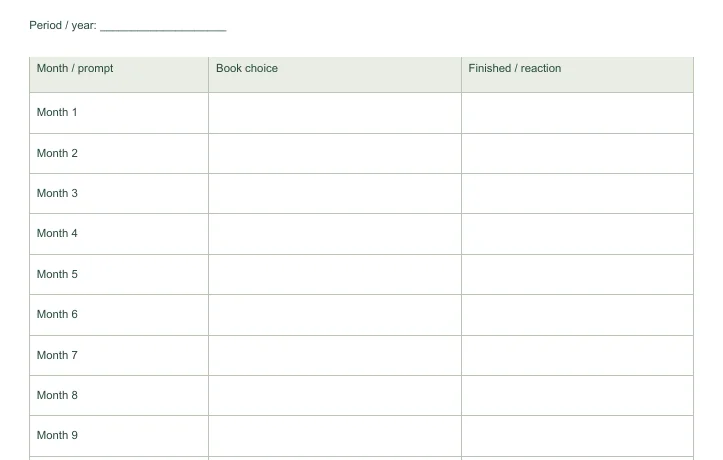

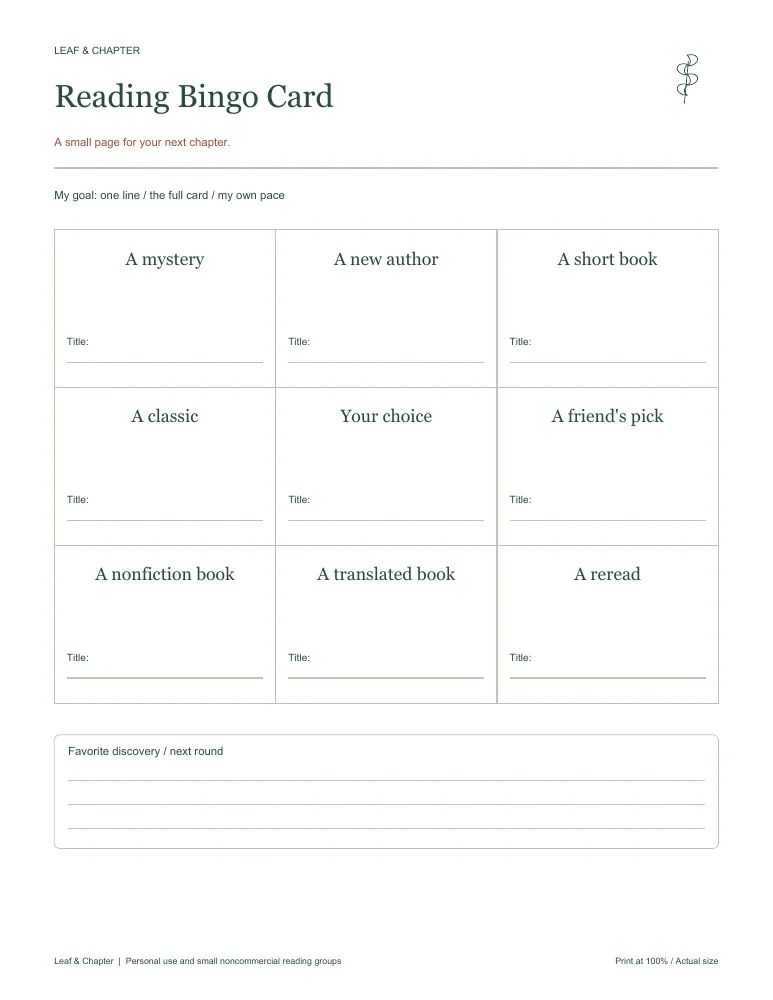
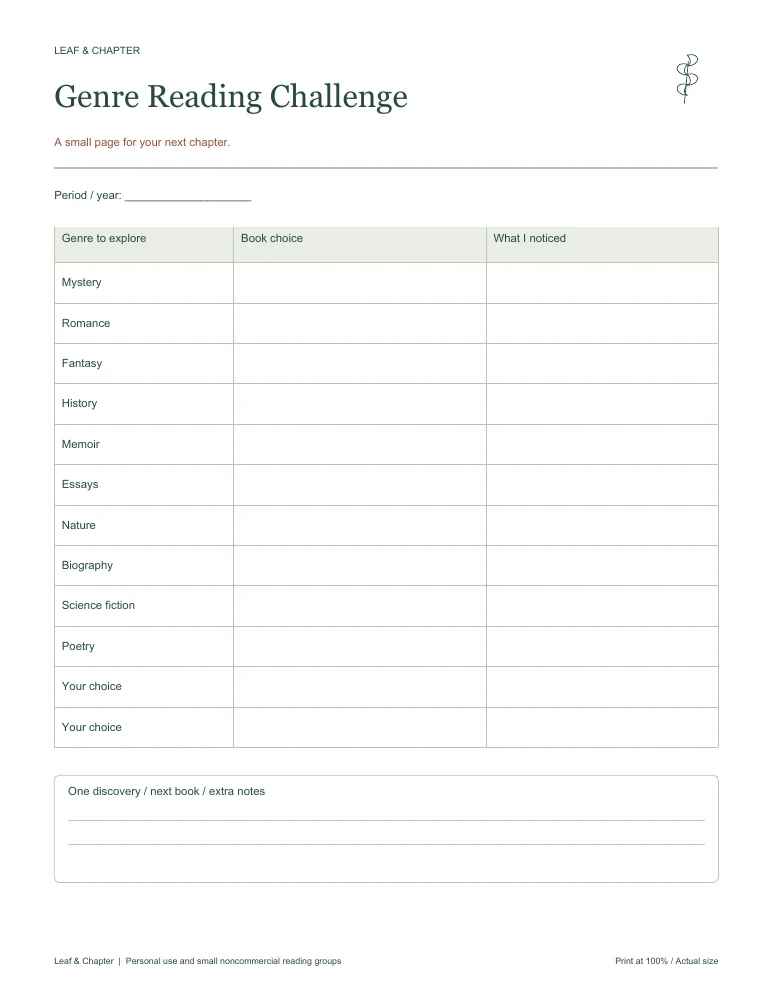
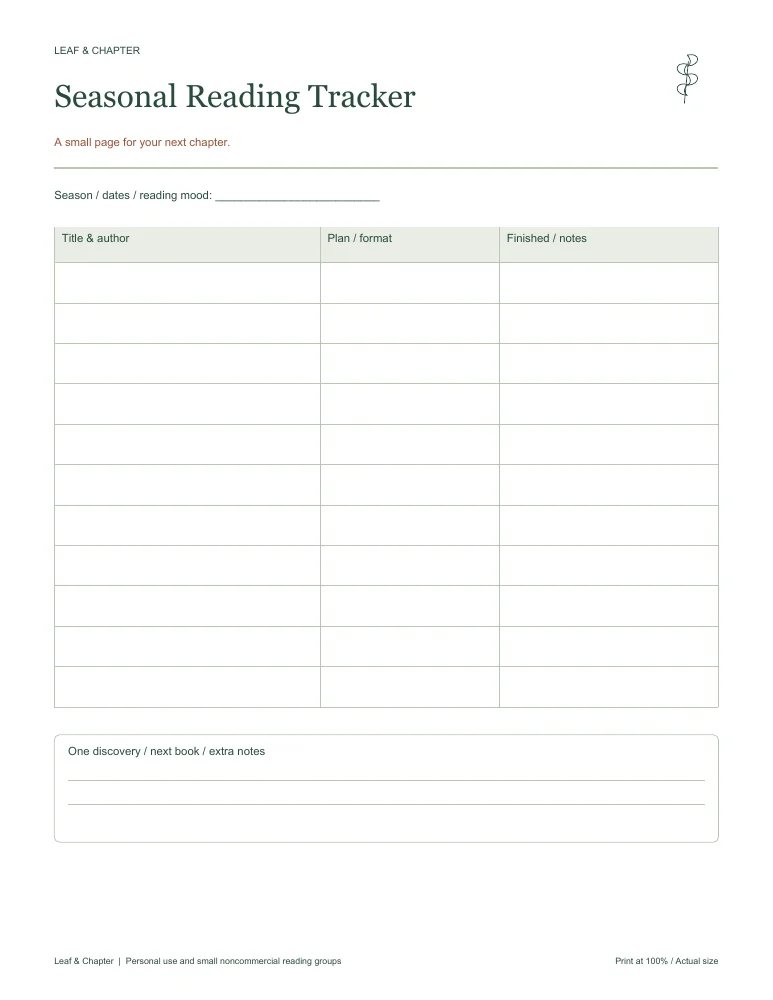
12-Month Reading Challenge
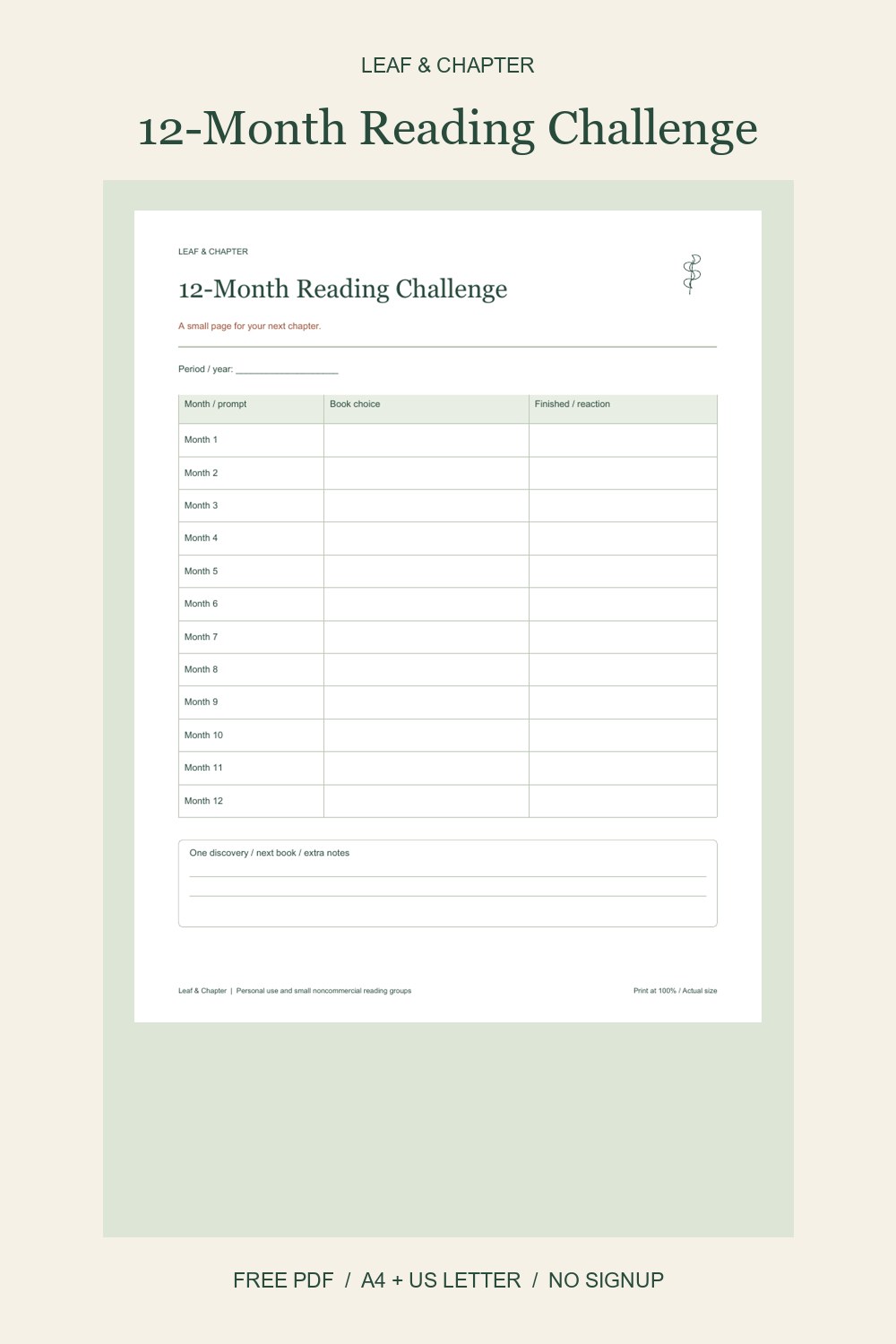
Choose the paper size that matches your printer. Both PDFs are free, undated, and made for personal use.
PDF format · No signup · Print at 100% / Actual size
Need a hand? Read the printing guide. These are print-and-write pages, not fillable forms. Personal-use license.
Save it for your
next bookish day.
Keep a link to this page so the printable is easy to find again.
Save to Pinterest ↗A few questions before you print
Can I start halfway through the year?
Yes. The page is undated, so your first month can be any month. You can also treat the twelve spaces as reading stages rather than calendar deadlines.
What if I read more than one book a month?
Record your challenge book on this sheet and keep other titles in your reading log. You do not have to make every book serve the challenge.