Name the season in your own way
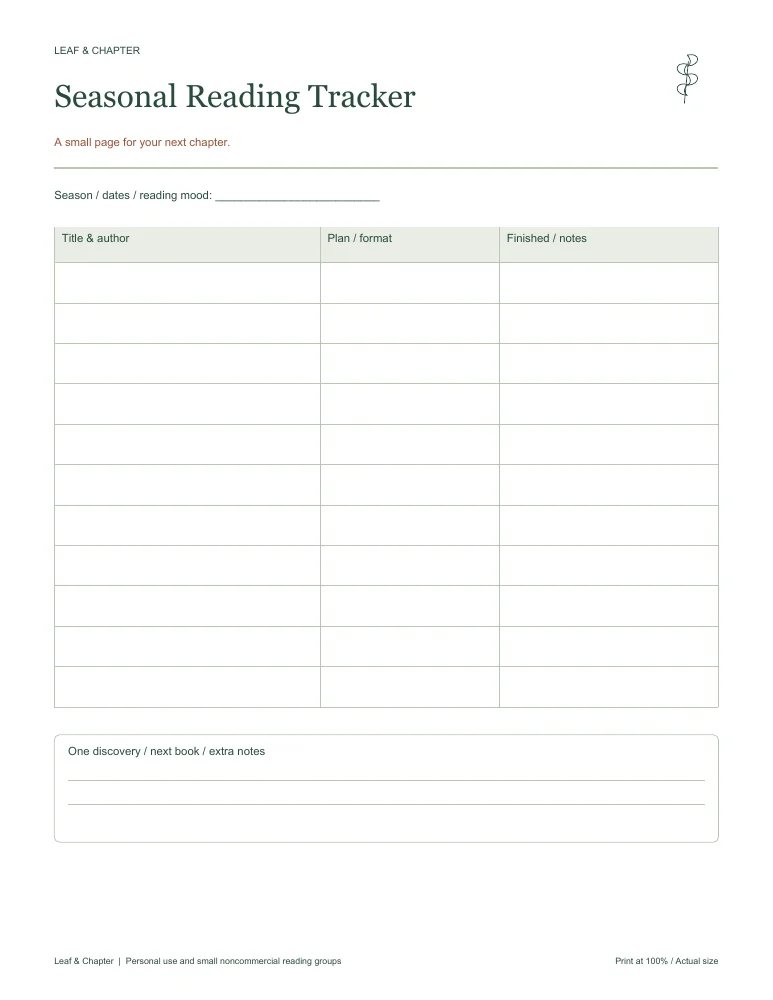
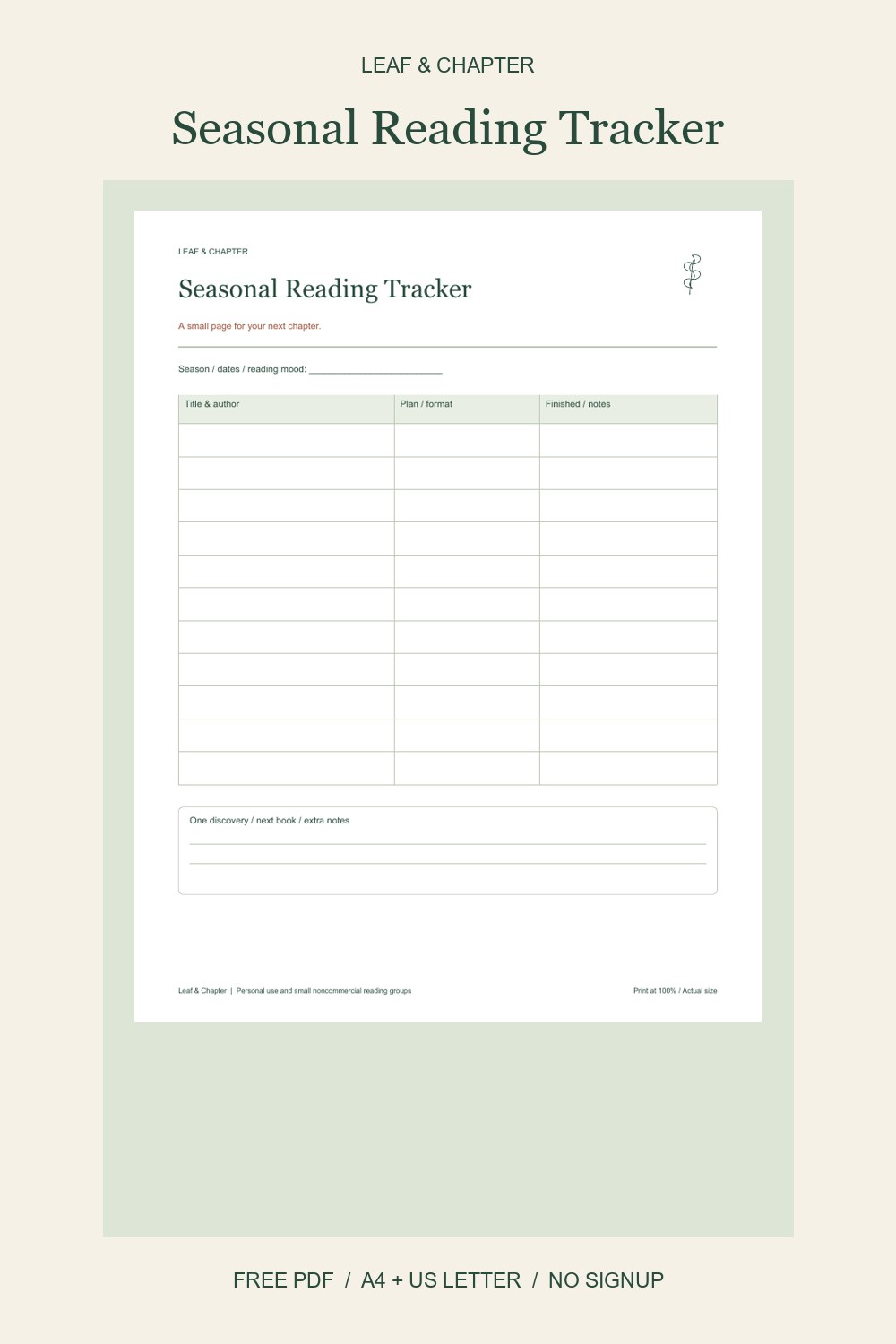
Write the season and the period you have in mind at the top of the sheet. You might use spring, summer, autumn, or winter, but a holiday break or a busy work season can be just as meaningful. The page is undated, so the start and end are yours to choose. Think about the circumstances around your reading. Will you have long stretches of time, short evening windows, or travel? That answer can guide the format and length of the books you put on the list.
Choose a mood before choosing a stack
Describe the reading you want with a few words: light and funny, absorbing and adventurous, reflective, or familiar. Then browse books that match those qualities. A seasonal choice does not need snow, beaches, or falling leaves on its cover. A fast-paced novel may suit your summer better than a book set beside the sea. Include one or two possibilities from your shelf before adding new books. This keeps the tracker grounded in choices you can actually begin rather than a collection of appealing covers.
Leave space for unplanned discoveries
Write a short list, not every book you hope to finish. Keep a couple of spaces empty for an unexpected library find or a recommendation from a friend. If you tend to collect more possibilities than you can read, separate your current choices from your maybe-later list. Three inviting titles are easier to act on than a crowded page. You can replace a planned book when your mood changes. A useful tracker should make choosing easier, not remind you of every interesting title you have not reached.
Add practical notes beside the titles
Record the format, where the book is coming from, and any date that matters, such as a library due date or a club meeting. You can mark a book as available, on hold, started, or finished. These small distinctions prevent an unavailable title from blocking the whole plan. If you read more than one book at once, use a simple symbol for each format. Keep the notation light enough that you can update it quickly. A complicated tracking system can become more work than the choices it was meant to organize.
Capture the feeling while it is fresh
After a book, write one sentence about why it suited the season or why it did not. Perhaps the pace worked well for a weekend, or the subject asked for more attention than you had available. You can also note a setting, character, or conversation that stayed with you. Avoid forcing every book into a themed interpretation. Sometimes the most useful observation is simply that you wanted something different halfway through the season. Those notes can help you choose a better mix when the same time of year returns.
Close the season with a small review
Look at what you finished, what you sampled, and what you carried forward. Choose one favorite discovery and one change you would make next time. Move unread titles onto a future list only if they still interest you. You do not need to preserve every earlier plan. If the tracker has several blank spaces, keep it anyway. It records a period of your reading life, including the time available. Starting a fresh sheet can be a pleasant reset without turning the previous one into a failure.
Print one page and keep it visible
Use a PDF that matches your paper size and check the preview before printing. A clipboard beside a shelf works well if you like seeing the list; a journal pocket works better if you want it tucked away. Pencil is useful for changing plans. If several people share the challenge, give each person a sheet and invite them to share a seasonal favorite. That lets different tastes and reading speeds fit into the same activity without asking everyone to follow one stack of books.
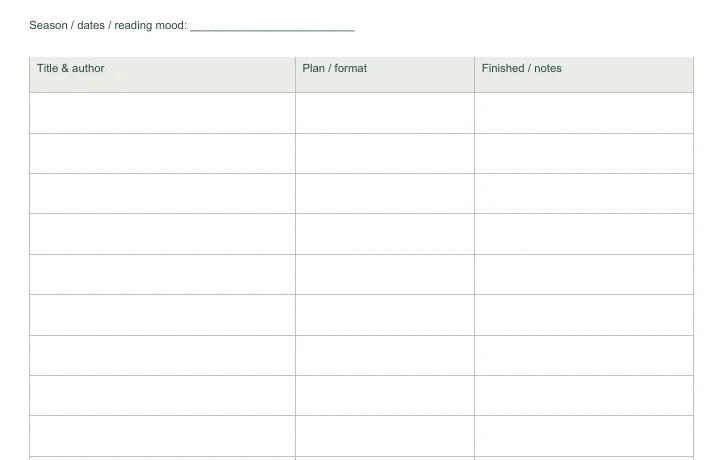

Seasonal Reading Tracker
Choose the paper size that matches your printer. Both PDFs are free, undated, and made for personal use.
PDF format · No signup · Print at 100% / Actual size
Need a hand? Read the printing guide. These are print-and-write pages, not fillable forms. Personal-use license.
Save it for your
next bookish day.
Keep a link to this page so the printable is easy to find again.
Save to Pinterest ↗A few questions before you print
Do the books need to have seasonal settings?
No. Choose books that fit your mood, available time, or plans. A seasonal setting is optional.
What should I do with unfinished titles?
Carry forward only the books you still want to read. You can leave the others behind and start the next season with a fresh list.