Begin with what you already like
Write down two or three features of books you enjoy. Maybe you like close friendships, strong settings, short chapters, or a mystery that resolves cleanly. Those preferences are more useful than a broad label alone. When exploring a new genre, look for a book that retains at least one familiar feature. A reader who enjoys vivid historical settings might try a historical mystery before jumping into an unfamiliar contemporary thriller. You are building a bridge into a new experience, not testing how far outside your taste you can travel.
Choose a manageable set of genres
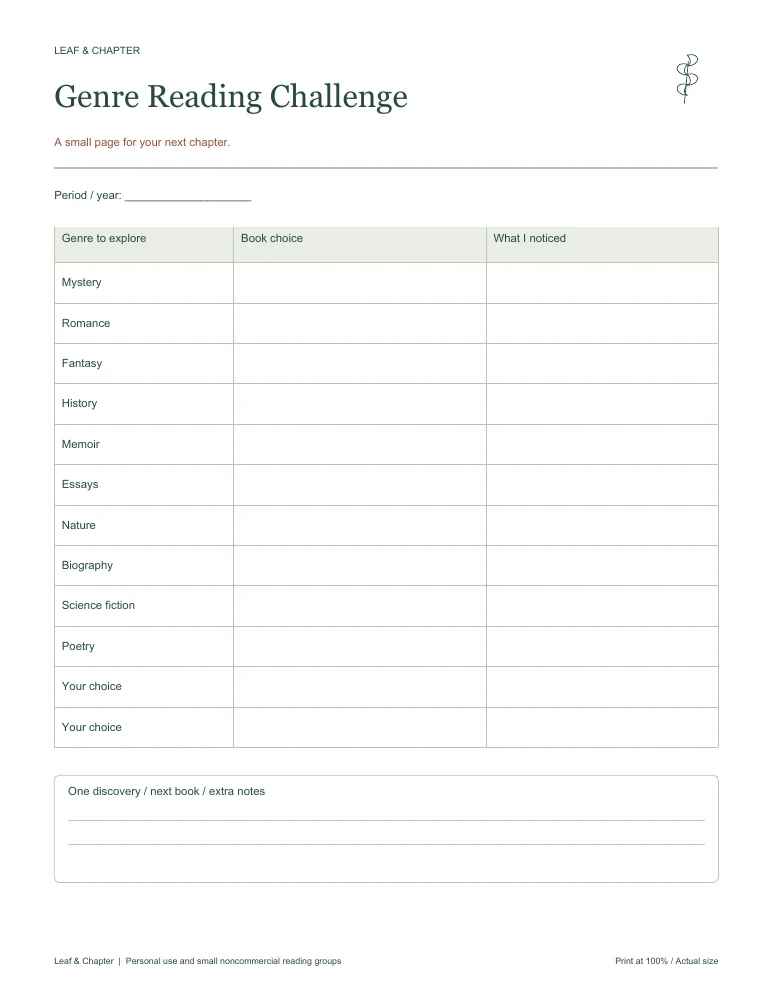
Pick a few categories that interest you and leave the rest for another round. Fiction might include mystery, romance, fantasy, historical fiction, science fiction, or literary fiction. Nonfiction could include memoir, biography, nature writing, history, or essays. Categories often overlap, so do not worry about creating a perfect classification system. Write the label that explains why you chose the book. If you only want to sample four categories this season, that is a useful challenge. More boxes do not automatically create better reading.
Find an approachable first choice
Ask for an accessible example of the genre rather than its longest or most celebrated book. Read a sample to check the voice, structure, and pace. A library is particularly useful for experiments because you can return a book that does not suit you. Add the source of each recommendation beside the title so you can find another suggestion later. If someone knows your usual reading preferences, ask why they think a particular book would fit. That explanation can be more helpful than a list of popular titles.
Set a stopping point that feels fair
Decide how you will sample a book before starting. You might read a few chapters or listen for a short stretch, then ask whether you want to continue. There is no universal page count that guarantees a fair judgment. Some books open slowly; others reveal their style immediately. If you stop, note what did not fit, such as pacing, tone, or subject. Avoid treating one disappointing book as proof that an entire genre is wrong for you. You can try a different entry point when curiosity returns.
Compare the experiences in useful language
After a book, write a few practical observations. What kept you turning pages? What made you hesitate? Did the genre label accurately describe the reading experience? Note whether you would try another book with similar elements. Instead of only giving a score, use a phrase you can act on later: more character-focused mysteries, shorter essay collections, or fantasy with fewer viewpoint changes. These notes help you choose the next book and give a friend a clearer picture when you ask for another recommendation.
Keep room for a comfortable book
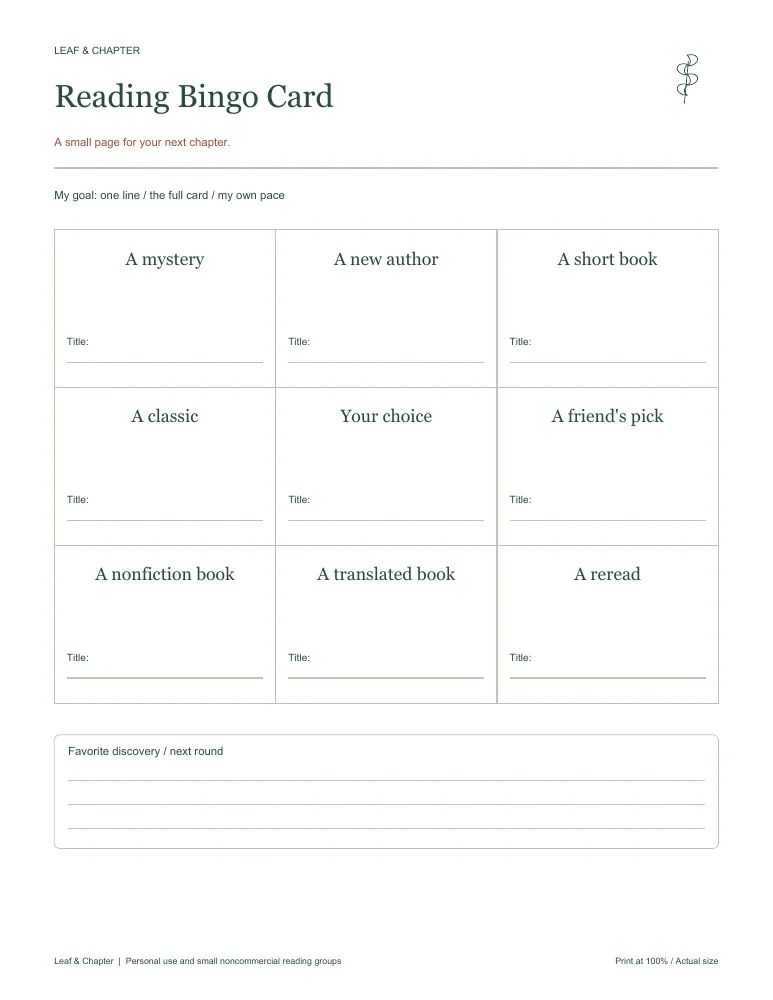
You do not need to read every unfamiliar choice back to back. Put a familiar favorite between experiments if that makes the challenge enjoyable. A reread can also help you identify what you value in a story before trying a new category. When a book crosses several genres, choose the one you were exploring and record the overlap in a note. The purpose is discovery, not policing labels. Finish with a short list of categories you would like to revisit and a few you are happy to pause.
Use the page as a record of curiosity
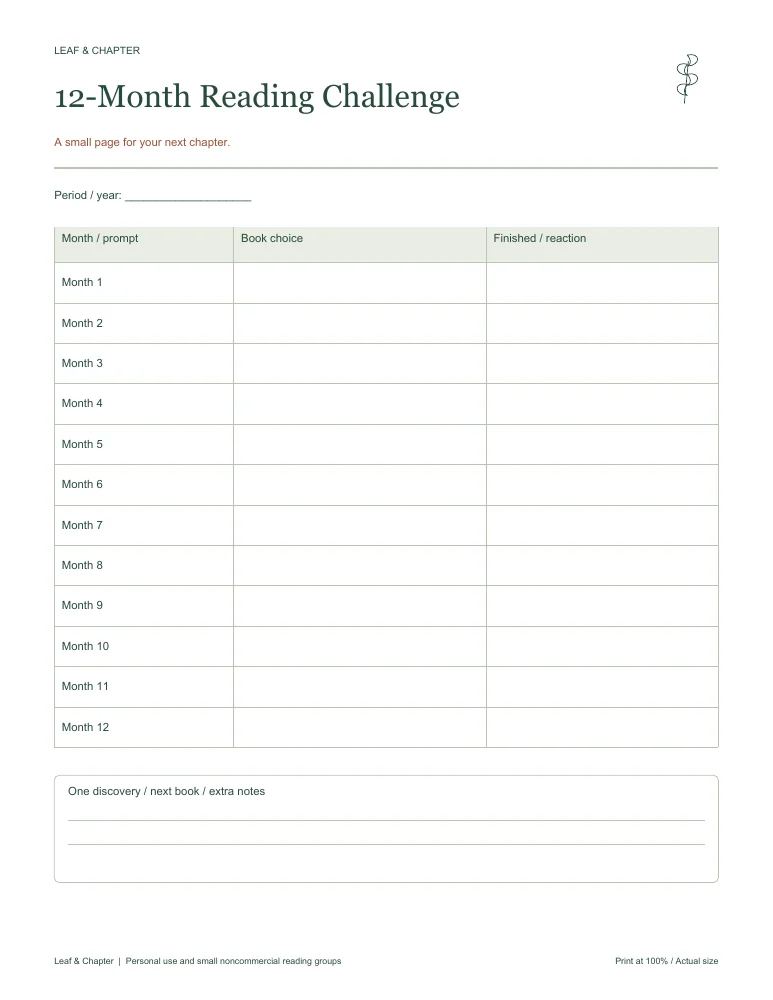
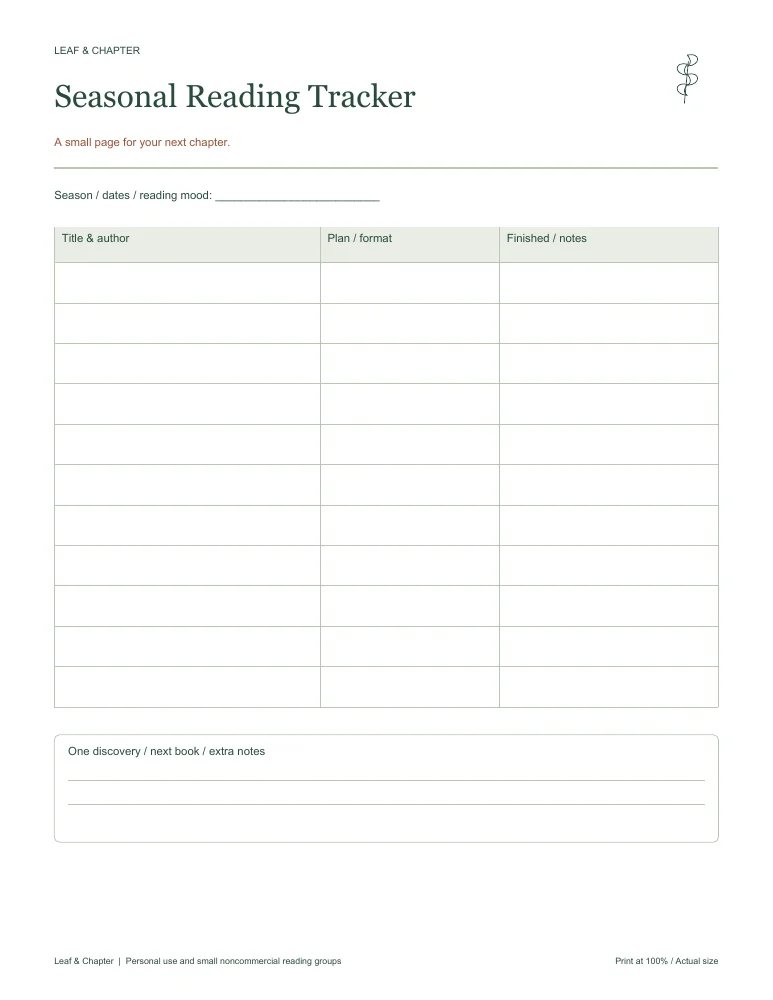
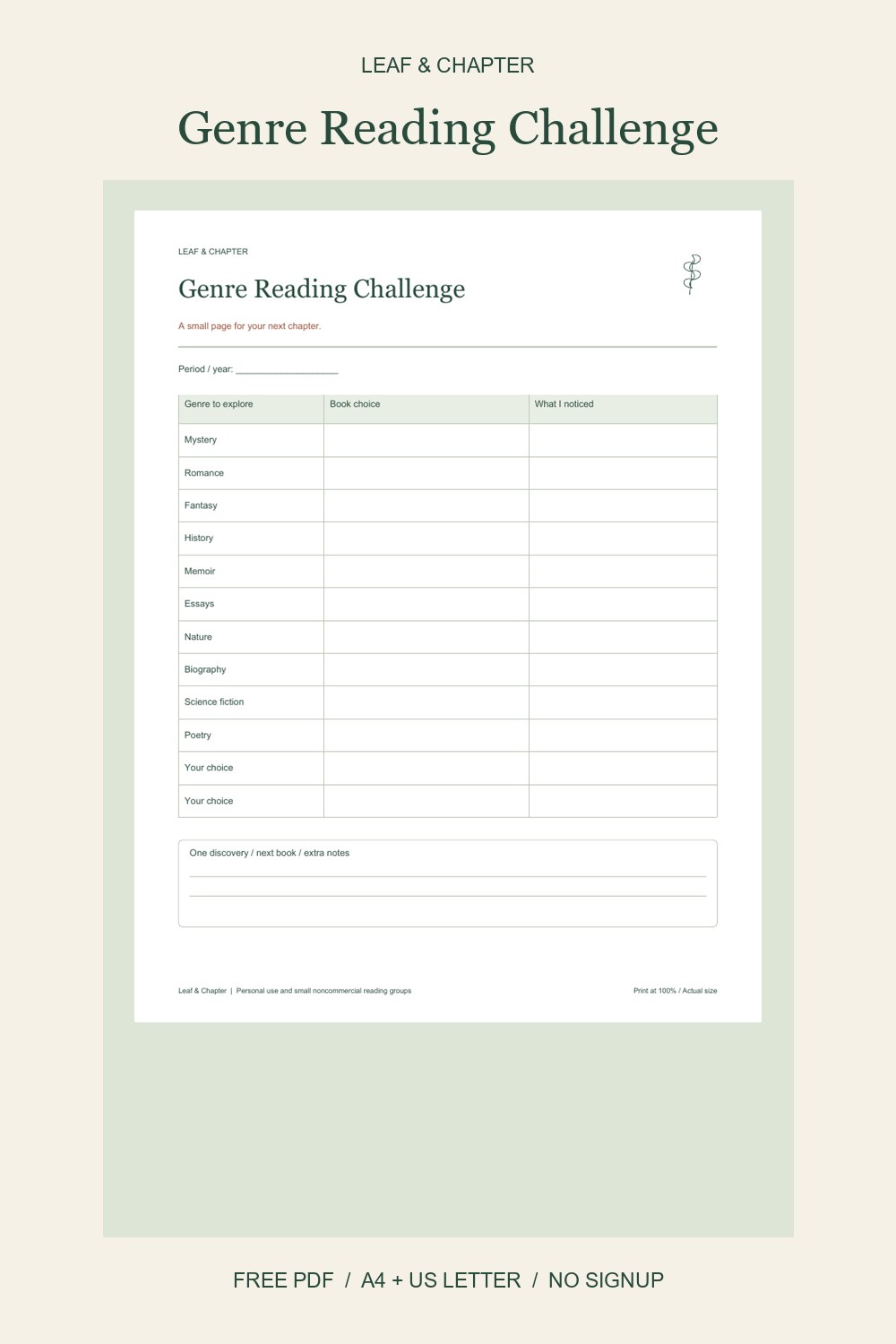
Print the genre sheet on the paper size that suits your folder or journal. Check a single page before making multiple copies. Write provisional titles in pencil, then add your final selection when you begin. You can keep an extra copy blank for a future round with different categories. If you use the challenge with a group, share recommendations rather than matching completion totals. A conversation about why a book worked gives everyone a better starting point than simply announcing which boxes have been filled.
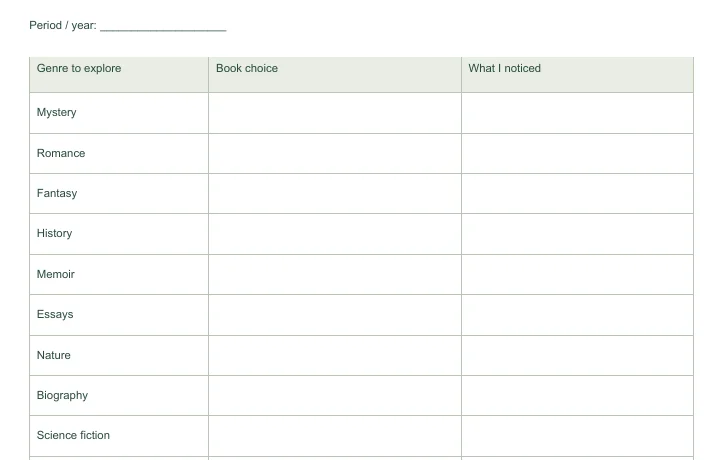

Genre Reading Challenge
Choose the paper size that matches your printer. Both PDFs are free, undated, and made for personal use.
PDF format · No signup · Print at 100% / Actual size
Need a hand? Read the printing guide. These are print-and-write pages, not fillable forms. Personal-use license.
Save it for your
next bookish day.
Keep a link to this page so the printable is easy to find again.
Save to Pinterest ↗A few questions before you print
Does a book have to fit only one genre?
No. Books often cross categories. Use the label that reflects your reason for choosing it and note any overlap if that helps.
Should I finish a genre I dislike?
You can stop a book or replace a category. Record what did not work so a future recommendation can be more specific.