Start with one line, not the whole card
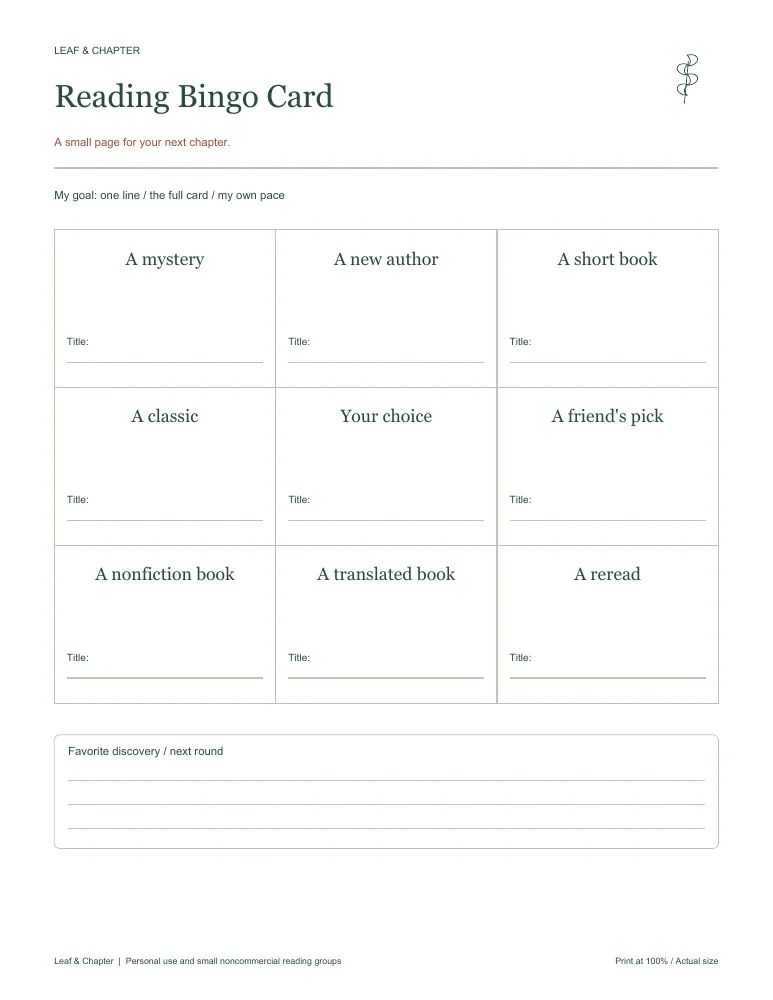
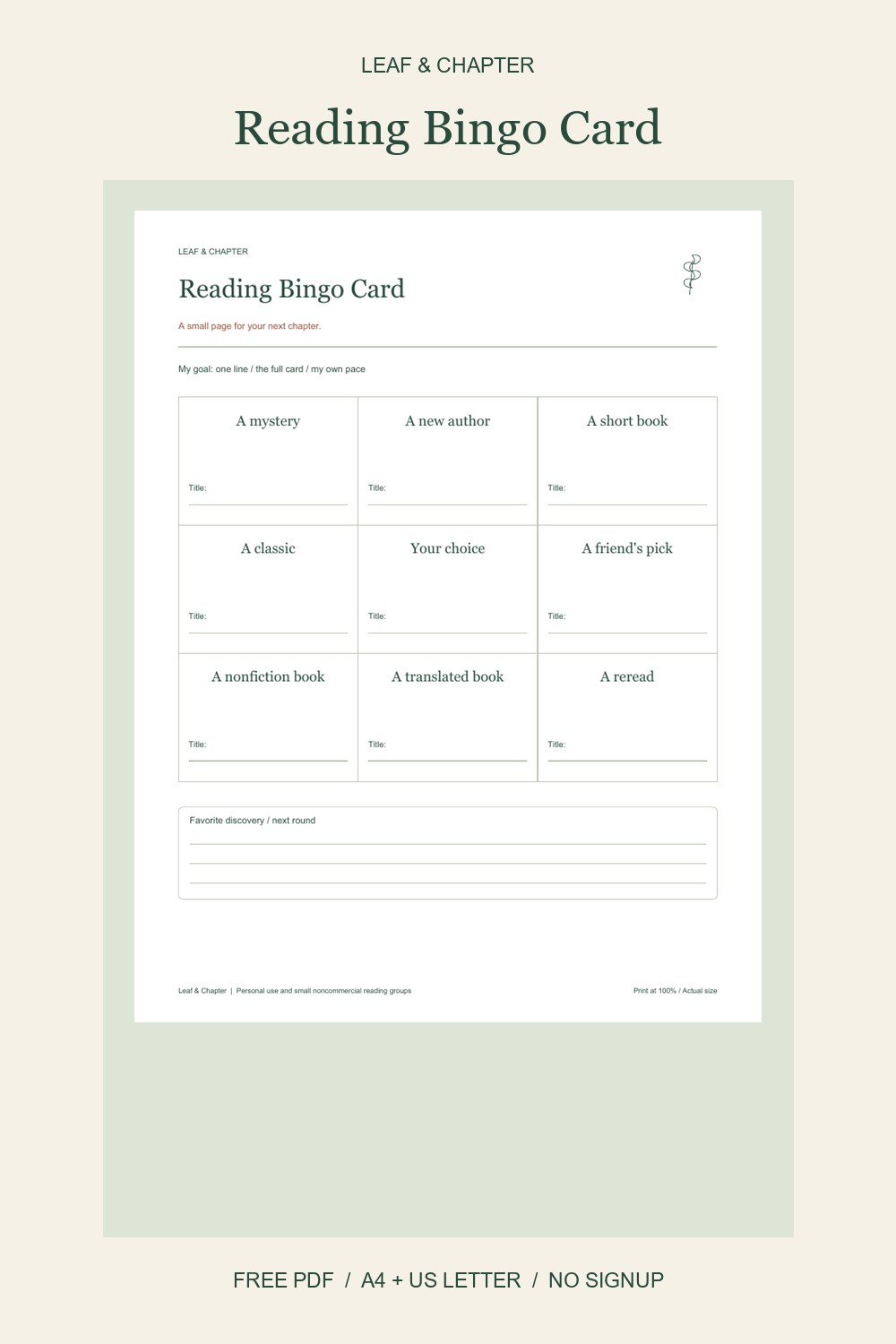
Print the bingo page and look for three squares that seem inviting. You can aim for a row, a column, or a diagonal, but there is no reason to start with a blackout challenge. Circle a route lightly in pencil. If a square requires a kind of book you do not enjoy, swap it for a prompt of your own. A challenge should make the shelf feel more interesting. It should not leave you searching for a book you already know you will dislike just to finish a row.
Choose your counting rules before you begin
Decide whether one book can fill several squares. Allowing overlap is useful for a relaxed challenge: a short mystery by a new author might qualify for three prompts. Using one book per square gives you more variety, but takes longer. Both approaches work. Write your choice in the margin so you do not renegotiate every time a book fits two spaces. Audiobooks, ebooks, graphic novels, and rereads can all count if you want them to. Choose rules that suit the reading you actually do.
Find books without creating a second research project
Start with books you own, library holds you already have, and recommendations you saved. Put a small pencil dot beside any square that already has a candidate. For the remaining prompts, ask a librarian for two or three options rather than assembling a huge list. You can also browse a shelf by cover or read a sample before committing. Avoid choosing the next five books at once. Keeping one or two squares open leaves room for a recommendation that arrives at just the right time.
Keep a small record inside each square
Write the book title in the square once you have finished, then add a date or a star if there is space. If the title is long, use a shortened version and keep the full title on a separate reading log. Color the border, draw a tiny check mark, or use a sticker. A simple mark is enough. For an abandoned book, you can add a pencil note instead of erasing it completely. That note may explain why a prompt needs changing, which is useful information for the next round.
Make bingo work for a group
For a book club or a family, let everyone choose their own books while sharing the same card. At a check-in, ask which prompt led to the most unexpected choice. This gives people something to discuss without requiring matching reading speeds. If you want a shared goal, combine completed squares across the group. Agree on any special rules first, including whether children and adults use different prompts. Keep the reward small and optional, such as choosing the next library outing or bringing a favorite snack to the discussion.
Leave room for a change of mood
A book that sounded appealing in January may feel wrong in June. Replace it without treating the change as a setback. You can return to a comfortable genre between bingo choices, take a week off, or extend the challenge beyond the season you first imagined. If a square repeatedly stalls you, cross out its wording and write something more useful. The page records what you explored. It does not need to prove that you completed every possible kind of reading. One memorable discovery can be a satisfying result.
Print a card you will actually see
Choose the PDF that matches your paper size, then print a single test page before making copies. Use actual size when the print preview fits comfortably inside your printer margins; use fit to page if anything is cut off. Keep the card in your current book, clip it beside your reading list, or tuck it into a journal. Pencil works well when your plans are still moving around. At the end, save the card with a short note about your favorite discovery before beginning another one.
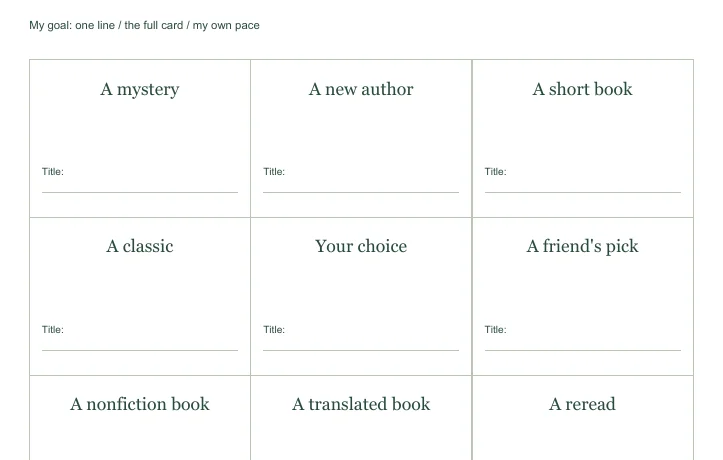

Reading Bingo Card
Choose the paper size that matches your printer. Both PDFs are free, undated, and made for personal use.
PDF format · No signup · Print at 100% / Actual size
Need a hand? Read the printing guide. These are print-and-write pages, not fillable forms. Personal-use license.
Save it for your
next bookish day.
Keep a link to this page so the printable is easy to find again.
Save to Pinterest ↗A few questions before you print
Can one book count for more than one square?
Yes. Decide before starting whether overlap is allowed. A relaxed card can let one book fill several prompts; a variety challenge can use a different book for every square.
Do I need to finish every square?
No. A single line is a complete challenge if that suits you. You can also use the card simply as a menu of ideas.