Record the book and the performance
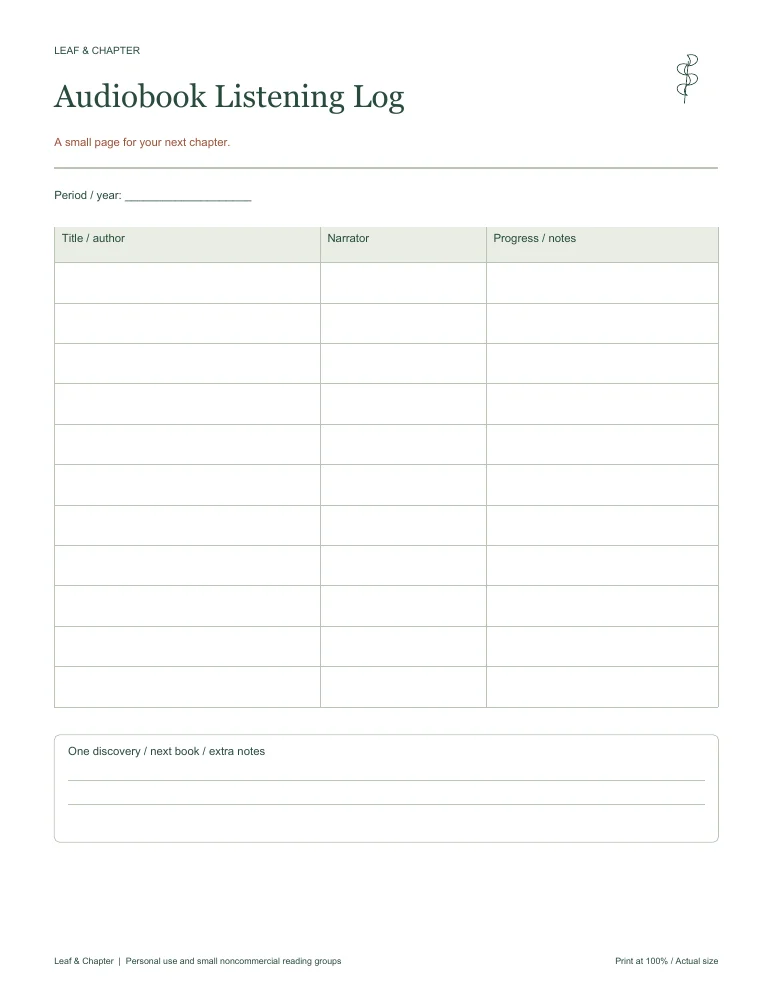
Write the title, author, and narrator when you begin. Some audiobooks use several performers, while others have different recordings of the same book. Add the edition or platform if it will help you find the version again. The narration is part of your listening experience, and remembering it can make future recommendations more useful than a title alone.
Keep your reaction to the writing separate from your reaction to the performance when they differ. You might enjoy the story but struggle with the pacing of the narration, or love a voice in a book that otherwise feels uneven. A short note about each helps you choose another title later. Avoid treating one difficult experience as a conclusion about every audiobook by that author or narrator.
Track progress in a way you can find again
If you stop for several days, note the chapter or approximate timestamp. A chapter label is often easier to relocate than a remembered percentage. If you switch between print and audio, record the last event or section you reached as well, because the positions may not match neatly. Keep the reminder brief and mark it if it contains a spoiler.
You do not need to copy every listening session into the log. Record progress when you pause for a while, change formats, or expect to lose your place. If the app already tracks position reliably, use the printable for reactions and practical notes instead. The paper should add something useful rather than duplicate a record you never need to read.
Choose listening situations thoughtfully
Notice where you can comfortably follow the book. Some material works well during a familiar walk or routine task, while a complicated argument may need your full attention. Use your own experience to choose. If you keep missing important details, replay the section or save that book for a quieter time. Keep listening compatible with the attention and safety requirements of whatever else you are doing.
A listening-speed setting is a preference, not a target. Choose the speed at which the voice is comfortable and the content remains clear. Record it only if you want to remember the setting for that particular narration. If you change speed, the app's remaining-time estimate may change too. Do not use a faster setting merely to make the finish date look better on the page.
Keep loans and unfinished titles clear
If the audiobook is borrowed, note the official return date and check it in the lending account when necessary. Digital returns can happen automatically, but losing access halfway through a chapter is still inconvenient. Decide whether you can finish comfortably, renew where available, or wait for another loan. The listening log can remind you of the issue; it does not replace the platform's current information.
Mark a title as paused or stopped if you move on. Add a short reason that helps your future self decide whether to return. Perhaps you wanted a different mood, the recording was hard to follow, or the subject needed more attention than you had available. You can revisit the book in print or try another recording if available, but you do not have to finish every audiobook you start.
Use the printable to build better recommendations
After finishing, add one sentence about the experience. Mention a performance detail, a memorable scene, or the kind of listener you would recommend it to. 'Distinct character voices made the large cast easy to follow' is more helpful than 'great audio.' If you would seek out the narrator again, mark that clearly. You are creating a small reference for your next listening choice.
Print a fresh page when you need it and keep completed logs with your other reading records. Count audio and print together or separately according to your own preference, but avoid counting a format switch as two completed books. At the end of a month, look for one narrator, genre, or listening situation that worked well. Use that observation to make the next selection easier, while leaving room for something entirely different.
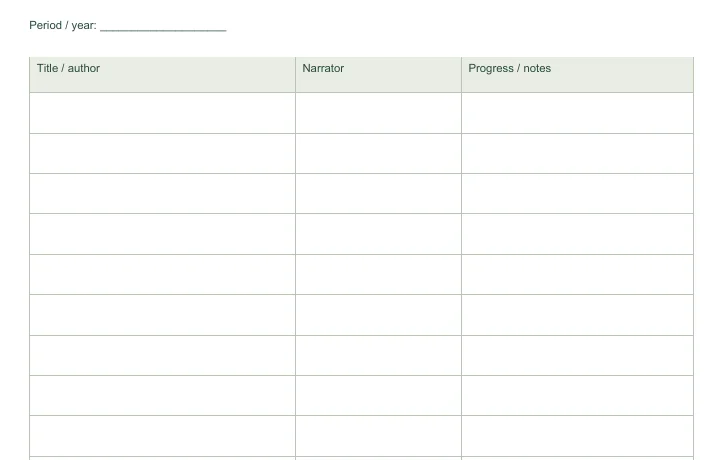

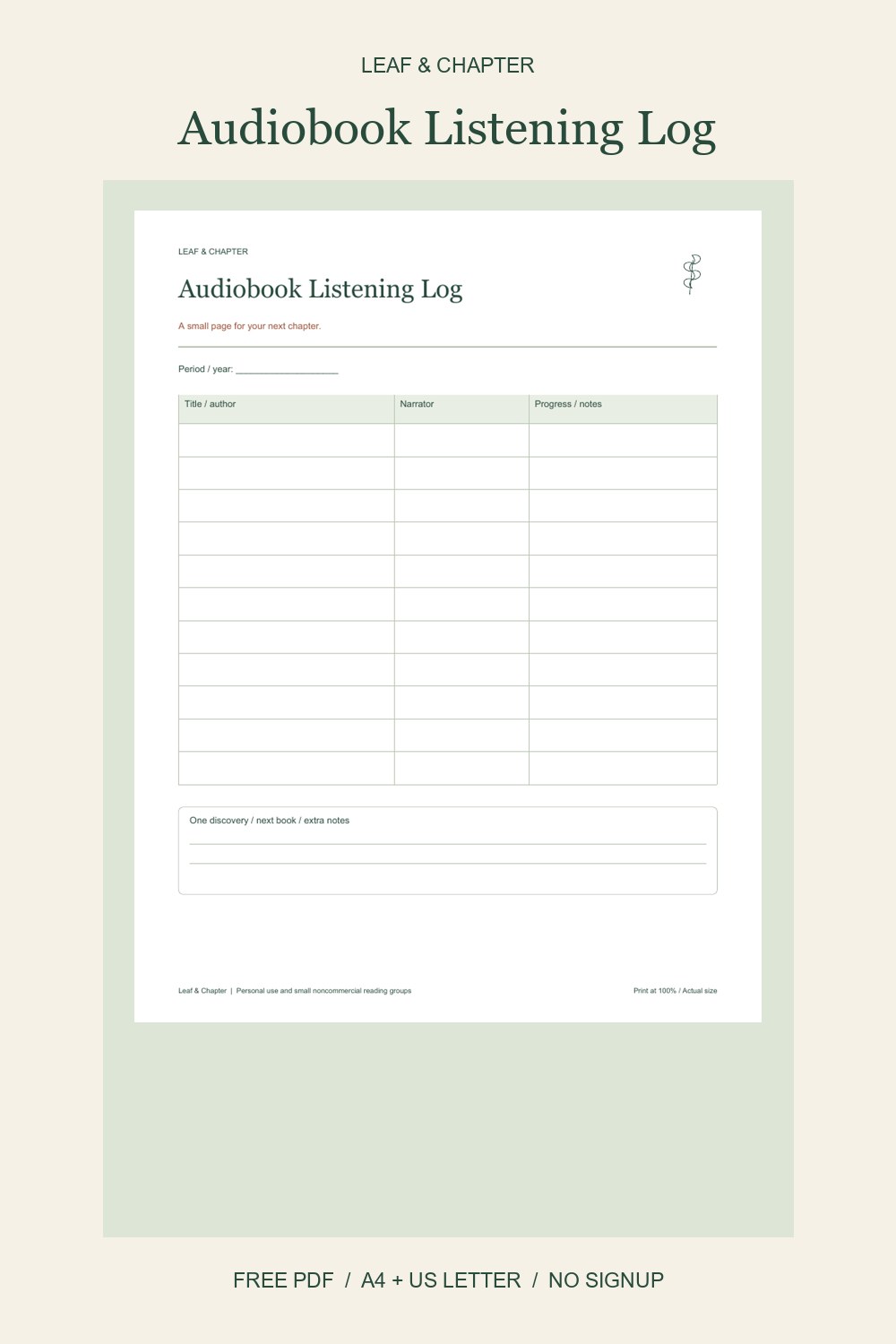
Free Audiobook Listening Log
Choose the paper size that matches your printer. Both PDFs are free, undated, and made for personal use.
PDF format · No signup · Print at 100% / Actual size
Need a hand? Read the printing guide. These are print-and-write pages, not fillable forms. Personal-use license.
Save it for your
next bookish day.
Keep a link to this page so the printable is easy to find again.
Save to Pinterest ↗A few questions before you print
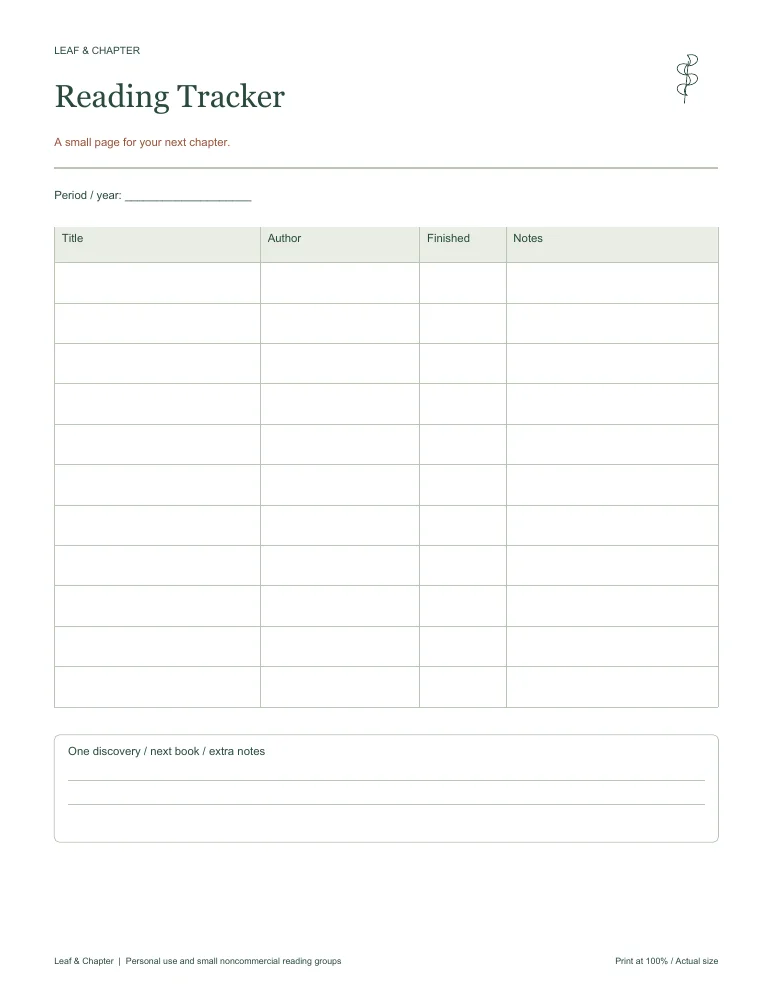
Do audiobooks belong in my regular reading tracker too?
They can. Keep the title in the main tracker and use this page for narrator and listening details. Choose a consistent counting rule so one book is not accidentally counted twice.
Should I track listening speed?
Only if the information helps you. A comfortable, understandable performance matters more than choosing a particular speed or meeting an arbitrary finish time.