Choose your year before choosing a target
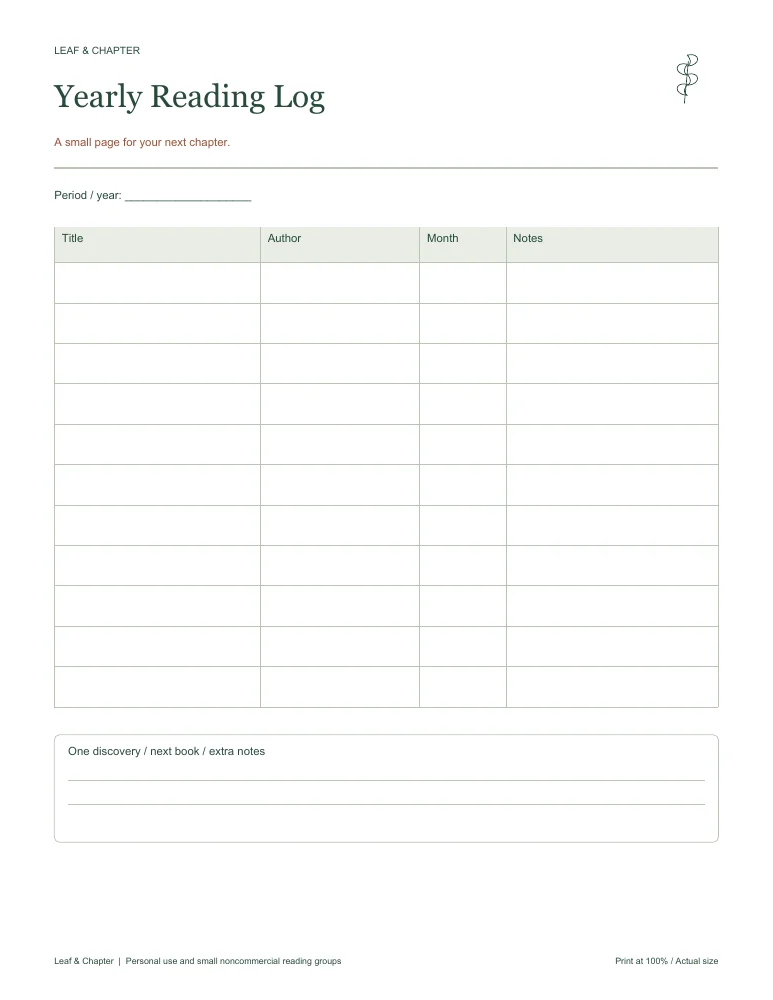
Write the period you want to record at the top of the printable. That might be January through December, your birthday year, or the next twelve months. A clear date range prevents confusion when you return to an older page. If you start halfway through a calendar year, decide whether to add earlier books or begin with the current month. Either approach is useful. You do not need a complete archive before the log can earn its place in your reading routine.
A yearly log and a reading goal are different things. The log records what happened. A goal describes something you hope to do. Keep them separate if a target makes the record feel judgmental. You might read forty books one year and twelve the next because work, family, or your taste changed. A longer book can also take the time that several short ones would have used.
Use a consistent, simple entry
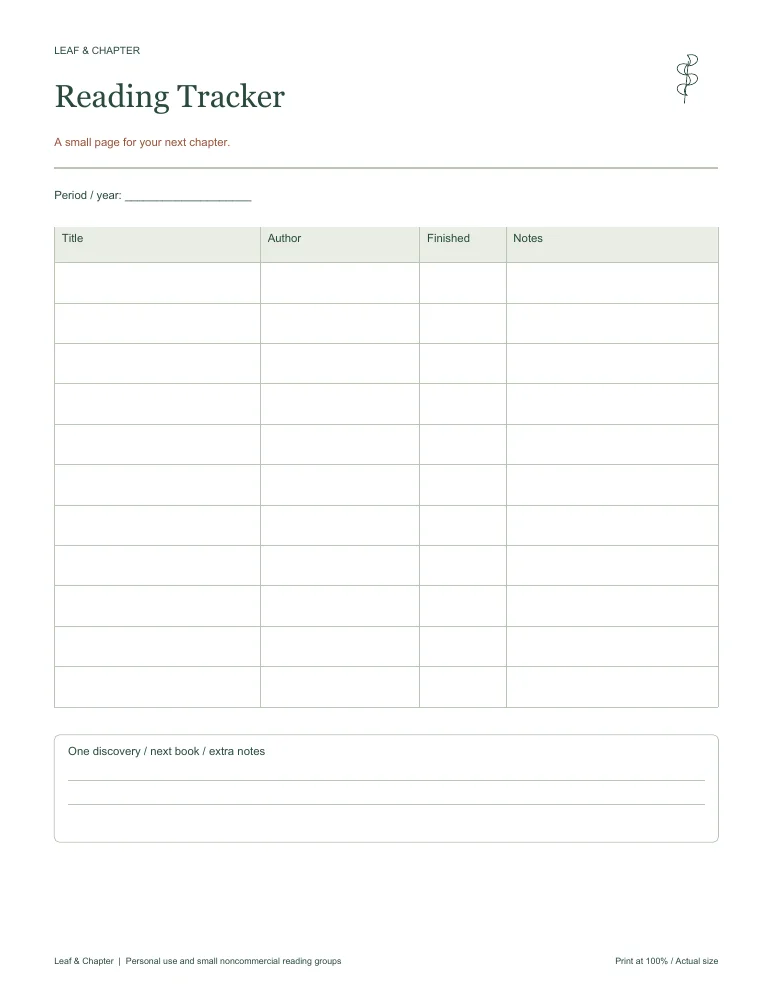
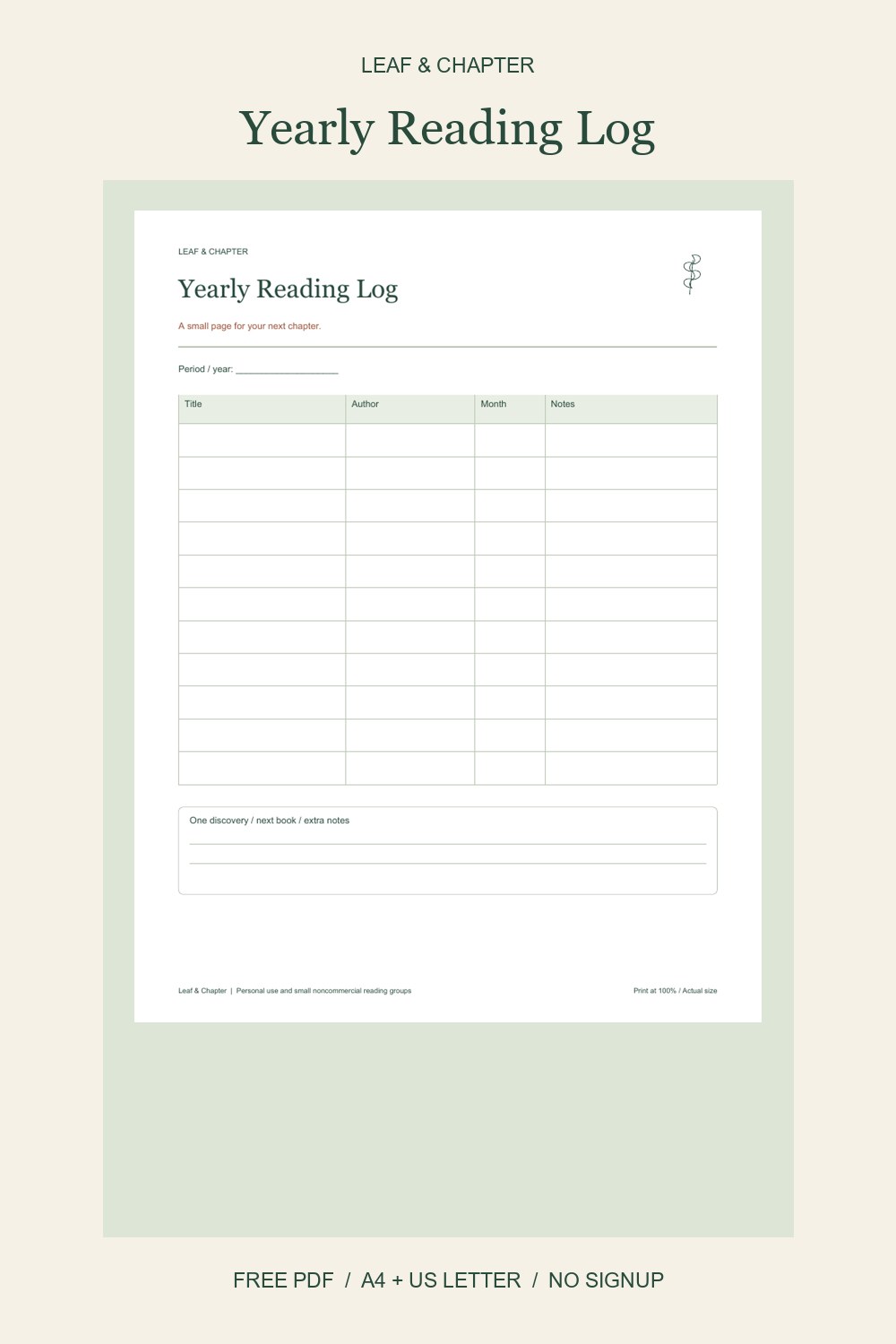
For each book, record the title, author, and finish month or date. Add a short note if there is room. Consistency makes the page easy to scan later, particularly if you read several books with similar titles. If a title is very long, use a recognizable shortened version and keep the author. Mark a reread with a small R, and add a format code only if it matters to you.
Do not let a missing date block an entry. 'Early summer' is enough when that is what you remember. If you want to reconstruct the beginning of the year, check your library history or your own reading notes where available, then stop when the search becomes tedious. Some reading records are incomplete, and that is fine. The sheet is a useful personal document rather than an audited account.
Decide what belongs in your total
Choose a counting rule that you can explain in one sentence. You might count every finished book, including audio and graphic novels, and list abandoned books separately. If you read a collected edition, decide whether you count the collection or its individual books. There is no prize for choosing the strictest rule. What helps is using the same approach so the year's total means something to you.
For books that stretch across two years, use the finish date if you want an easy rule. A December start and January finish becomes a January entry. You can note the earlier start if it matters. If you reread only a few favorite chapters, record that in a separate note rather than counting a complete reread. Small decisions like these keep the log clear without making it fussy.
Look back before you add more plans
Every few months, read the list without immediately judging the total. Which titles can you still picture? Which authors would you seek out again? Perhaps you discovered that essays fit well into lunch breaks, or that a favorite genre no longer holds your attention. Circle a few memorable titles and write a short observation at the bottom or on the reverse. This turns the list into a record of taste, not only a count.
At the end of the period, choose favorites in categories that make sense for your reading. Try best conversation starter, most surprising discovery, or book I want to reread. You do not need to rank every title against every other title. A collection of different favorites can tell a richer story than a single winner. Use those notes when selecting books for the following year.
Give completed logs a permanent home
Print a new page when the current one fills, and label it with the same year and a page number. Keep the sheets together in a folder or binder. If you prefer a compact journal, print a smaller copy only after checking that the writing lines remain readable. A quick photo of a finished sheet provides a backup, but consider where you store it if the notes include personal information.
When the year closes, write one brief paragraph about its reading mood. Maybe it was a year of familiar authors, long audiobooks, library discoveries, or half-finished experiments. That sentence gives context to the numbers. Then start the next log with the same uncomplicated routine. You are building something enjoyable to revisit, one title at a time, with enough structure to remember and enough flexibility to keep going.
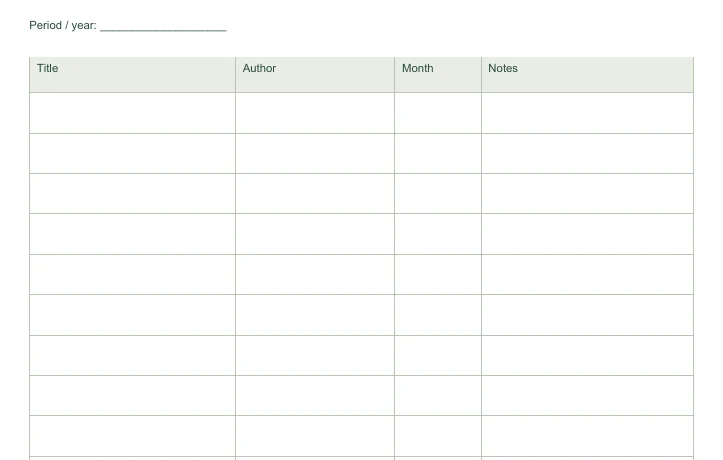

Free Yearly Reading Log
Choose the paper size that matches your printer. Both PDFs are free, undated, and made for personal use.
PDF format · No signup · Print at 100% / Actual size
Need a hand? Read the printing guide. These are print-and-write pages, not fillable forms. Personal-use license.
Save it for your
next bookish day.
Keep a link to this page so the printable is easy to find again.
Save to Pinterest ↗A few questions before you print
Should audiobooks count in my yearly log?
They can. Choose a rule that reflects your reading life and use it consistently. Mark the format if you want to compare listening and print later.
What if I finish more books than the page holds?
Print another sheet, label it with the same date range, and number the pages. Continue the list rather than squeezing extra entries into unreadable spaces.