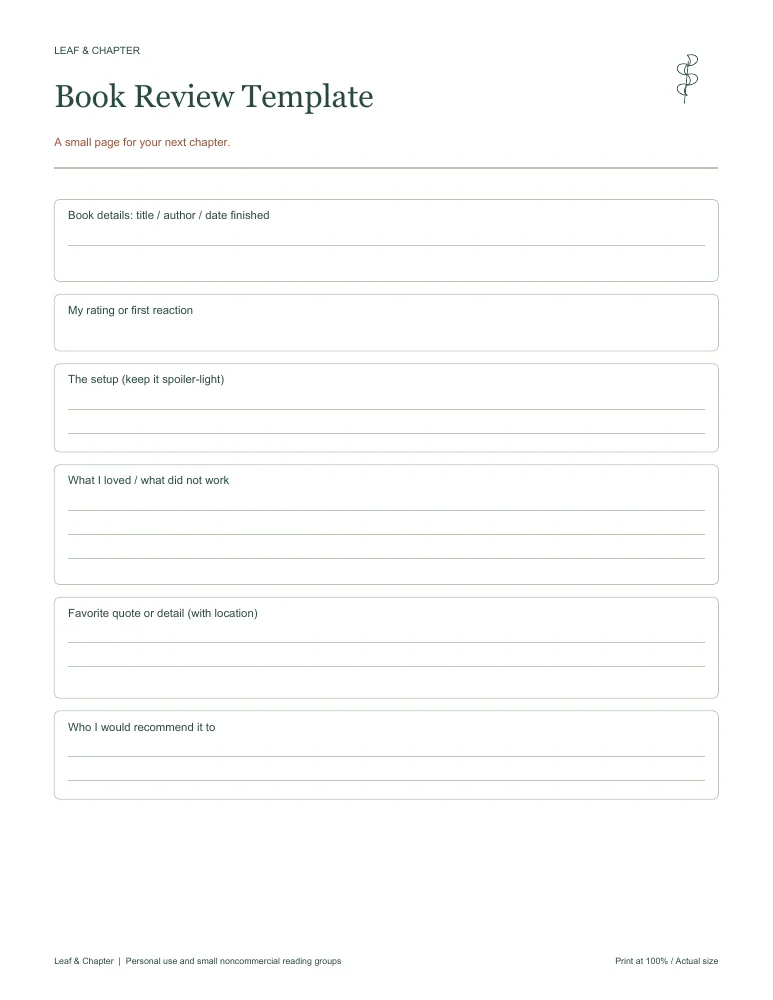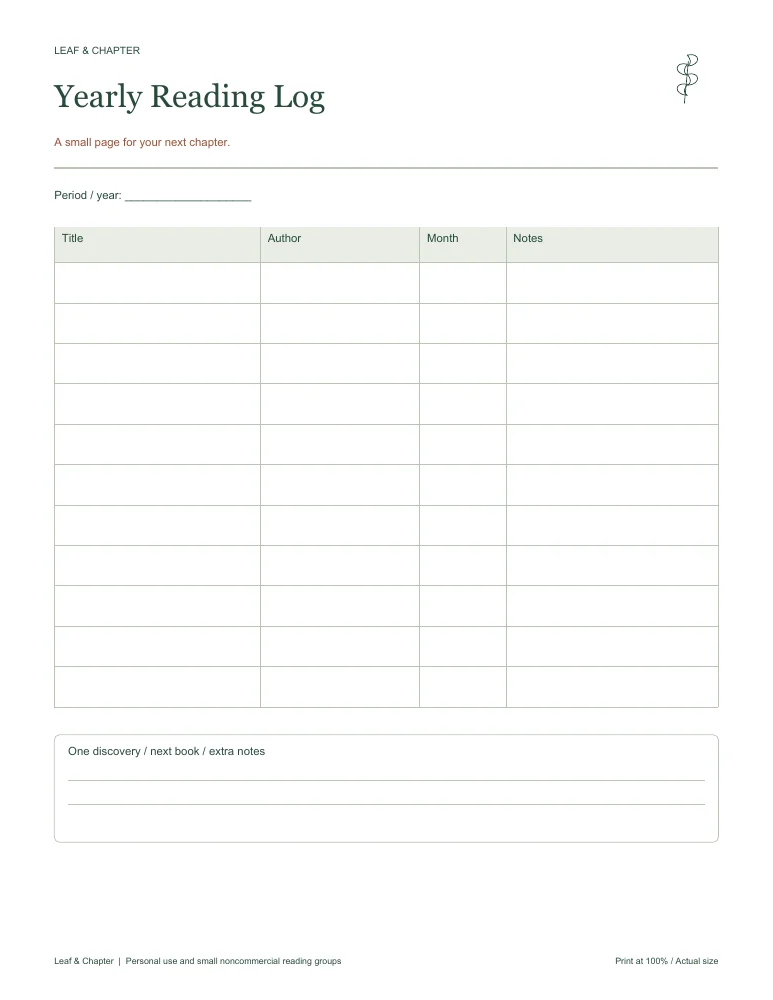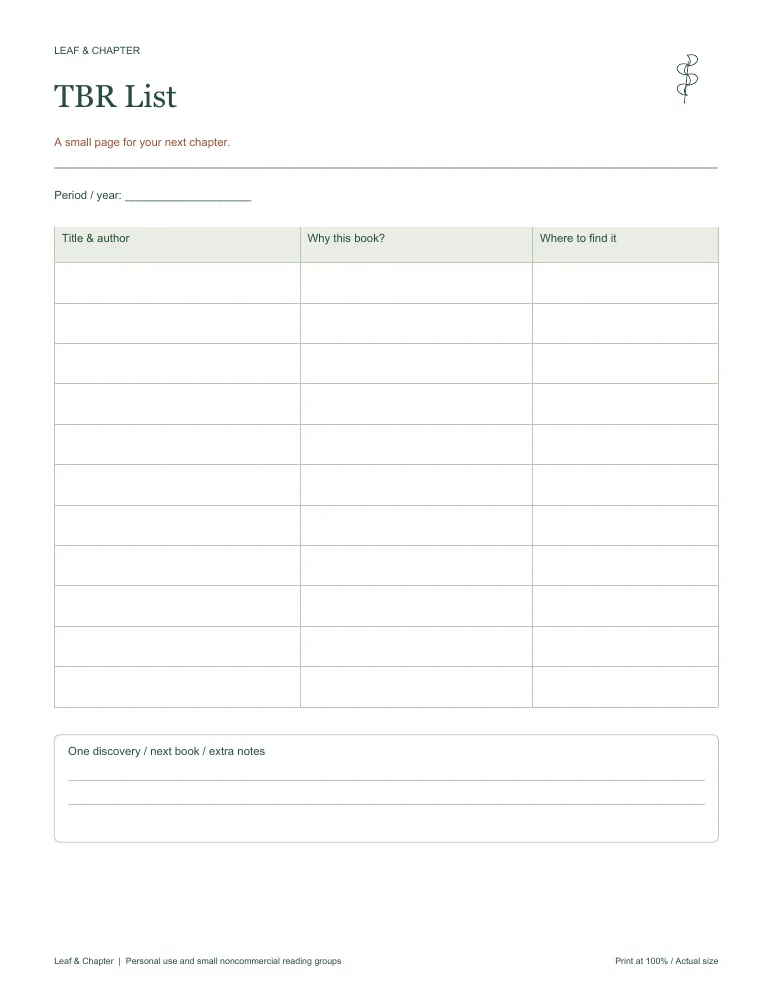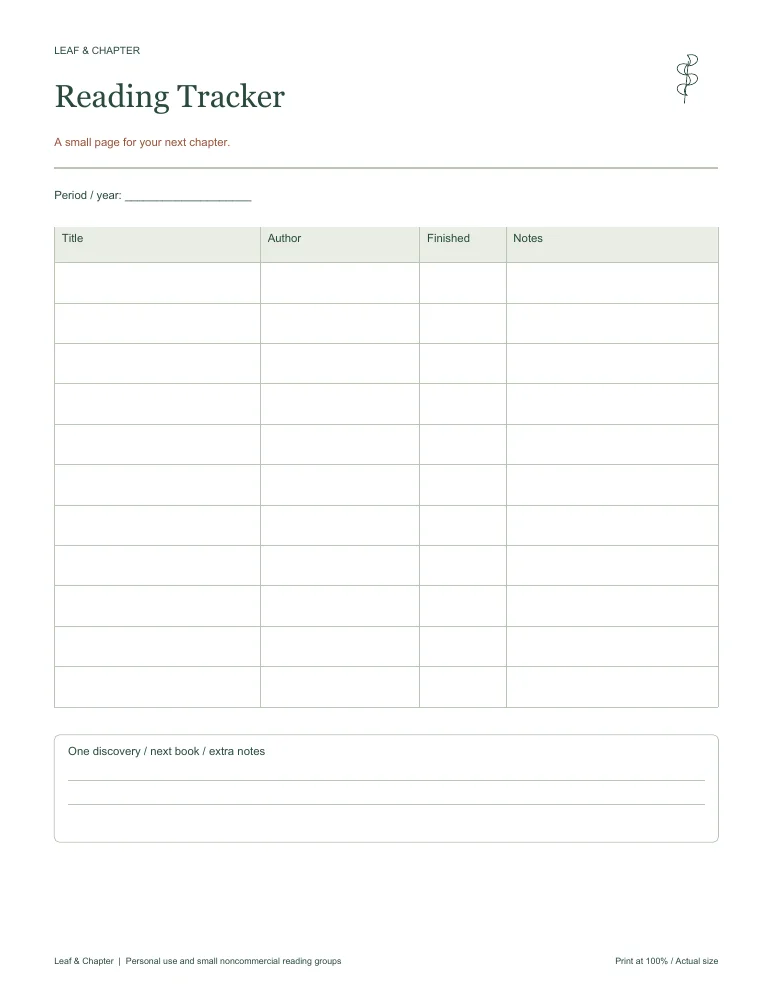
Choose what you want to remember
Before you fill in the first line, decide what the tracker is supposed to do for you. Perhaps you want to remember titles when a friend asks for recommendations. Maybe you borrow books from several places and want a clearer record. Or perhaps you simply enjoy seeing a page fill up over time. That purpose matters more than the number of books you record. Keep the title and author as your essentials, then choose a finish date, a brief reaction, or a rating if those details will be useful later.
You do not need to write down everything a reading app can measure. Page counts, reading minutes, publication dates, and detailed genre labels can quickly make a simple habit feel like admin. Start with less. If you repeatedly wish you had recorded a particular detail, add it in the notes space. A tracker becomes useful through repeated use, not through the number of boxes on the page.
Make an entry while the book is still fresh
The easiest moment to record a book is just after you close it. Write the title, the author, and one phrase that will bring the experience back. Try 'quiet seaside mystery' or 'excellent first half, rushed ending.' These small descriptions often tell your future self more than a star rating alone. If you forget to enter a book immediately, add it when you remember. Leave the date approximate rather than spending ten minutes hunting through messages to reconstruct a Tuesday.
For a first entry, pick a book you finished recently. Do not begin by rebuilding every year of your reading history. You can add older favorites later if you want a reference collection. Starting with one real, current book makes the tracker easier to return to. Keep the sheet near the place where you put finished books, inside your journal, or in a folder beside your usual reading chair.
Decide how to count unfinished books
A tracker should have room for honest decisions. If a book is not working for you, record its title and mark it paused or stopped in your notes. You might write 'not the right mood' or 'needed more background knowledge.' That gives you a useful record without treating an unfinished book as a failure. Decide whether your total counts finished books only, and use the same rule throughout the page. The rule is yours to choose.
Audio, ebooks, graphic novels, and print editions can all belong on the same sheet. If you listen to half of a book and read the rest, you have still followed one book, not two. Mark the format only if comparing formats interests you. For rereads, make a fresh entry when you want to record the new experience. Your reaction to a familiar story can change enough to deserve its own small note.
Use the page to choose your next book
After five or six entries, look for patterns that help you make a decision. Which books made you want to read past bedtime? Which ones felt like a chore? You might notice that short nonfiction works well during busy weeks, or that you keep reaching for mysteries after dense historical novels. These observations are suggestions, not rules. Use them to choose one promising next book rather than trying to design the perfect reading schedule.
If ratings begin to feel repetitive, switch to a few words: recommend, borrow again, discuss, or not for me. You can also circle one standout title at the end of the month. This makes the tracker a source of recommendations when someone asks what you have enjoyed lately. A page with your own reactions is more useful than a neat list you never look at again.
Print it and keep the habit small
Download the tracker, choose the paper size that matches your printer, and check the preview before printing. Use actual size if the page fits correctly, or fit to page if your printer clips the margins. A black-and-white setting is usually enough for a working copy. Keep an extra page nearby so a full sheet does not interrupt the habit. Date each sheet if you expect to use several over a year.
Give yourself a one-minute routine: title, author, date, reaction. That is enough. At the end of a month, read the entries and pick one favorite. If you miss a month, continue on the next blank line. The goal is a record that you can enjoy and use, with enough room for real life to happen around it.
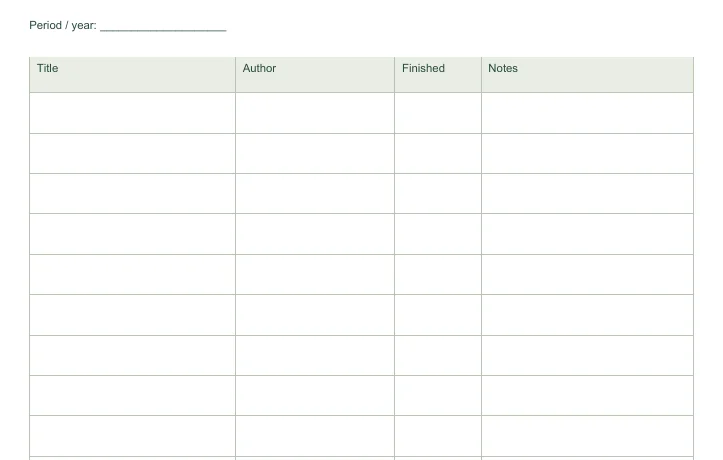

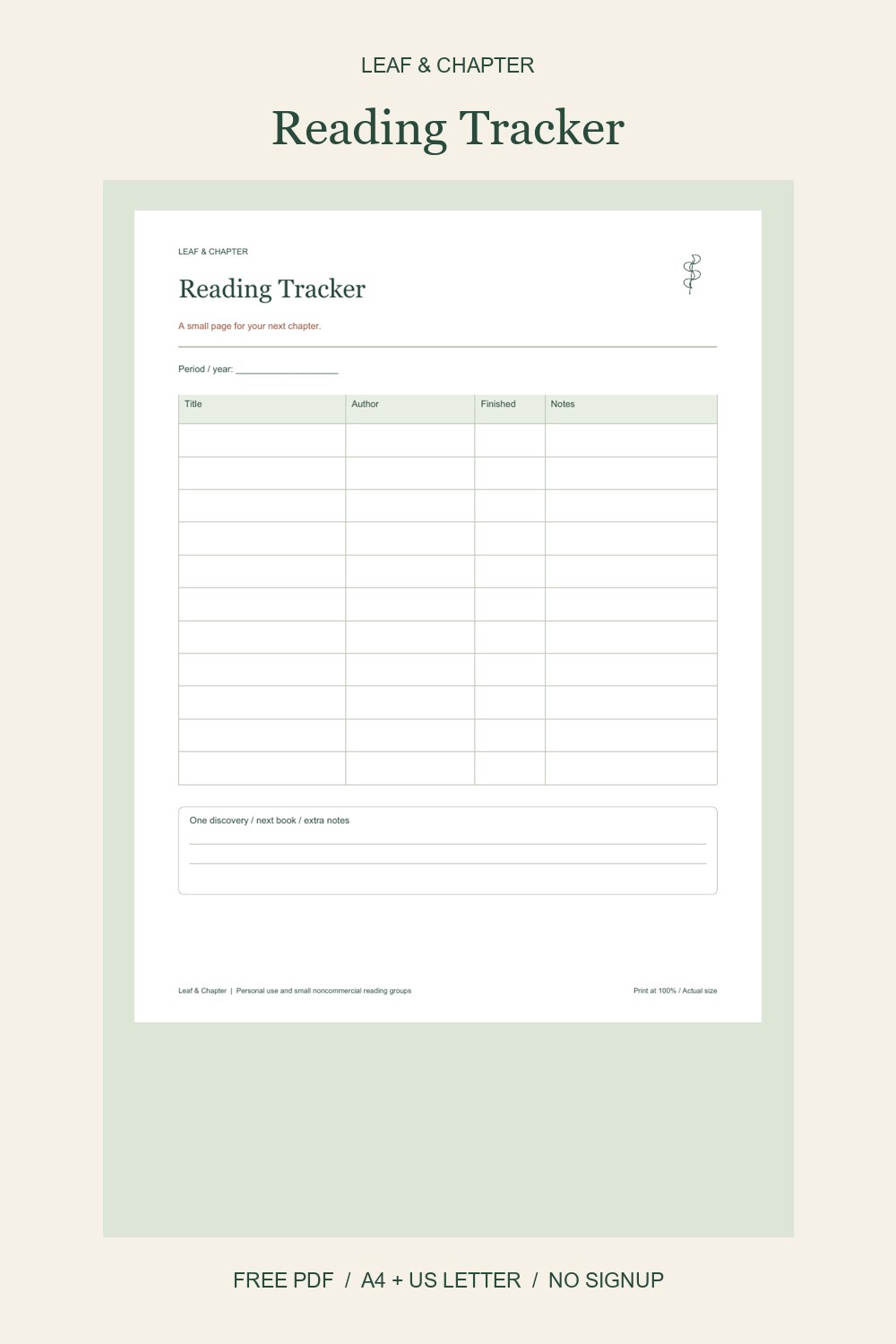
Free Reading Tracker
Choose the paper size that matches your printer. Both PDFs are free, undated, and made for personal use.
PDF format · No signup · Print at 100% / Actual size
Need a hand? Read the printing guide. These are print-and-write pages, not fillable forms. Personal-use license.
Save it for your
next bookish day.
Keep a link to this page so the printable is easy to find again.
Save to Pinterest ↗A few questions before you print
Do I have to use star ratings?
No. Use a short reaction, a favorite detail, or a simple recommendation note instead. Choose the information you will actually want to read later.
Can I use one tracker for the whole family?
Yes, if everyone is comfortable sharing it. Add initials in the notes space, or print a separate page for each reader so preferences remain easy to follow.