Separate interest from commitment
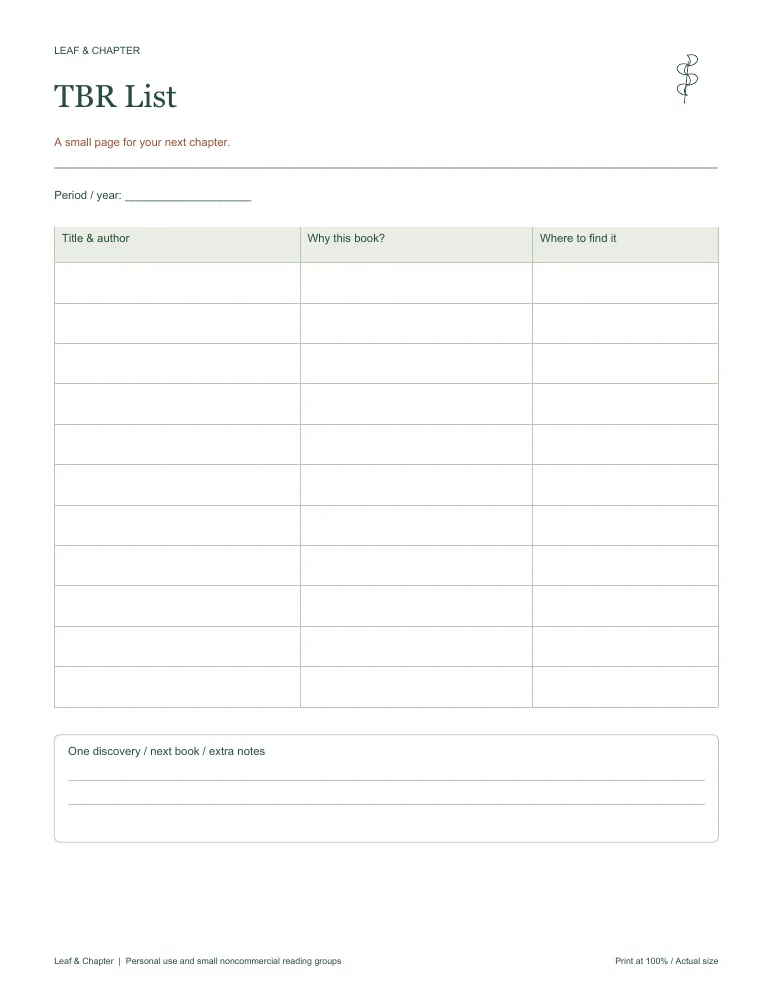
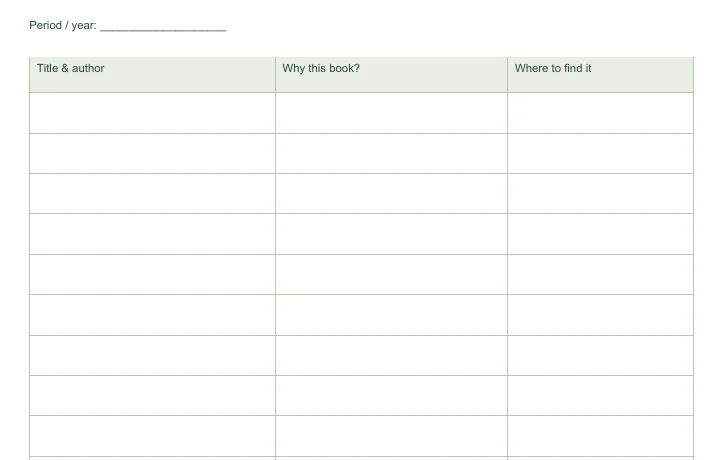
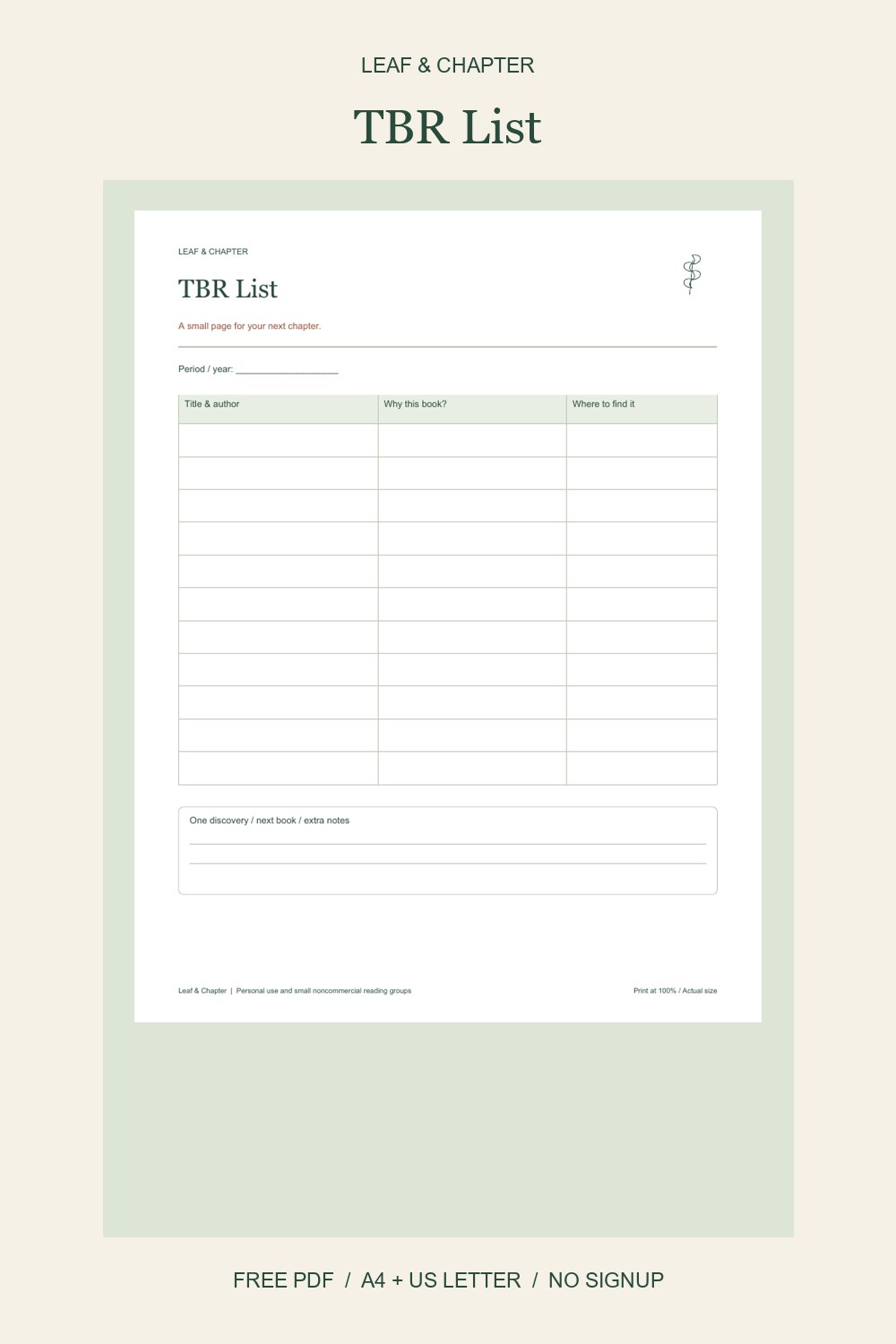
When you add a title, treat it as a possibility. A book can sound interesting today and lose its appeal next month. That does not mean the list has failed. Write the title, author, and a few words explaining why you added it. 'Friend loved the humor' or 'short history of a familiar place' preserves the original attraction better than a title alone. The note also helps you decide whether that reason still matters.
If your existing list is enormous, do not copy it all at once. Choose a small group that you are genuinely curious about right now. Keep the older list as an archive if you want, but give the printable a practical job: helping you select the next few books. Ten current choices are easier to use than a hundred choices with no indication of what makes any one of them appealing.
Include where you can find the book
A promising title is more useful when you know how to get it. Note whether you own it, can borrow it, have a library hold, or need to check availability. You do not need a full price comparison on the page. A simple source note can prevent buying a book you already have on an ereader or requesting a title that is sitting on a shelf at home.
Library availability can shape the next choice without taking over the whole list. If a hold arrives during a busy week, decide whether the loan window is realistic before starting. If you cannot fit it in, return or postpone it according to the library's options. Keep the book on the TBR if you still want it. Access and interest are separate considerations, and the sheet can hold both.
Build a short next-up group
Choose three possible next reads with different moods. You might select a familiar mystery, a short essay collection, and a novel recommended by your book club. Circle them or mark them in the notes area. When you finish your current book, you then have a small, varied group rather than the entire list. This approach leaves room for your mood to change while removing some of the decision-making work.
Avoid a rigid order unless it solves a real problem, such as reading a series in sequence or preparing for a club meeting. A TBR does not need to tell you what to read on a particular Tuesday. If one option suddenly feels wrong, choose another. If something unexpected appears at the library, you can read it without first asking the list for permission.
Edit the list as carefully as you add to it
Once a month, look at the reasons you wrote beside the titles. Remove anything that no longer interests you. You can cross it out, move it to an archive, or simply stop carrying it onto the next page. A recommendation from a trusted person is still a suggestion. Your tastes, available time, and curiosity are allowed to change. An edited list becomes more helpful because it reflects the reader you are now.
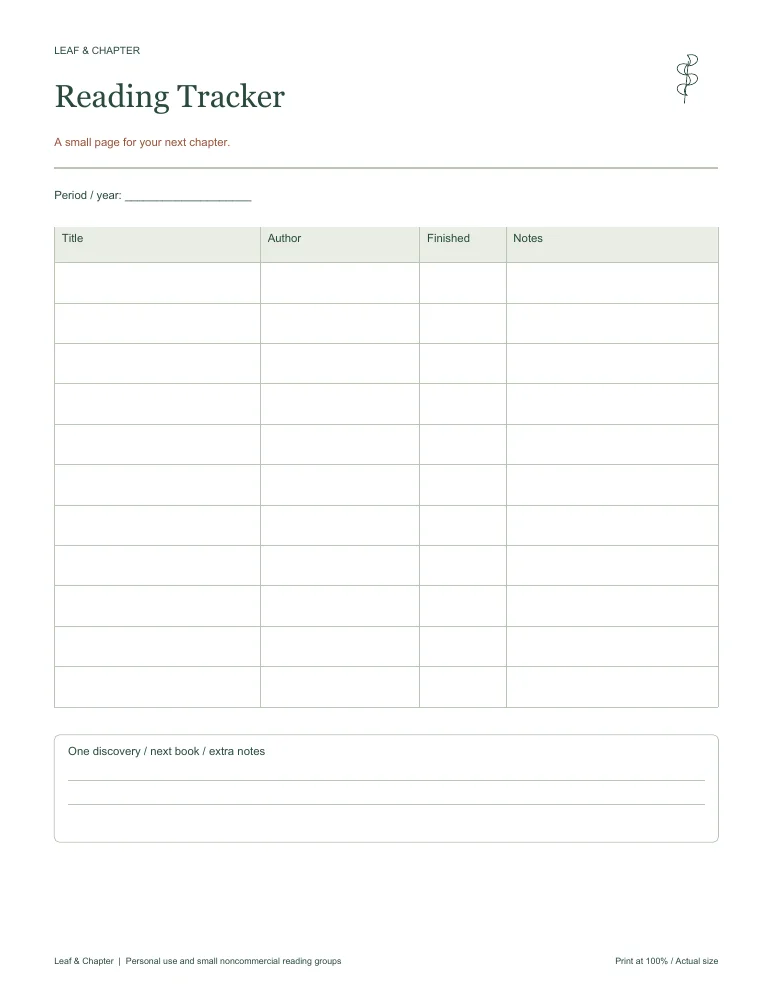
When you finish a listed book, mark it read and move its basic details to your reading tracker if you use one. If you tried it and stopped, note that too. This prevents the same abandoned book from repeatedly looking like an untested opportunity. You can always revisit it later, but a small record of the earlier attempt helps you make a deliberate choice.
Put the printable where decisions happen
Print the page in the size that suits your folder or journal, then check that the text and writing spaces are clear. Keep it near your library card, inside your reading journal, or beside the books you already own. A photo on your phone can help when you are browsing away from home. Update the paper when you return so the two versions do not quietly become different lists.
Try a simple first session: add five titles, give each a reason, and mark three possible next reads. Then stop. The most useful TBR list is the one that makes starting a book easier. It should preserve your curiosity without turning curiosity into a backlog you feel guilty about. Leave a blank line for the next unexpected recommendation, and let the rest of the page stay open until you need it.

Free TBR List
Choose the paper size that matches your printer. Both PDFs are free, undated, and made for personal use.
PDF format · No signup · Print at 100% / Actual size
Need a hand? Read the printing guide. These are print-and-write pages, not fillable forms. Personal-use license.
Save it for your
next bookish day.
Keep a link to this page so the printable is easy to find again.
Save to Pinterest ↗A few questions before you print
How many books should my TBR list contain?
Use as many as you can comfortably scan. A short current list with an optional separate archive often works better than one huge page of undifferentiated choices.
Should I remove books I no longer want to read?
Yes. Removing a title is normal maintenance. Keep a brief note if you want to remember why you passed, but you do not owe every saved recommendation a reading slot.