Start with the reaction you actually had
Before you summarize anything, write one honest sentence about the experience. Perhaps the opening grabbed you immediately, the middle dragged, or the ending left you thinking about a character for days. Specific reactions make a review useful. 'I liked it' tells you very little six months later. 'The friendship was convincing, but the last reveal felt too convenient' gives your future self a clear memory and a reason for your opinion.
You do not need to sound authoritative. A personal reading journal can include uncertainty, mixed feelings, and a change of mind. If you loved the setting but did not connect with the narrator, record both. A balanced note does not mean finding one complaint for every compliment. It means describing what happened for you as a reader, with enough detail to explain your conclusion.
Keep the setup short
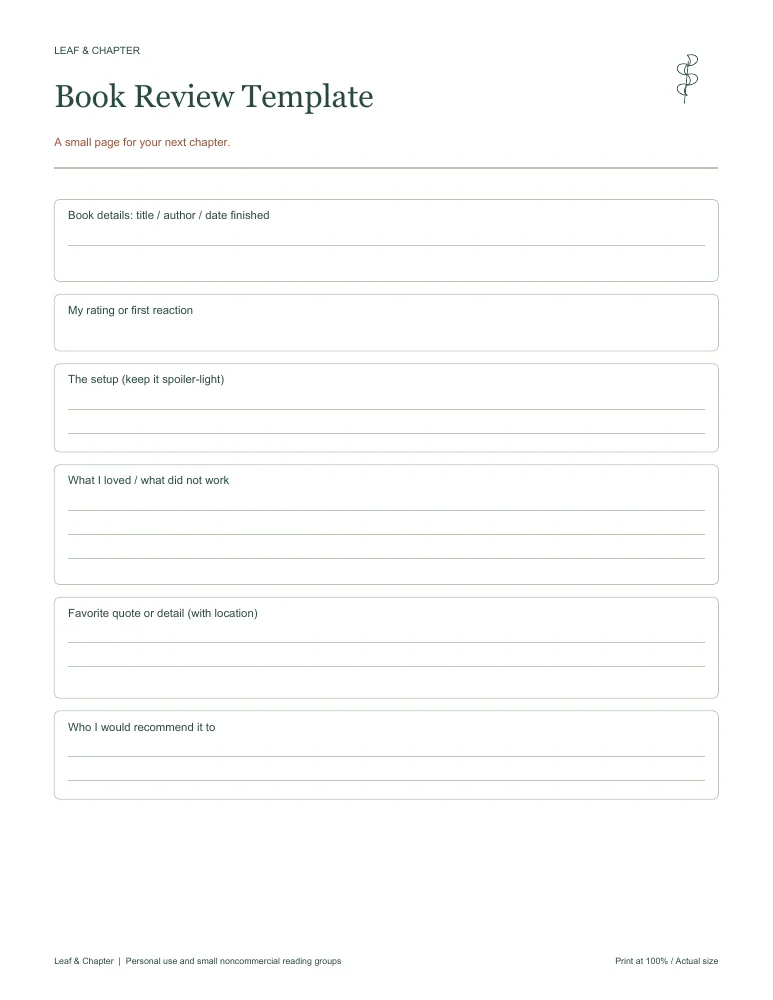
Record the title and author first so the page makes sense on its own. Then describe the setup in two or three sentences. Name the central situation, the kind of story, and perhaps the setting. For a mystery, that might be a retired teacher investigating a disappearance in a coastal town. For nonfiction, explain the subject and the author's approach. Stop before the major turns. The review should preserve your response, not become a second version of the book.
If the page is only for you, spoilers are a choice. If you may share it with a book club or photograph it online, separate plot-sensitive notes from the opening description. Write 'spoilers below' before discussing the ending. Keep personal notes about who borrowed the book or where you bought it elsewhere if you intend to share the review. A useful private record and a public recommendation have different boundaries.
Choose two details worth discussing
Pick two elements that shaped your response. In a novel, you might focus on character choices and pacing. In a memoir, you might discuss the narrator's voice and the organization of memories. In practical nonfiction, consider whether the examples made the ideas understandable and whether the advice fit the situations the author described. You do not have to address every possible feature of a book. Two clear observations are better than eight vague compliments.
Support each observation with a moment you remember. Instead of saying the dialogue was realistic, explain that two siblings kept changing the subject when a difficult conversation came up. You can describe the scene without copying a passage. If you include a quotation in your private journal, record a location so you can find it again. Page numbers vary by edition, so a chapter or ebook location may help too.
Make the rating work for you
A rating is optional. If you use one, decide what it means. Five stars might mean an immediate favorite, while three stars might mean enjoyable with reservations. A book can be well made and still not suit your taste. Your notes should explain that distinction when it matters. You can also skip stars and use three questions: Would I recommend it? Who might enjoy it? Would I read this author again?
Imagine giving the review to one particular reader. Would you recommend the book to someone who loves slow, atmospheric stories, or to someone looking for a fast weekend read? A recommendation becomes clearer when it names a preference. Avoid promising that everyone will love a title. 'Try this if you enjoy family secrets and a patient build' is more useful than calling it a must-read without explaining why.
Finish the page before starting another book
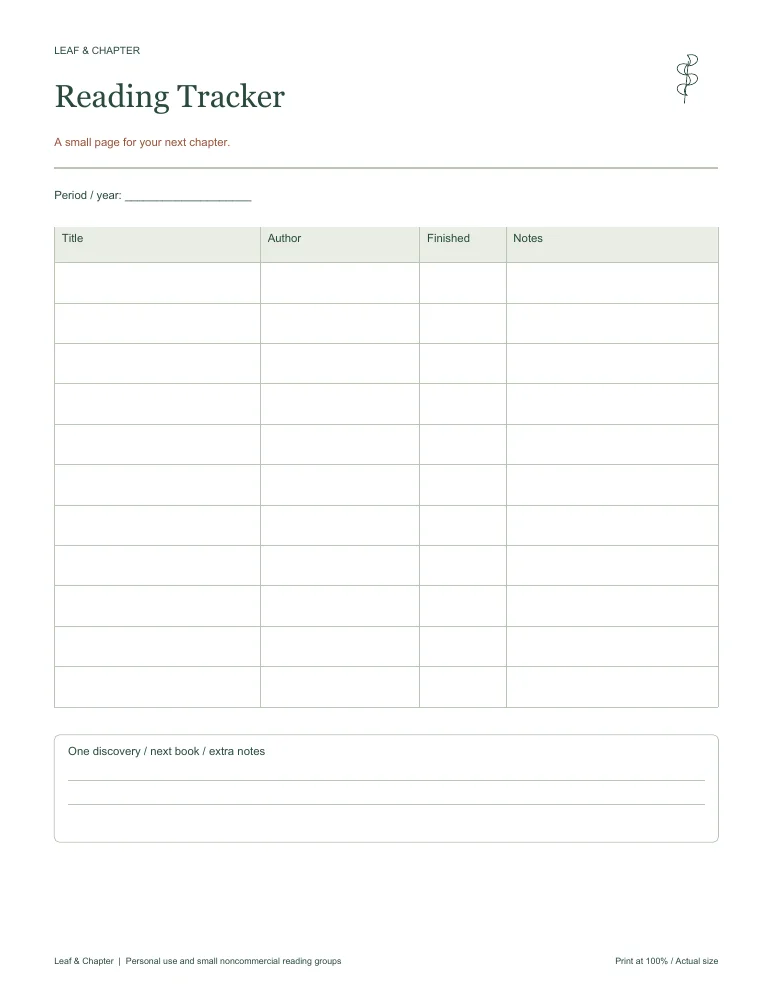
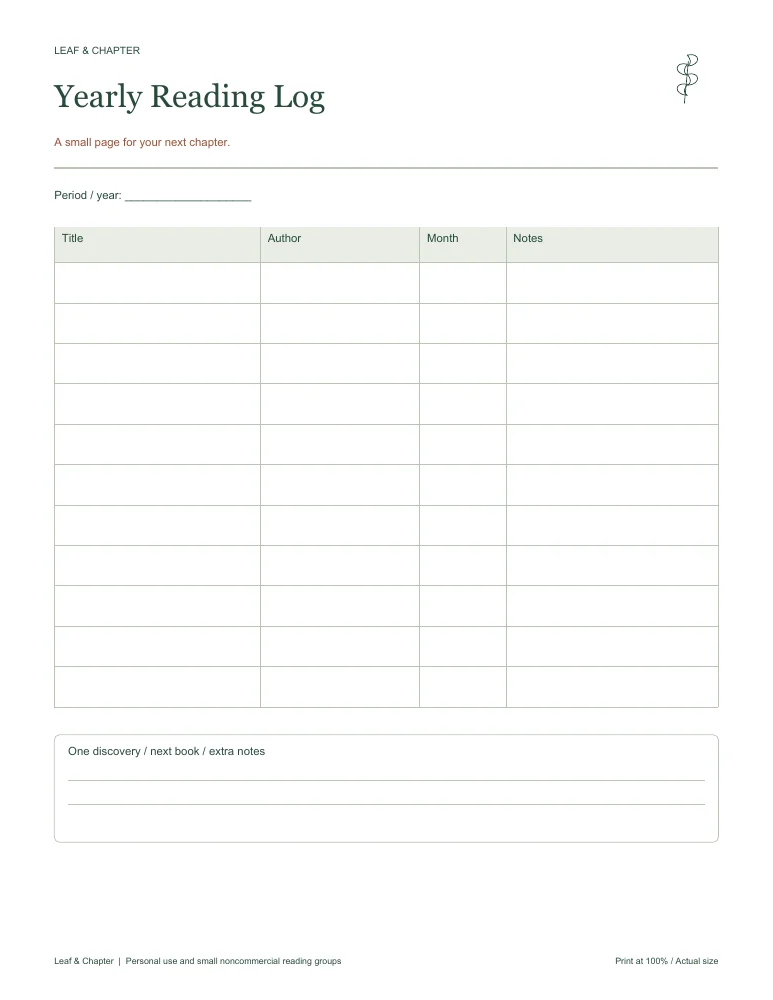
Use the printable soon after finishing, while a few scenes are still easy to recall. Set a small limit, such as five minutes or one filled page. You can return later if the book stays on your mind. Print the matching paper size and keep completed reviews behind your reading log. If you use a binder, check the inner margin before punching holes so the writing space remains comfortable.
For your first review, write the basic details, one sentence about the setup, two observations, and a recommendation. Leave a section blank if it has nothing useful to hold. Over time, the pages become a personal library of reactions. They can help you choose a reread, compare books by the same author, or bring a more interesting answer to the next conversation that starts with 'Have you read anything good?'
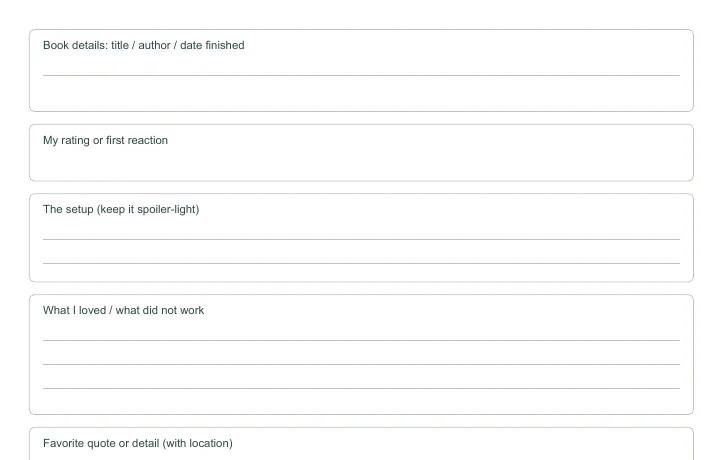

Free Book Review Template
Choose the paper size that matches your printer. Both PDFs are free, undated, and made for personal use.
PDF format · No signup · Print at 100% / Actual size
Need a hand? Read the printing guide. These are print-and-write pages, not fillable forms. Personal-use license.
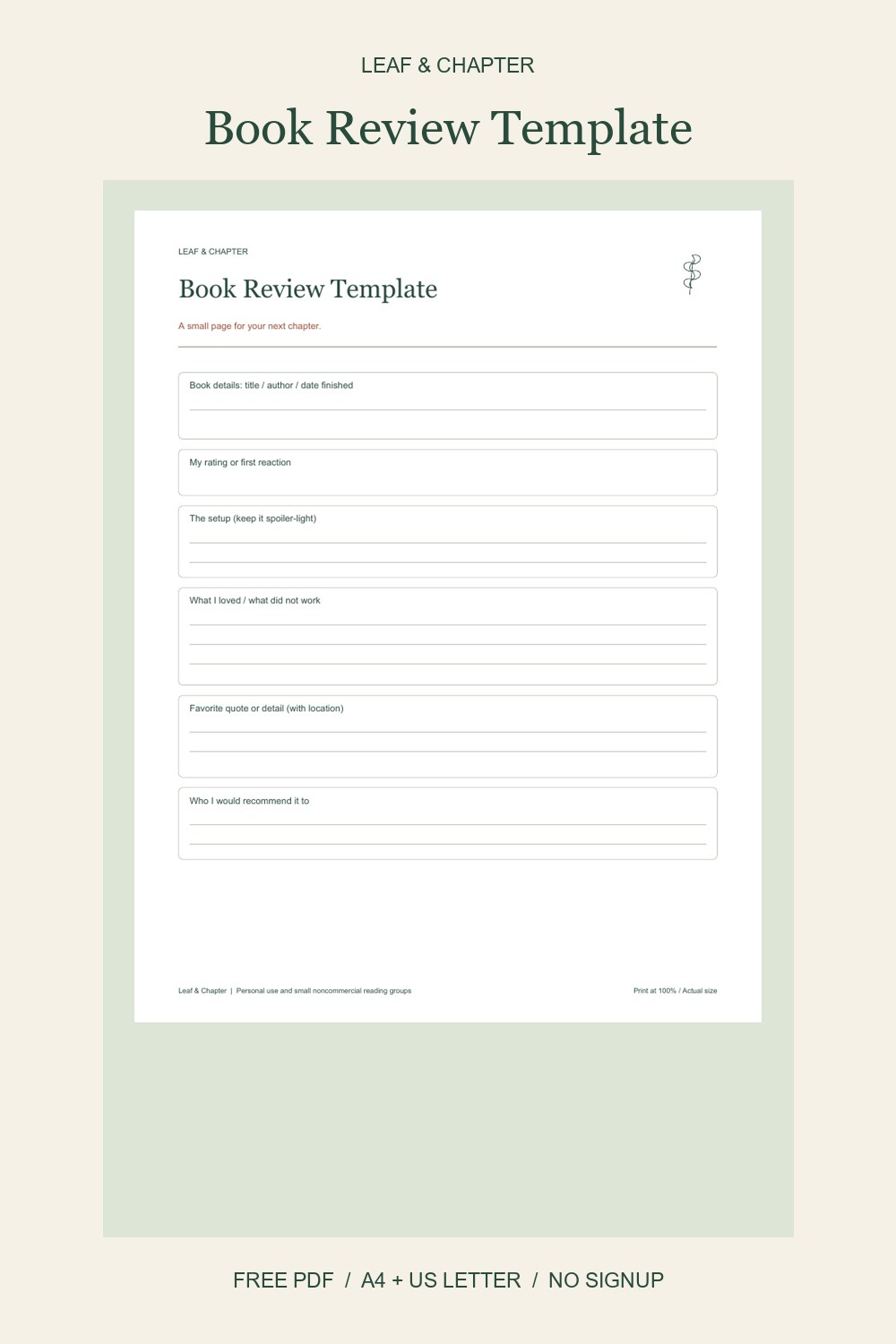
Save it for your
next bookish day.
Keep a link to this page so the printable is easy to find again.
Save to Pinterest ↗A few questions before you print
How long should my review be?
A few focused paragraphs are enough for a personal journal. Cover the reaction, the details behind it, and who might enjoy the book. Length is less important than specificity.
Can I review a book I did not finish?
Yes. State where you stopped and describe your experience up to that point. Avoid judging later events or the ending if you have not read them.