Write down the decisions that affect attendance
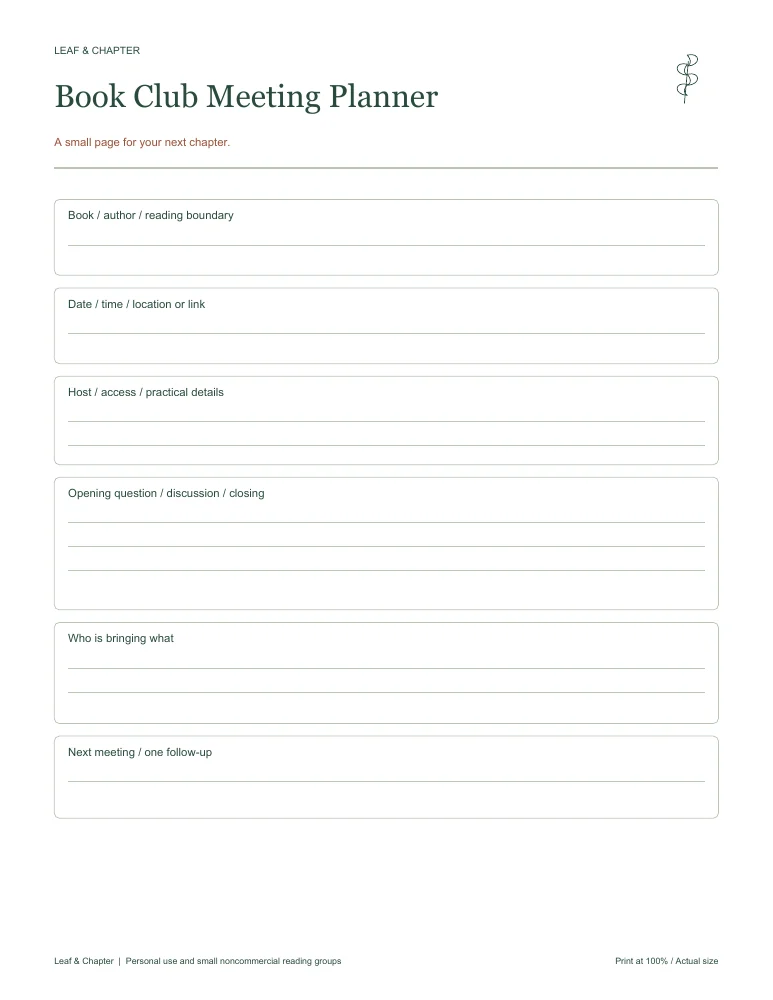
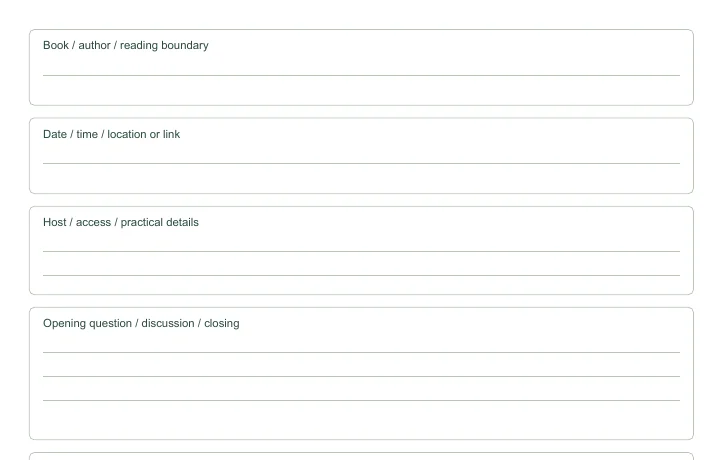
Start with the date, start time, approximate end time, location, and book. Include the reading boundary, especially if the group discusses a book in sections. For an online meeting, add the platform and explain when the joining link will be shared. For an in-person gathering, include any relevant parking or entrance information in the invitation.
Think about access early. Members may need step-free entry, a quieter seating area, captions for an online call, or a format available through their library. Ask what would help without requiring anyone to justify a request. You cannot solve every issue on one worksheet, but naming the question before invitations go out gives you time to respond.
Build an agenda with breathing room
A simple meeting might begin with arrivals and informal conversation, move into the book discussion, and finish with the next selection. Write those stages down with approximate lengths. If you have an hour, protect most of it for discussion instead of filling the schedule with several games and administrative decisions.
Treat the agenda as a guide. A short break may help a longer meeting, while a small group may prefer one uninterrupted conversation. Tell members the expected finish time and try to respect it. People can enjoy the gathering more easily when they know they will be able to leave on schedule without missing an essential decision.
Prepare the discussion, then stop preparing
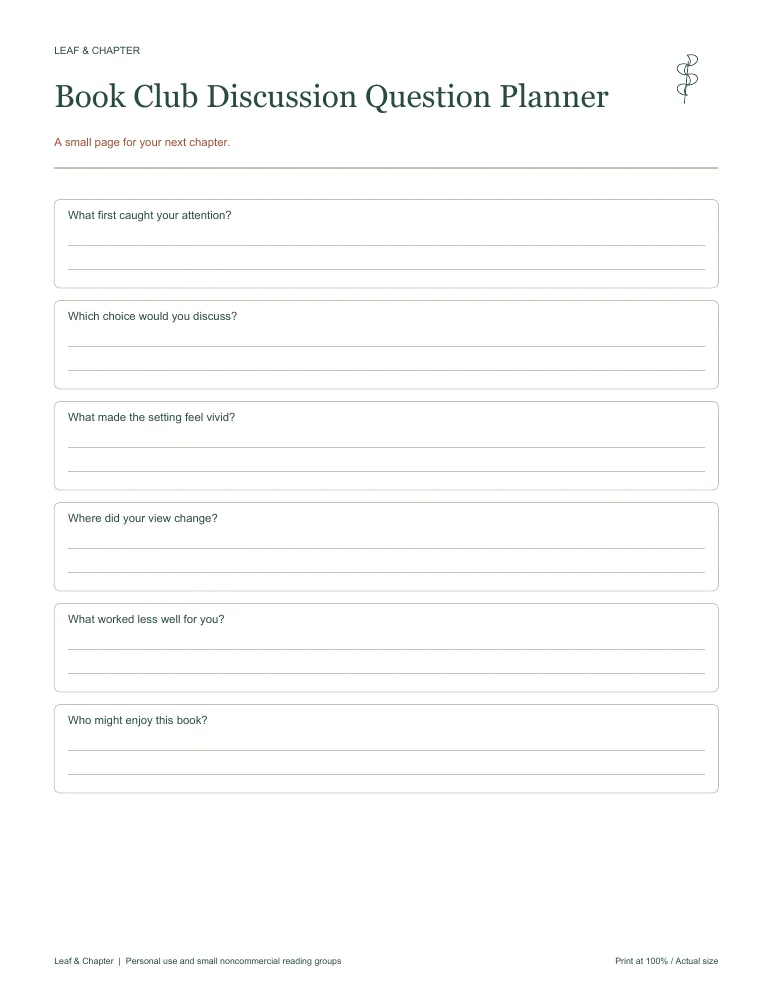
Choose a small set of open questions and note the chapters they involve. Prepare an easy opening prompt, a few questions about the book's choices, and a closing reflection. That is usually more useful than a lengthy script. Leave space on the planner for a point someone raises that you did not anticipate.
Check practical details once: enough seating, water, the online link, and any accessibility arrangements. If you are hosting remotely, test your microphone and joining instructions before the meeting. Avoid adding more activities simply because the page has room. A calm host and a clear question can do more than a complicated theme.
Welcome newcomers without putting them on the spot
At the beginning, explain the spoiler boundary and the basic discussion rhythm. Let members introduce themselves briefly, but do not require a long personal history. Tell people they may pass on a question. This is particularly useful for a first meeting, where nobody yet knows how quickly others speak or how informal the group will be.
If someone has not finished the book, make room for participation within the agreed boundary. They may have thoughtful observations about the opening or want to listen. If a few members take most of the airtime, invite other views without publicly scolding anyone. The planner can remind you of this intention before the room becomes busy.
Close with one clear next step
Reserve a few minutes for the next meeting date or the process for choosing the next book. Record the decision and who will send the update. If the group needs to vote later, specify the deadline. A vague 'we will figure it out' often creates more messages and more work for the organizer.
After the meeting, write one thing to keep and one thing to adjust. Perhaps the discussion needed more time, the start time was awkward, or a shorter opening round worked well. Download the planner below and reuse the structure for future gatherings. A small improvement each month is more manageable than reinventing your club every time.

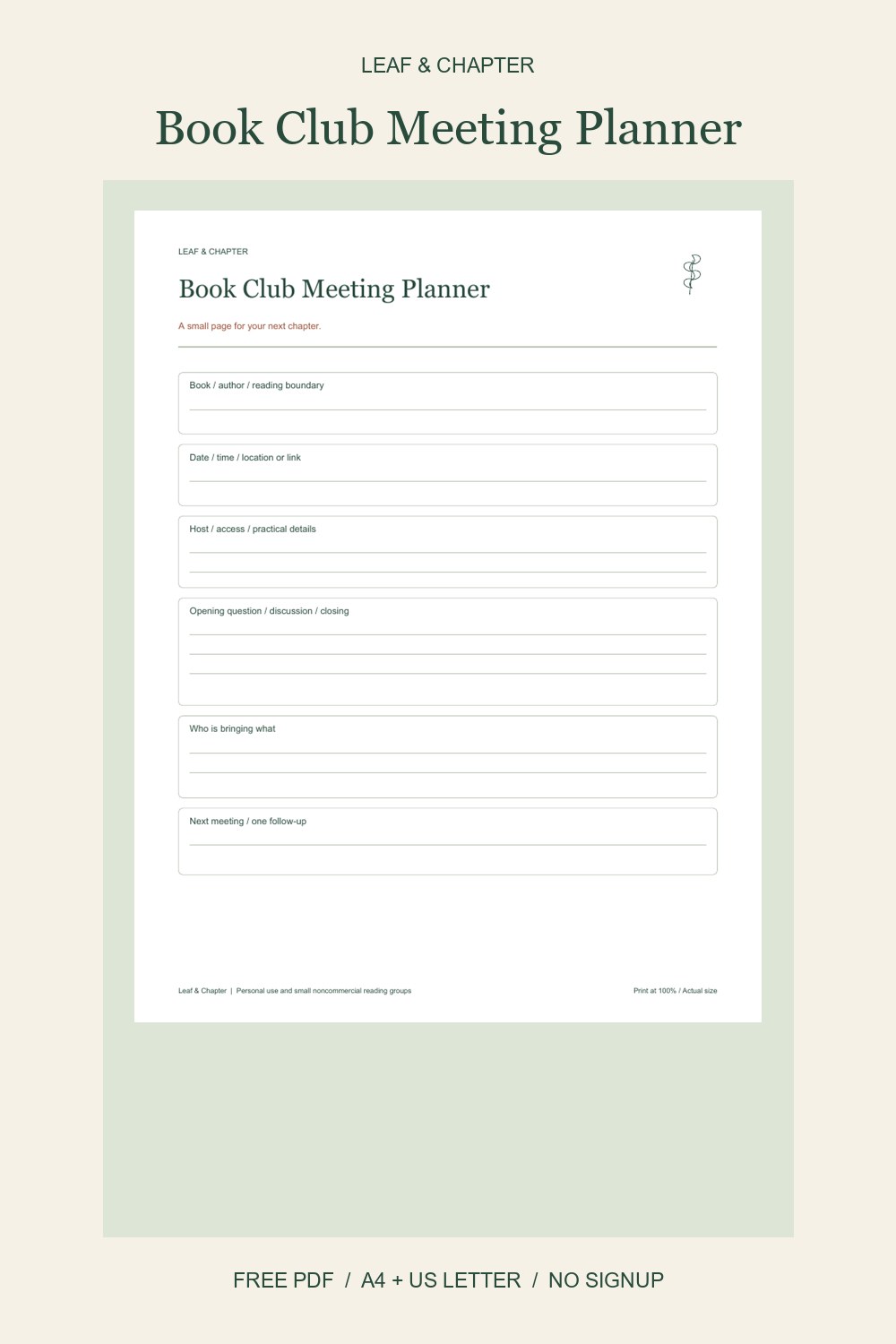
Book Club Meeting Planner
Choose the paper size that matches your printer. Both PDFs are free, undated, and made for personal use.
PDF format · No signup · Print at 100% / Actual size
Need a hand? Read the printing guide. These are print-and-write pages, not fillable forms. Personal-use license.
Save it for your
next bookish day.
Keep a link to this page so the printable is easy to find again.
Save to Pinterest ↗A few questions before you print
Do we need a formal agenda?
No. A short outline helps the host manage time, but members do not need a rigid schedule or a printed agenda.
What should happen if nobody finishes the book?
Agree on a spoiler boundary and discuss what people did read. You can reschedule a full-book conversation if the group wants one.