Choose paper that fits the way you read
Ordinary printer paper works if you want to try the design before committing to a whole sheet. For a bookmark you will use repeatedly, a slightly heavier paper usually holds its shape better. Check your printer's paper limits before buying cardstock. Some home printers feed heavy stock poorly, and a jam is a frustrating start to a simple project.
You do not need a glossy finish or special craft supplies. Matte paper is easy to write on, which is useful if you want to add a name or a short message to the back. If you prefer a softer bookmark that bends inside a small paperback, choose a lighter sheet rather than the thickest stock available.
Print one sheet before making a stack
Open the printable and check the page preview. Choose the paper size that matches your sheet, then use actual size or 100 percent when that setting is available. Printer menus vary, so inspect the preview for cropped edges before pressing print. If your printer cannot print near the edge, leave its usual margins in place.
Print one test sheet first. Check the colors, the size, and the amount of white space around each bookmark. A screen can make a gentle green look brighter than it does on paper. If the result feels too pale, inspect the printer's quality and ink settings instead of printing several disappointing copies at once.
Cut neatly without turning it into a craft project
Scissors are enough. Cut slowly along the outside edges, rotating the paper rather than bending your wrist around awkward corners. A paper trimmer is useful if you already own one, but buying a tool for one bookmark sheet is optional. Clear the table first so that loose scraps do not cover the next cutting line.
For young children, an adult can handle cutting or supervise with suitable scissors. Keep the finished shape simple. Rounded corners, punched holes, and ribbon are decorative choices, not requirements. A flat bookmark is often the easiest to carry and the least likely to catch on a book jacket or another item in your bag.
Give each bookmark a useful home
Keep one beside your reading chair and another in the bag you take to work or school. A small supply near your books reduces the chance that the nearest envelope becomes your next placeholder. If several people share a shelf, write a name on the back so bookmarks are easier to return.
Avoid adding bulky decorations that press against the pages. Thin ribbon can look lovely, but a large bead or thick knot may leave an uneven stack when the book closes. For valuable, fragile, or borrowed books, use a clean, dry, flat bookmark and follow any handling guidance from the owner or library.
Turn a spare bookmark into a thoughtful gift
Slip one into a book you are giving, or pair it with a note recommending a title. The message can be small and specific: a wish for a quiet afternoon, a reminder of a shared conversation, or an invitation to discuss the book later. You do not have to guess the recipient's favorite quotation.
A bookmark also works as a book-club welcome item. Put a blank name space on the back and let members personalize their own. Keep any decorative extras optional so that the activity stays inexpensive and easy to finish. Before distributing printables beyond personal use, check the download's use terms rather than assuming every free file permits resale.
Keep the useful part and skip the pressure
If your first cut is slightly crooked, the bookmark still knows where chapter seven begins. This is a practical reading accessory, not a test of crafting ability. Make the version that suits your supplies and your patience. You can always print another sheet later.
Use the download button below for the worksheet. Save the file somewhere you can find again, such as a reading-printables folder. If you enjoy matching pages, pair your bookmark with a reading tracker or book-review sheet. The goal is a small system that makes returning to your book easier, not a collection of stationery you feel obliged to complete.
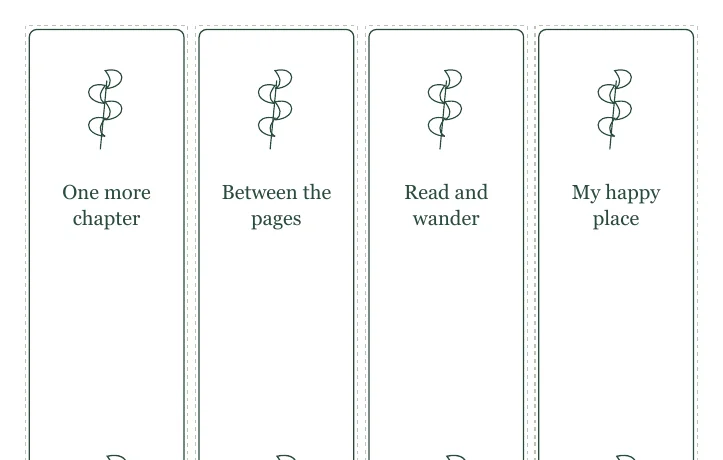

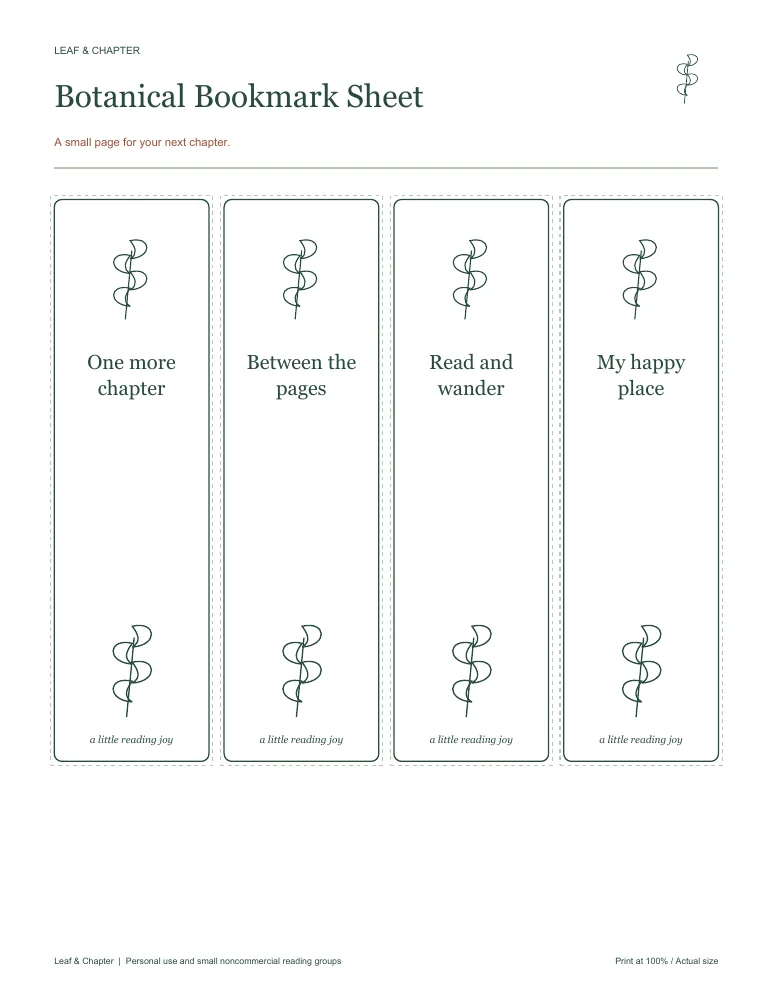
Botanical Bookmark Sheet
Choose the paper size that matches your printer. Both PDFs are free, undated, and made for personal use.
PDF format · No signup · Print at 100% / Actual size
Need a hand? Read the printing guide. These are print-and-write pages, not fillable forms. Personal-use license.
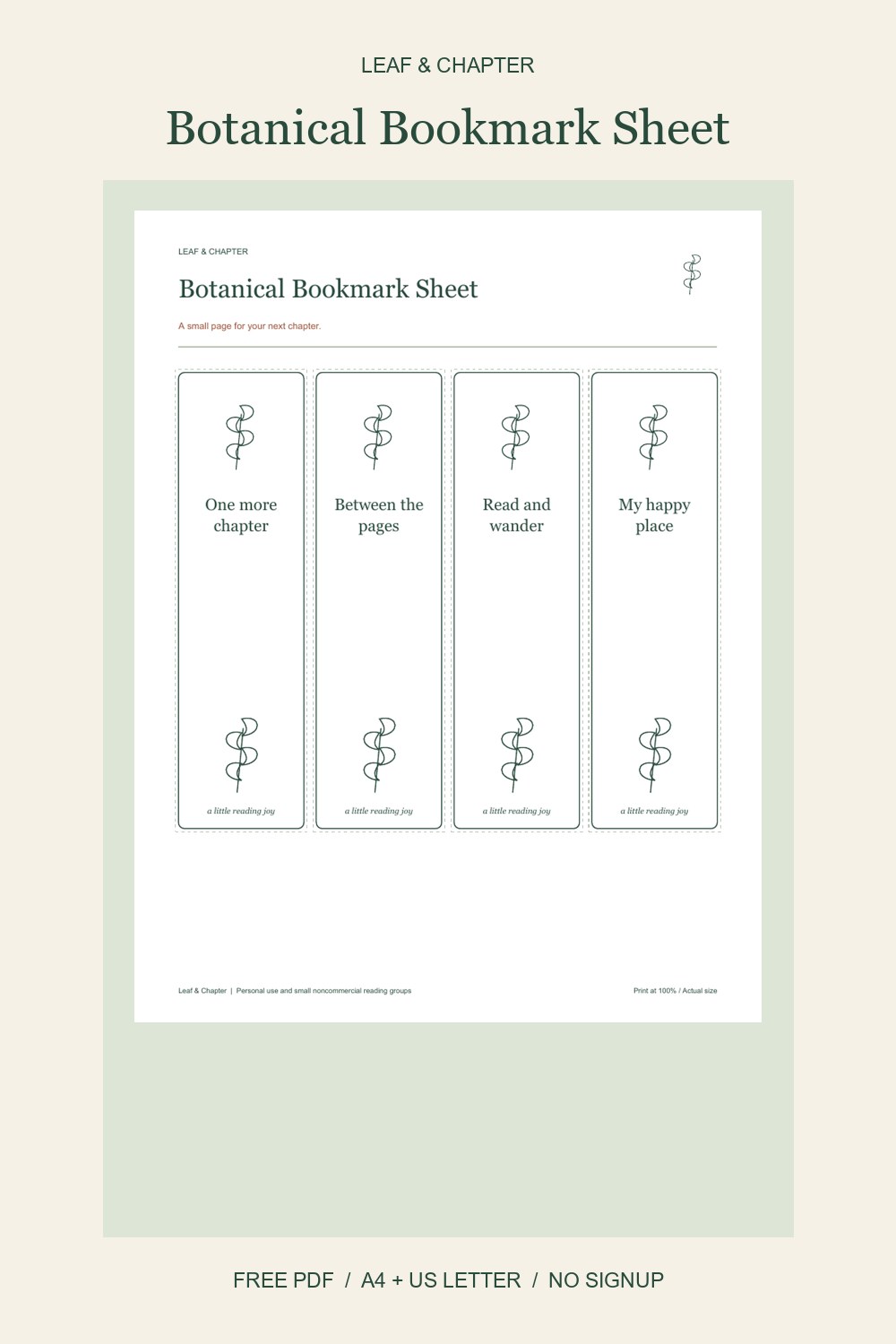
Save it for your
next bookish day.
Keep a link to this page so the printable is easy to find again.
Save to Pinterest ↗A few questions before you print
Do I need cardstock?
No. Printer paper works for a quick bookmark. A heavier sheet may last longer, provided your printer supports it.
Should I laminate the bookmarks?
That is optional. Lamination changes the thickness and finish. A plain paper bookmark is simpler and is usually enough for everyday reading.