Decide what one mark means
Before you start, choose a simple rule for the tracker. One box could mean one day you read, one reading session, or one chapter completed. These measure different things, so pick the one that answers your question. If you want to build a regular habit, a day-based mark is usually easier to understand than a count of chapters with very different lengths.
Write your rule in a spare space on the bookmark. A short note such as 'one mark per reading day' prevents confusion later. You can change the rule with your next book. There is no need to make every title comparable or turn a short novel and a long history book into equal units.
Start with the book you are already reading
Fill in the title and your start date if you know it. If you do not remember, write the date you began tracking. That honest starting point is more useful than guessing. You do not have to finish an old reading log before using a new one, and the tracker does not need to begin on a Monday.
Slip the bookmark into your current place. At the end of a session, make a small mark before closing the book. Keeping the action attached to something you already do makes it easier to remember. A pencil tucked nearby is helpful, though you can also update the tracker the next time you sit down.
Record enough to be useful
If you want a little more context, note the date and the page you reached. This can help you see whether you read more easily in short bursts or longer stretches. For ebooks and audiobooks, use chapter numbers, percentages, or listening time instead. Choose a single method within one book so the entries remain easy to interpret.
Do not crowd the bookmark with every detail of the session. A sentence about the weather, your mood, and each character belongs in a larger journal if you enjoy that kind of record. This printable is meant to stay compact. Its strength is that it can capture a useful detail in a few seconds.
Make room for pauses and abandoned books
An empty box does not mean you failed. Some weeks contain less reading, and some books take more attention than you can give them at the moment. Look for patterns without making accusations. If you repeatedly avoid a book, consider whether you need a different format, a shorter session, or a different book altogether.
If you stop reading, write 'paused' or 'stopped' with the date. Add a brief reason if it would help you choose future books. You can keep the bookmark inside the book for a possible return, or file it with your reading notes. A useful tracker records decisions as well as completions.
Use it for a buddy read without creating a race
For a shared read, agree on the discussion boundary separately from the number of tracker marks. Two people may read at very different speeds while still arriving at the same chapter by the meeting date. The bookmark should help each reader manage their own progress, not reveal who has accumulated the most sessions.
A small note space can hold one discussion question or a page reference you want to revisit. Avoid writing a major spoiler where another reader might see it before reaching that point. If you lend the book, remove your notes first or warn the borrower that the bookmark contains later-story details.
Print, trim, and keep it simple
Print the page on paper that your printer supports, check the preview, and cut around the bookmark outline. A sturdier sheet may be easier to write on repeatedly. Keep any ribbons or decorations thin so the bookmark lies comfortably inside the book. Make a single test copy before preparing several for a group.
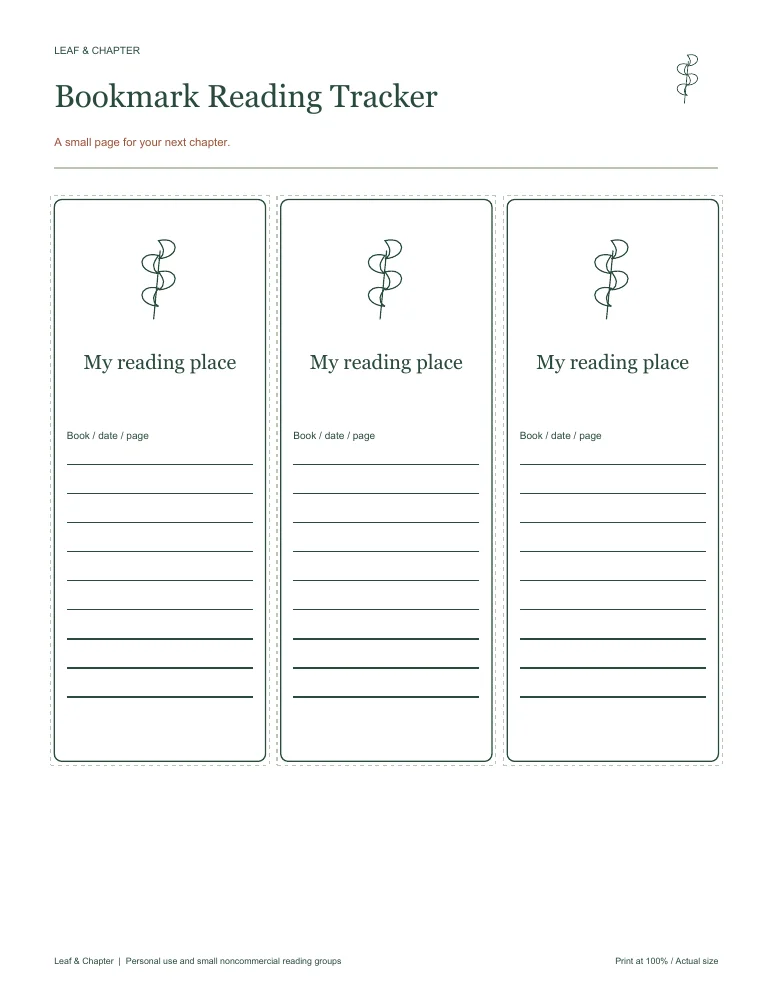
Download the tracker below and try it with one title. At the end, ask whether the record helped you return to the book or remember your progress. If it felt like a chore, simplify the rule. The best reading system is the one that leaves most of your attention available for reading.
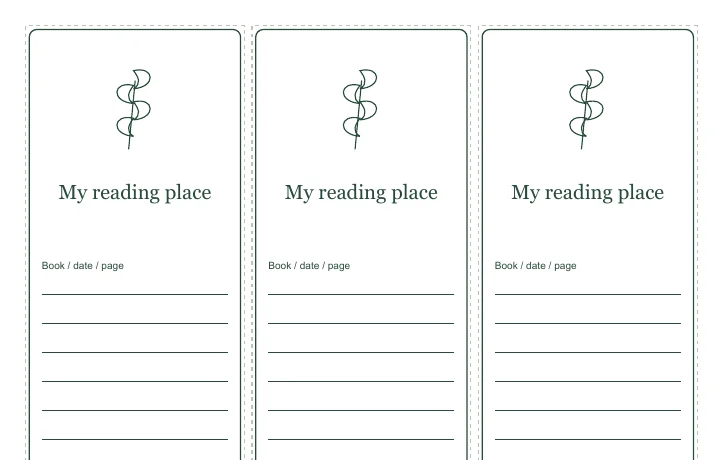

Bookmark Reading Tracker
Choose the paper size that matches your printer. Both PDFs are free, undated, and made for personal use.
PDF format · No signup · Print at 100% / Actual size
Need a hand? Read the printing guide. These are print-and-write pages, not fillable forms. Personal-use license.
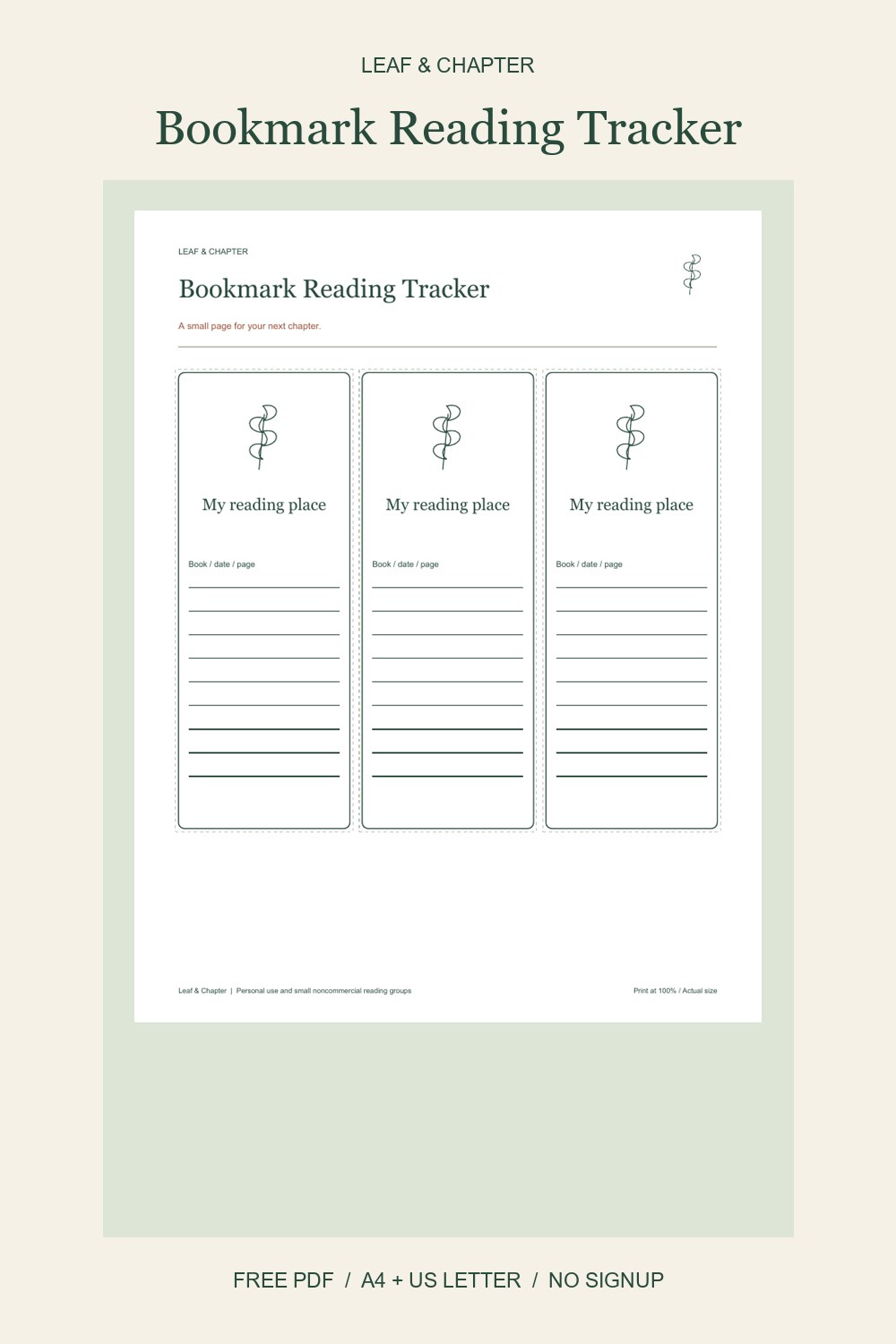
Save it for your
next bookish day.
Keep a link to this page so the printable is easy to find again.
Save to Pinterest ↗A few questions before you print
Can I use this with an audiobook?
Yes. Keep it nearby and use listening sessions, chapters, or minutes as your chosen unit.
What if I miss a day?
Leave that day unmarked. You can resume whenever you next read without catching up or inventing entries.