Explain how the answers will be used
Tell members that their responses will help guide book choices and meeting arrangements. Make it clear which questions are optional and who will see the answers. A small group may discuss preferences openly, while a larger club may prefer responses collected privately. Do not promise anonymity if names, handwriting, or a shared form will reveal the writer.
Collect only what you need. Favorite genres, preferred formats, comfortable book lengths, and meeting preferences are useful. A home address, birth date, or detailed personal history usually is not. If you keep completed questionnaires, store them sensibly and avoid sharing individual answers beyond the purpose members agreed to.
Ask about preferences without creating fixed labels
Invite members to name a few genres they enjoy and one they would like to try. Someone who usually reads mysteries may welcome a carefully chosen memoir. Include an open space for a recent book they liked and what worked about it. The reason often tells you more than the title: quick pacing, a strong setting, or an unusual point of view.
Allow 'not sure' and 'happy to try something new' as real answers. Reading tastes can change. Avoid turning the questionnaire into a permanent profile that determines every recommendation. Its purpose is to give the organizer a better first picture, not to decide what each person is allowed to enjoy.
Include access and time, not just genre
Ask which formats members can use: print, ebook, audiobook, or large print. Then check availability when considering a selection. A popular title may have a long library waiting list. A vote for a book does not automatically mean everyone can get a copy in time, so leave enough notice or consider another option.
Ask about a comfortable reading commitment rather than a required pace. A rough page range or a preference for shorter books can help, but page counts vary by edition and do not measure difficulty. Also ask whether members prefer a monthly meeting, a longer interval, or a book split across sessions. The answers may reveal a better schedule than the organizer first imagined.
Give members control over sensitive topics
You can ask whether members want advance information about certain content, with an optional space to name topics they would rather avoid. Do not ask why. People should not have to disclose a personal experience to have a preference respected. You may also invite them to contact the organizer privately if writing it on a shared sheet feels uncomfortable.
Be honest about the limits of screening. An organizer may miss a theme or disagree about how it appears. Use trustworthy content information when available and let members decide whether to participate in a particular read. A considerate club allows someone to skip a book without explaining their private reasons to the group.
Translate answers into a balanced shortlist
Look for repeated preferences and practical constraints. If several members need an audiobook, availability should become part of your selection process. If preferences split across genres, rotate rather than trying to find one book that satisfies every taste. Record the reasoning so the group understands how its feedback influenced the choices.
Do not confuse the loudest preference with the most common one. Summarize the responses before preparing a shortlist. Where possible, offer a small range with clear descriptions of length, format availability, and tone. The questionnaire informs the shortlist; it does not remove the need for a fair vote or a group conversation.
Revisit the questionnaire when the club changes
Use the printable when the club begins, when several new members join, or when the current format stops working. An annual refresh can also help. Ask what is going well alongside what people want to change. Otherwise, a survey may collect only complaints and miss the routines members value.
Download the worksheet below and adapt how you introduce it to the group. Give people enough time to respond, then share a brief summary of the decisions it helped shape. That final step matters. Members are more likely to offer thoughtful feedback when they can see that answering led to a useful adjustment.
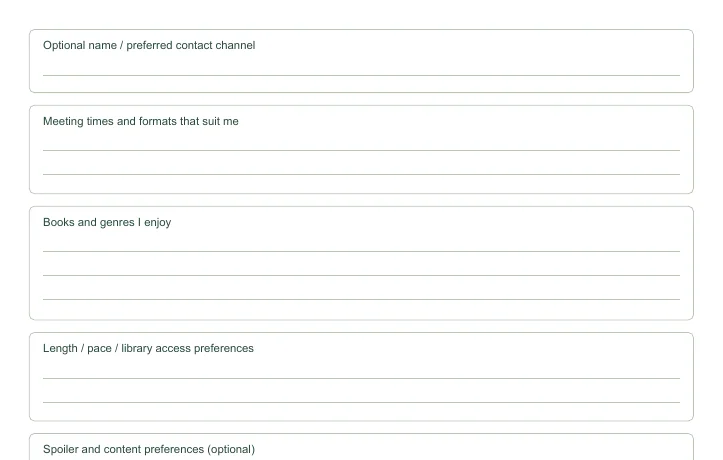

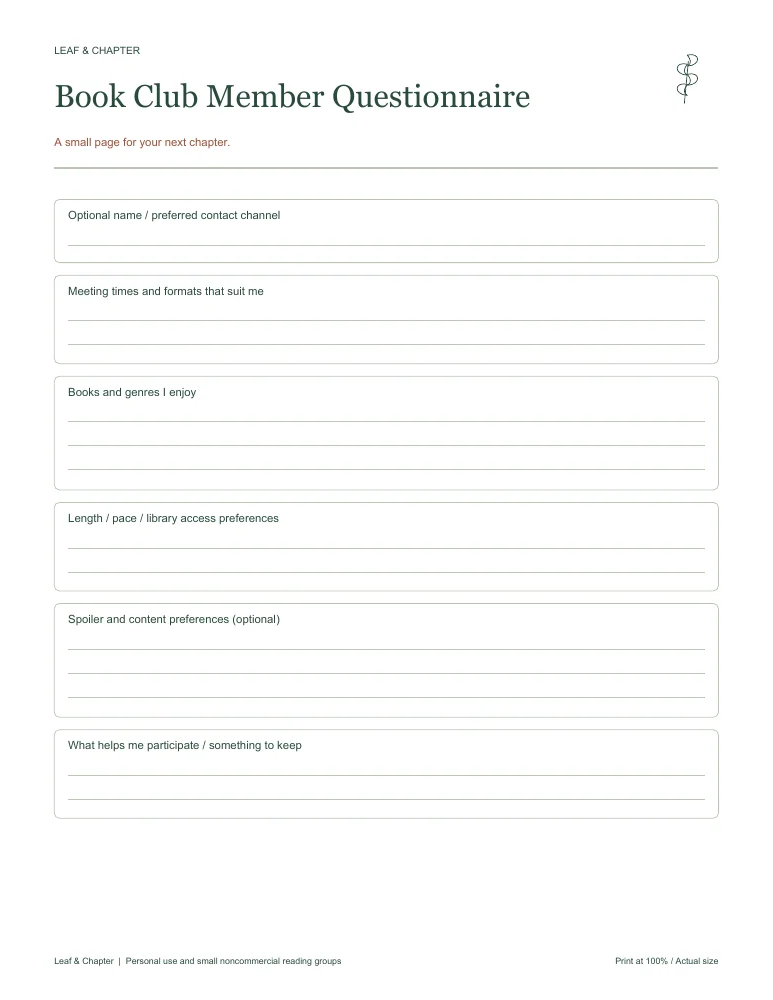
Book Club Member Questionnaire
Choose the paper size that matches your printer. Both PDFs are free, undated, and made for personal use.
PDF format · No signup · Print at 100% / Actual size
Need a hand? Read the printing guide. These are print-and-write pages, not fillable forms. Personal-use license.
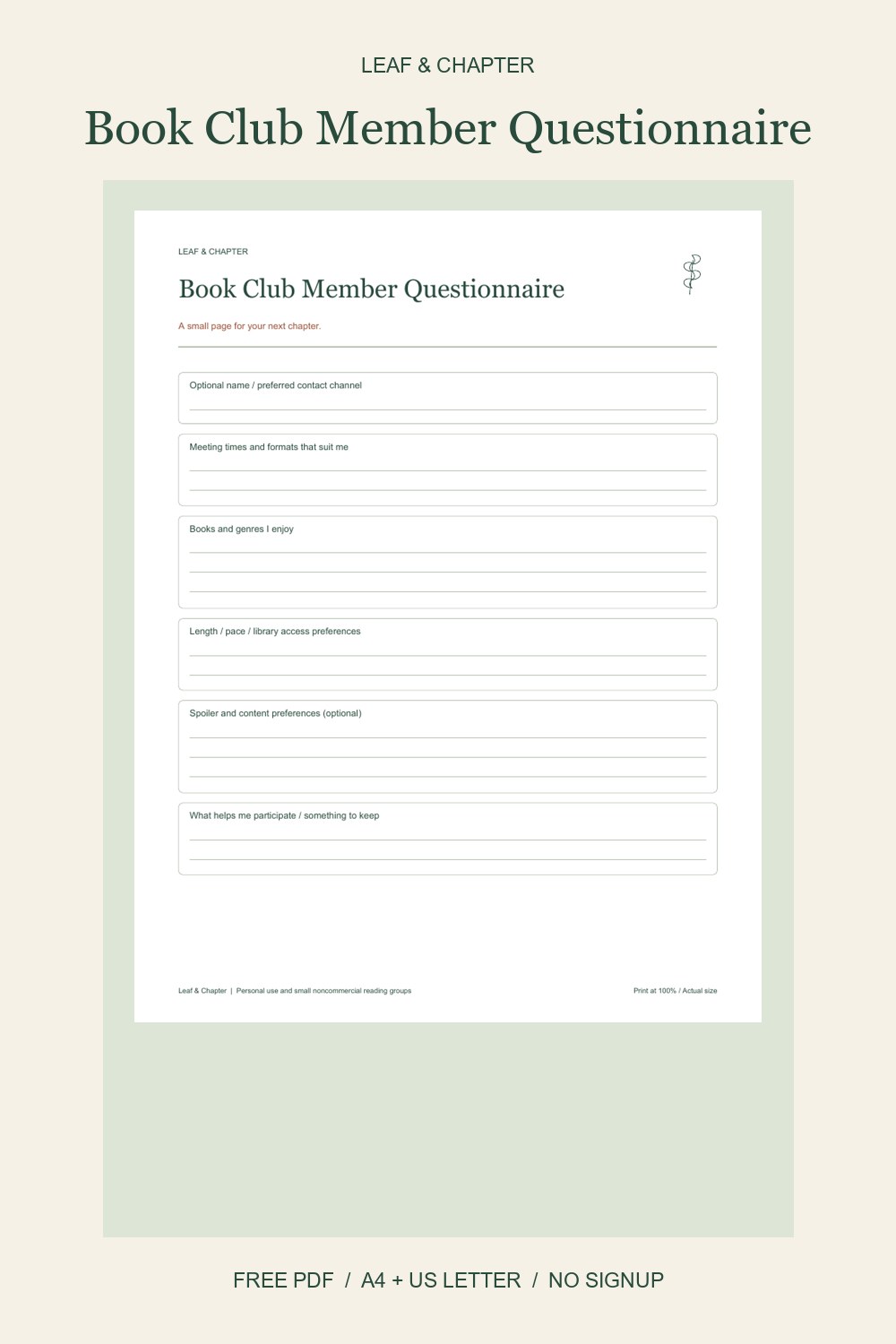
Save it for your
next bookish day.
Keep a link to this page so the printable is easy to find again.
Save to Pinterest ↗A few questions before you print
Should every question be required?
No. Keep personal or sensitive questions optional, and allow members to leave preferences open when they are unsure.
How often should we ask members again?
Use a refresh when membership or the meeting format changes. A yearly check can also catch preferences that have shifted.