Record the basics without turning them into homework
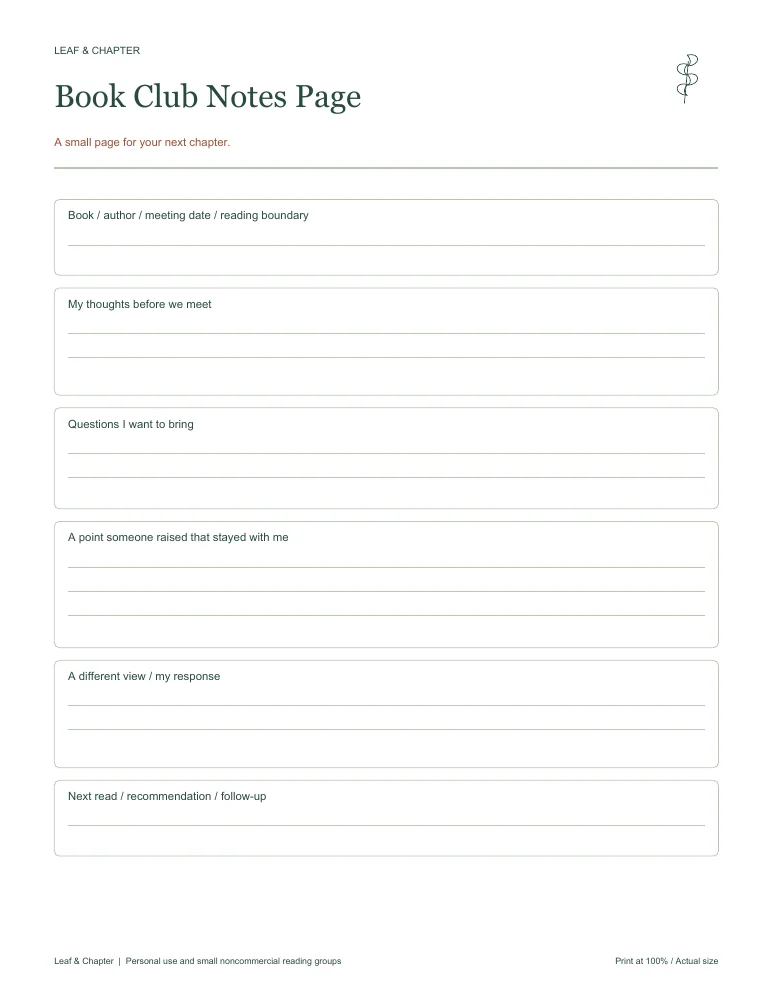
Start with the title, author, meeting date, and the format you used. Add the reading boundary if the club is discussing only part of the book. These details make the sheet understandable when you look back later. A month from now, 'the blue-cover novel' may not be enough to identify what you were reading.
You can include a rating if you enjoy them, but leave it blank until you are ready. A number is only one part of a response. Two books can earn the same rating for entirely different reasons. Use the rest of the page to explain what held your attention, where you struggled, and what you want to ask.
Catch reactions as you read
Write a brief note when something stands out. A few words such as 'unexpected sympathy in chapter four' may be enough to restore the thought later. Add a chapter or page reference when useful. Editions vary, so a chapter reference can help the whole group locate the moment even when your page numbers differ.
Choose a small number of observations rather than stopping constantly. Reading can lose its rhythm if every paragraph becomes a note-taking opportunity. You might record one surprising choice, one question, and one detail you want to revisit. If a scene contains a major spoiler, mark the note clearly so you do not introduce it outside the discussion boundary.
Separate the book's choices from your expectations
A useful note might begin with what you expected and then describe what happened instead. Perhaps you anticipated a fast mystery and found a slower character study. That difference can explain your response without claiming the book objectively failed. The group may reveal that another reader wanted exactly the thing you found frustrating.
For nonfiction, distinguish a claim you disagree with from evidence you found incomplete or hard to follow. Note the reason rather than only writing 'unconvincing.' You do not need to settle the issue before the meeting. A specific uncertainty can open a richer conversation than a firm verdict with no explanation.
Bring questions that invite other readings
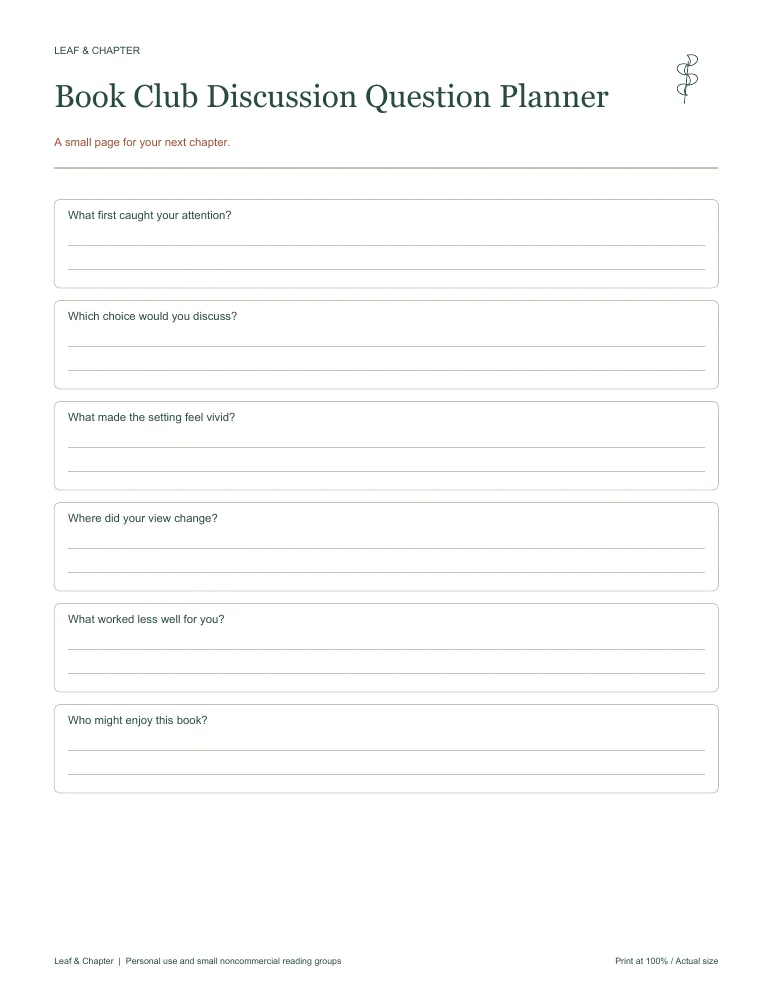
Turn an observation into an open question. 'I did not understand this decision' can become 'What do you think made this choice possible?' A question about pacing can ask which section others would shorten or expand and why. Leave room for a response that challenges your first interpretation.
Choose two or three questions you actually care about. You are not responsible for supplying the whole meeting unless you agreed to lead it. If another member raises your question first, listen rather than waiting to repeat your prepared version. The sheet is a support for participation, not a script you need to complete.
Use the meeting space for what changes
During discussion, note an idea you had not considered or a detail someone helped you connect. You do not have to record every speaker's point. A short phrase in your own words is usually enough. Avoid writing down another member's private story unless they explicitly want it included in a shared record.
If your opinion changes, add the new view beside the original one instead of erasing the earlier response. That gives you a more honest picture of the discussion's effect. You may also decide that your view stayed the same but you understand a different reading better. Both are worthwhile outcomes of a thoughtful meeting.
Keep a record you will want to revisit
After the gathering, write a sentence about who you might recommend the book to or what you would read next because of it. File the sheet with your reading journal, or keep only the notes that still feel useful. There is no requirement to preserve every page forever.
Download the notes template below and print one copy for your next selection. Write directly on the paper with your preferred pen or pencil. If you want a group record, agree on what will be shared and keep personal reading notes separate. A private response and a meeting summary serve different purposes, even when they begin on similar pages.
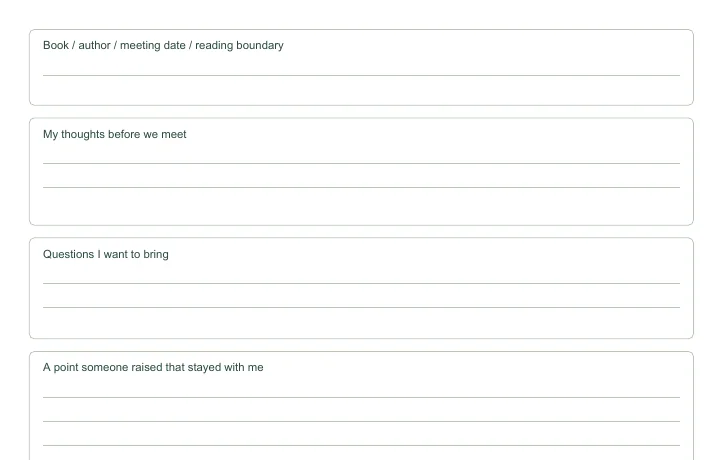

Book Club Notes Page
Choose the paper size that matches your printer. Both PDFs are free, undated, and made for personal use.
PDF format · No signup · Print at 100% / Actual size
Need a hand? Read the printing guide. These are print-and-write pages, not fillable forms. Personal-use license.
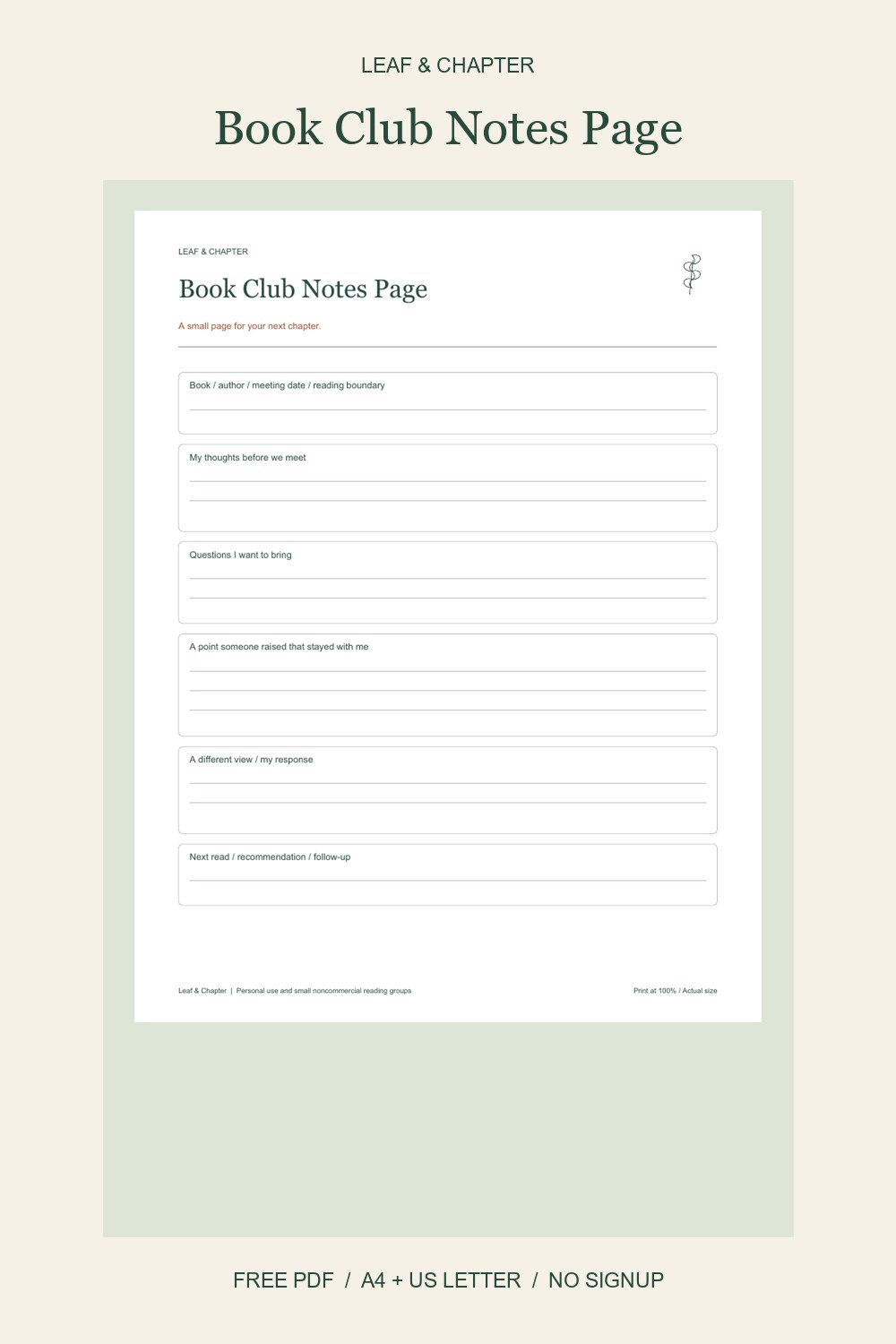
Save it for your
next bookish day.
Keep a link to this page so the printable is easy to find again.
Save to Pinterest ↗A few questions before you print
Do I need to take notes while reading?
No. You can fill the sheet after finishing or immediately before the meeting. Brief notes during reading are optional.
Can I use it for a book discussed in sections?
Yes. Write the agreed chapter boundary and use a fresh page for each meeting if you need more space.