Start with the meeting and work backward
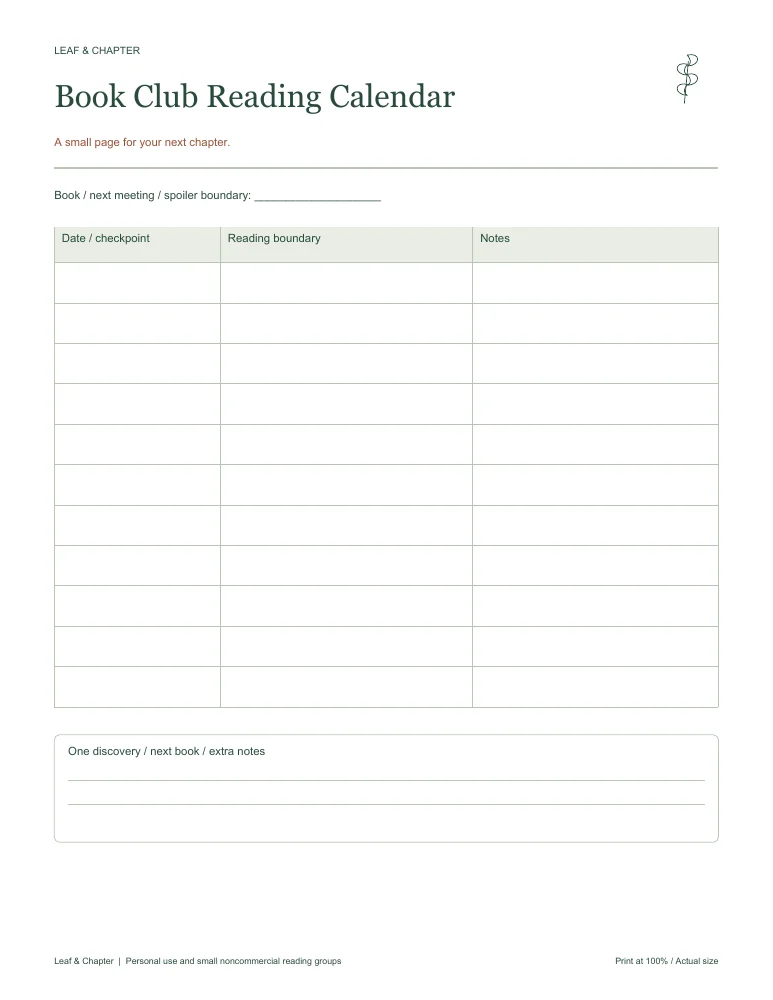
Write the meeting date, time, and location first. Then choose a reasonable period for getting the book and reading it. Check the length and availability before agreeing on the title. A widely available short novel may be easier to coordinate than a new release with a long library queue. If the group is meeting online, include the joining details in your usual private communication channel. The printed calendar should hold the useful outline, while personal contact information and access links stay where the group normally manages them.
Make the book choice clear
Record the full title and author so people do not borrow a similarly named book. Add any relevant edition note, especially for collections, translations, or books with optional sections. Decide whether audiobooks and ebooks are welcome; a flexible group can usually accommodate both. If someone suggests a title, ask about access as well as enthusiasm. Members may have different budgets and library options. Before finalizing, offer a brief window for people to raise practical concerns. A book that everyone can get is a better shared choice than an impressive but inaccessible selection.
Use checkpoints only when they help
Some clubs like a halfway check-in; others prefer one meeting after the whole book. If you use a checkpoint, choose a chapter or section title rather than a page number because editions differ. Mark whether spoilers are allowed at each conversation. A short message about how reading is going can be enough without another scheduled gathering. Keep checkpoints optional if the group prefers independent reading. The calendar should clarify the plan, not create extra attendance requirements that make a pleasant club harder to keep up with.
Give the host a small preparation list
Record who is hosting, who is opening the discussion, and whether anyone is bringing something. If those tasks rotate, note the next person rather than relying on memory at the end of a busy evening. Keep refreshments simple and avoid making hosting depend on elaborate food or decorations. The discussion leader can prepare a few open questions about characters, choices, and reactions. There is no need to prepare a lecture. A welcoming first question gives members a way into the conversation even when their responses to the book differ.
Handle unfinished reading openly
Agree in advance whether members who have not finished should still attend and what spoiler rules apply. Some groups welcome everyone but announce when the ending will be discussed. Others begin with a spoiler-light conversation before moving on. Write the approach on the planning sheet so nobody has to guess. Avoid calling on people to account for their progress. A member can participate by sharing an impression of the opening or listening. Clear expectations make the meeting easier for both finished readers and people who need more time.
Close the meeting with the next practical step
Before everyone leaves, confirm the next meeting date or the date by which it will be chosen. You can also shortlist the next book and assign someone to check availability. Do not rush a final title choice if the group needs time to consider options. On the calendar, add a short note about what worked, such as the discussion length or a useful checkpoint. Keep that note practical rather than rating the members. Over time, these small observations help the club settle into a rhythm that suits the people who attend.
Keep one clear version of the plan
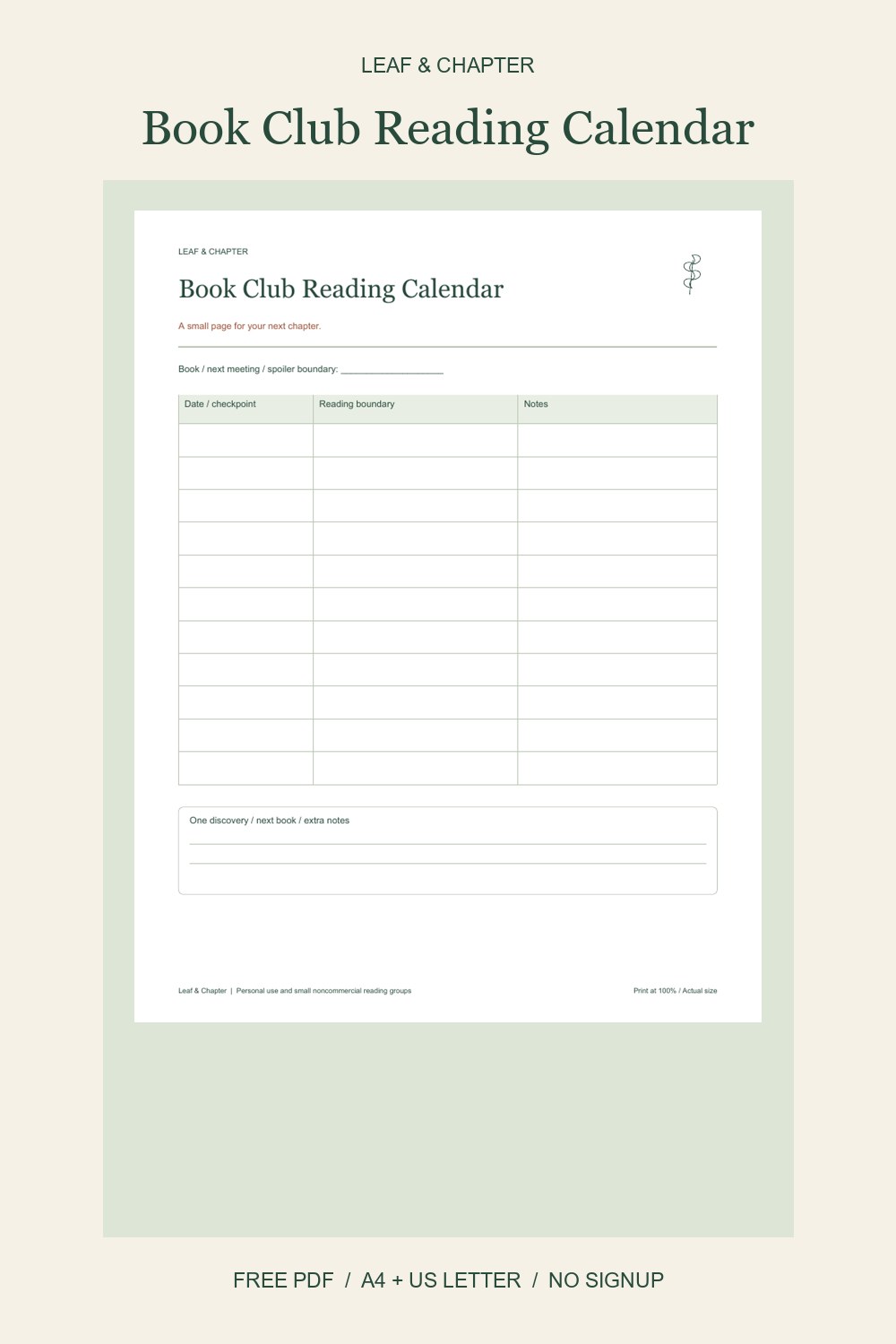
Print the undated calendar in your chosen paper size and fill the details in pencil until they are confirmed. Share the agreed information through the group's usual channel so members who do not use printouts still receive it. If a date changes, update that shared message as well as your paper copy. A printed sheet is useful for the host, but it should not become a competing source of information. Save the completed page with the book-club notes if you want a simple record of past selections and meetings.
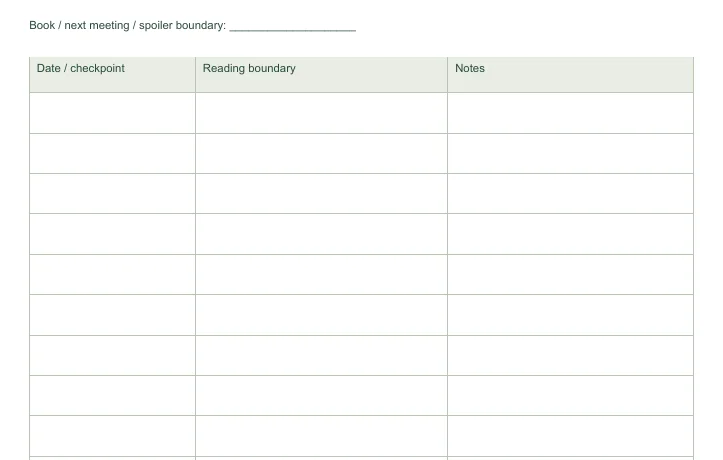

Book Club Reading Calendar
Choose the paper size that matches your printer. Both PDFs are free, undated, and made for personal use.
PDF format · No signup · Print at 100% / Actual size
Need a hand? Read the printing guide. These are print-and-write pages, not fillable forms. Personal-use license.
Save it for your
next bookish day.
Keep a link to this page so the printable is easy to find again.
Save to Pinterest ↗A few questions before you print
Should the club use page numbers for checkpoints?
Chapter or section names are usually clearer when members use different editions. Add a page number only as a secondary guide.
Can members attend without finishing?
Yes, if that fits your club. Agree on spoiler rules beforehand so everyone knows what the meeting will include.