Decide how much food the meeting actually needs
Consider the time of day and length of the gathering. A short afternoon discussion may only need drinks and a few snacks. A meeting scheduled over dinner needs a clear message about whether members should eat beforehand. Do not leave guests guessing whether a bowl of crackers is intended to replace a meal.
Write the expected attendance and the type of refreshments on the planner. Keep the menu modest unless the group actively wants a meal-based event. Hosting a book club should not require several hours in the kitchen. A simple spread also makes it easier to share tasks and repeat the arrangement next month.
Ask about dietary needs before assigning dishes
Invite members to share allergies or other dietary requirements privately if they prefer. Use that information to discuss suitable options with the people bringing food. Ingredient labels are helpful, but they do not guarantee that a food is safe for someone with an allergy. Preparation and cross-contact also matter, so let the person decide what they are comfortable eating.
Keep packaged labels available when possible. For homemade dishes, ask contributors to provide an ingredient list and be candid about what they know. If safe preparation cannot be assured, an attendee may prefer to bring their own food. Welcome that choice without making it awkward or presenting it as a failure to participate.
Assign specific contributions rather than vague categories
Give each volunteer a clear item or role. One person can bring fruit, another a savory snack, and another drinks or cups. Record the contributor beside the item so the host can spot gaps. If several people offer the same thing, suggest alternatives politely rather than accepting everything and buying the missing basics yourself.
Make contributions optional and consider cost. Members can help with setup or cleanup instead of purchasing food. If the group shares expenses, agree on that arrangement before shopping. An informal expectation to bring an impressive dish can discourage attendance, especially when someone is busy or working within a tight budget.
Choose snacks that suit a discussion table
Think about ease of serving and eating. Food that requires a knife, several sauces, or balancing a full plate may distract from conversation. Small portions and separate serving utensils can be easier to manage. Keep napkins nearby, and place food away from borrowed books, notebooks, and electronic devices.
If the group enjoys a theme inspired by the setting, treat it as a light suggestion rather than a historical accuracy project. You can use a color, season, or general mood without recreating a complex dish from the story. Avoid claiming that a themed menu represents a culture authentically unless you have done the appropriate research.
Plan storage and serving, not just shopping
Check whether a dish needs refrigeration, heating, or particular serving conditions before someone brings it. Follow package instructions and current food-safety guidance for storage and handling. A crowded table is not a reason to leave perishable food out indefinitely. When uncertain about an item's safety, do not offer it to guests.
Write down the plates, cups, utensils, serving tools, and space needed. This catches the common problem of having refreshments without a way to serve them. Keep water easy to reach. For an outdoor meeting, consider weather, insects, and access to handwashing rather than assuming the indoor plan transfers unchanged.
Make cleanup part of the plan
Set aside a place for used cups and plates so the host is not gathering them from every surface afterward. Ask one or two willing members to help restore the space. If there are leftovers, follow appropriate storage guidance and check with the contributor before dividing their food into take-home portions.
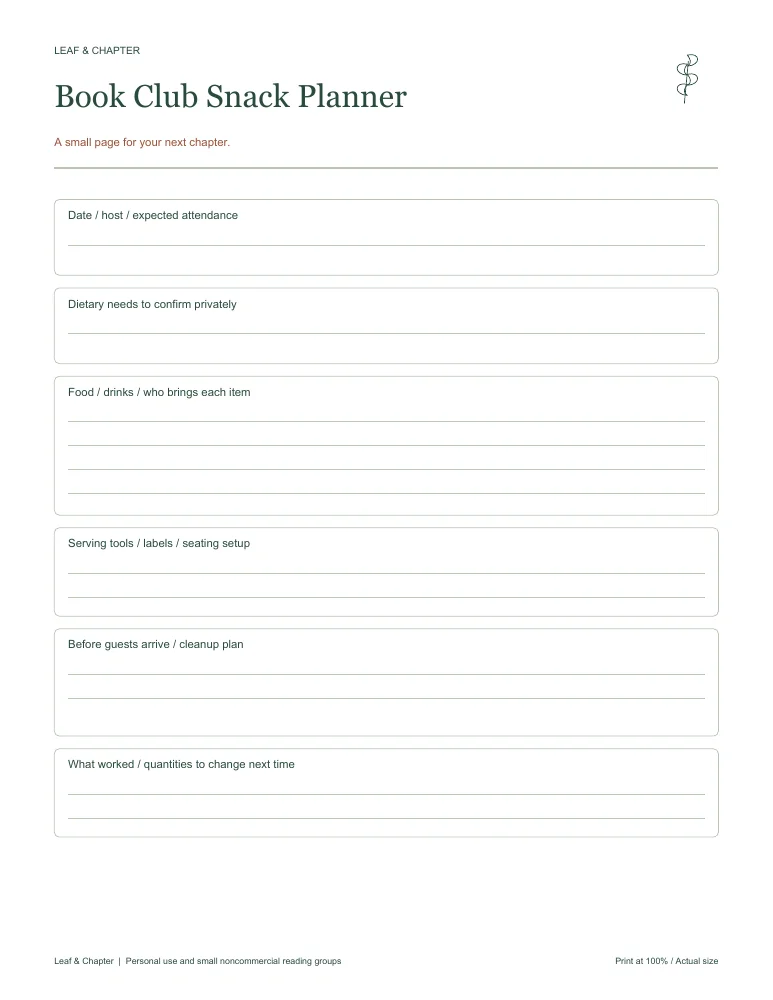
Download the snack planner below and fill only the fields you need. After the meeting, note what was useful and what remained untouched. Adjust quantities next time instead of repeating the same overfull spread. The aim is a comfortable gathering where refreshments support the conversation and nobody leaves exhausted by the catering.
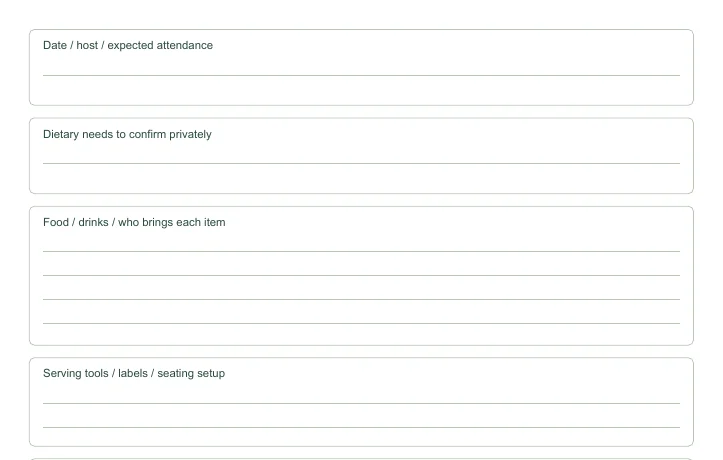

Book Club Snack Planner
Choose the paper size that matches your printer. Both PDFs are free, undated, and made for personal use.
PDF format · No signup · Print at 100% / Actual size
Need a hand? Read the printing guide. These are print-and-write pages, not fillable forms. Personal-use license.
Save it for your
next bookish day.
Keep a link to this page so the printable is easy to find again.
Save to Pinterest ↗A few questions before you print
Does every member need to bring food?
No. Contributions can be optional, and helping with setup or cleanup is another way to participate.
Are ingredient labels enough for allergies?
No. Labels do not address every preparation or cross-contact issue. Ask affected members what arrangements they need and let them decide what to eat.