Define what guests should bring
Tell guests how many books to bring and what condition is acceptable. A clean, readable copy with ordinary wear is different from a damaged or incomplete book. Ask people to bring books they own and are ready to give away. Library books and borrowed copies should never enter the swap unless their owner has explicitly agreed.
Choose whether the event accepts every genre or has a focus, such as adult fiction, children's books, or a particular book-club audience. Mention any exclusions in the invitation rather than making a guest discover them at the door. A small, specific exchange may be easier to browse than a large mix with little overlap in interests.
Pick a choosing system that matches the group
For a small party, one choosing round at a time can work well. Guests draw a number for the first round, then reverse the order for the next. Each person selects one book per turn. Another option is one swap token per book contributed, with a stated limit. Write the rule down and explain it before browsing begins.
Decide whether guests may participate without bringing a book. A welcoming event can reserve extra contributions for newcomers or let people join after the first round. The important thing is clarity. Do not change the system halfway through because someone brought a larger stack or because a popular title creates competition.
Arrange the table so browsing is easy
Group books loosely by genre or audience and leave enough space to see the covers. If you have many copies, separate duplicate titles rather than stacking them out of sight. Provide a small area for guests to set down bags so that books selected during a round do not get mixed back into the available pile.
Invite contributors to add a short recommendation card with a spoiler-free reason they liked the book. 'A patient story with a vivid setting' tells another reader more than 'amazing.' These cards should be original notes, not copied publisher descriptions. They are optional, and a guest should not feel obliged to defend a book they no longer want.
Keep recommendations welcoming and spoiler-free
Offer a brief introduction round where each person can mention one contribution. Limit it to a sentence or two if the group is large. Encourage descriptions of tone, pace, and broad themes without revealing plot turns. Guests can also say which reader might enjoy it, while leaving room for someone to choose outside their usual taste.
Avoid treating unchosen books as rejected personal opinions. Someone may already own the title, prefer another format, or simply want something different today. A swap is not a contest for the most popular contributor. The host can keep the atmosphere light by directing attention toward discovery rather than how quickly each person's books disappear.
Decide what happens to the leftovers
Ask contributors whether unclaimed books should go home with them or can be donated. Do this before the event ends. Do not assume every donation point accepts every kind of book; check the recipient's current guidelines first. A charity shop, community shelf, or school may have specific condition, subject, or quantity limits.
Assign one person to handle any agreed donation and record the plan on the worksheet. Without an owner, the leftovers tend to become the host's permanent responsibility. If no suitable destination is confirmed, returning books to contributors is a sensible fallback. A clean ending is part of a well-organized exchange.
Leave guests with a next chapter
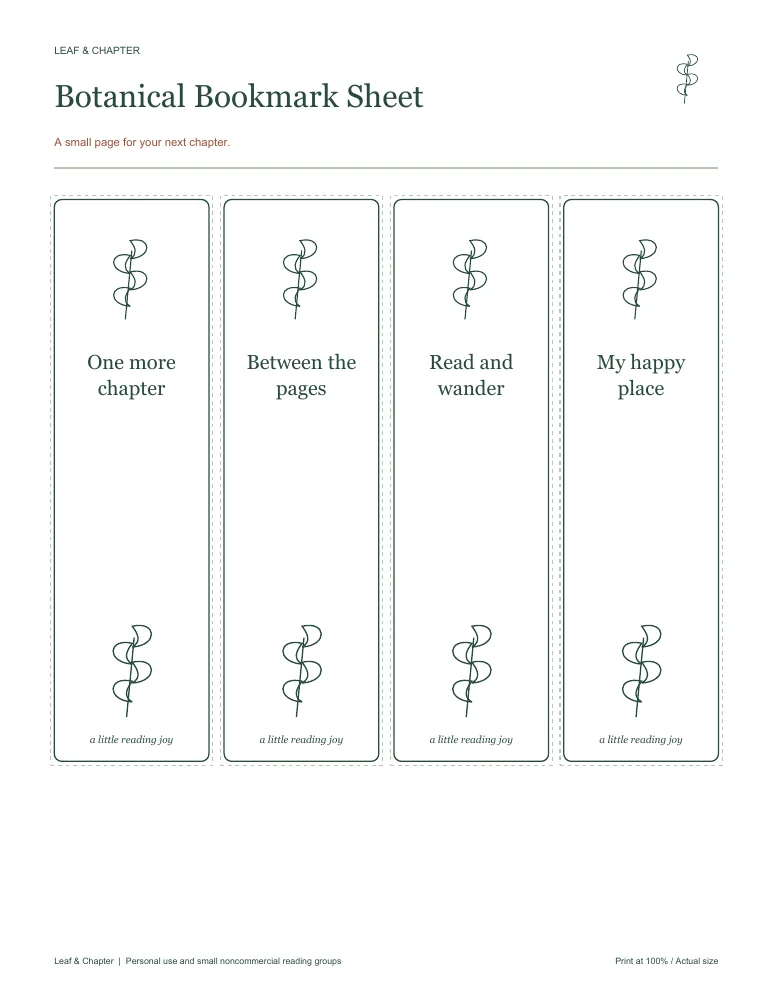
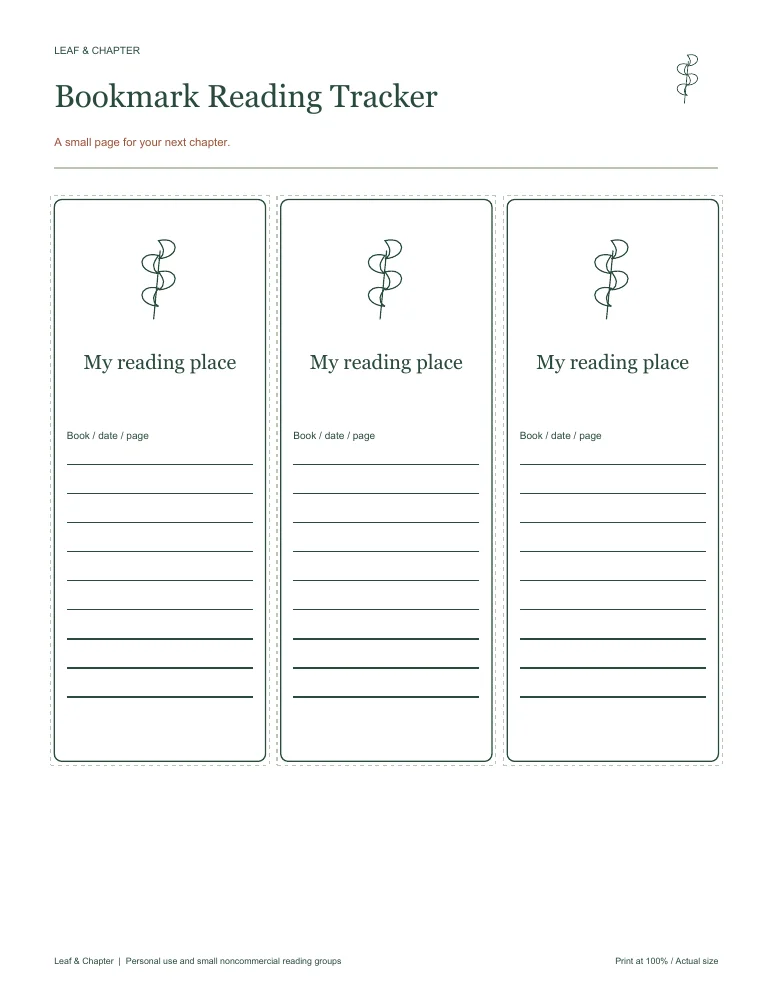
Before people leave, invite them to share what they selected and why it caught their attention. They can take a bookmark or a reading tracker with the book if you have spare copies. Avoid collecting promises to finish every selection. Taking a chance on an unfamiliar title is enough.
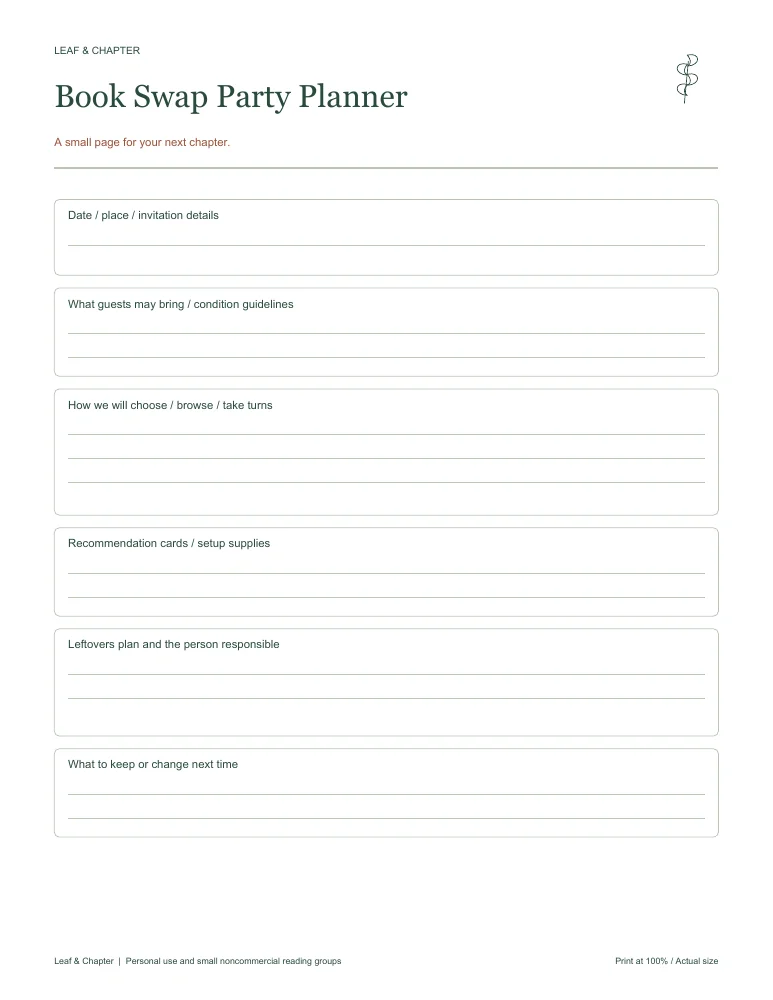
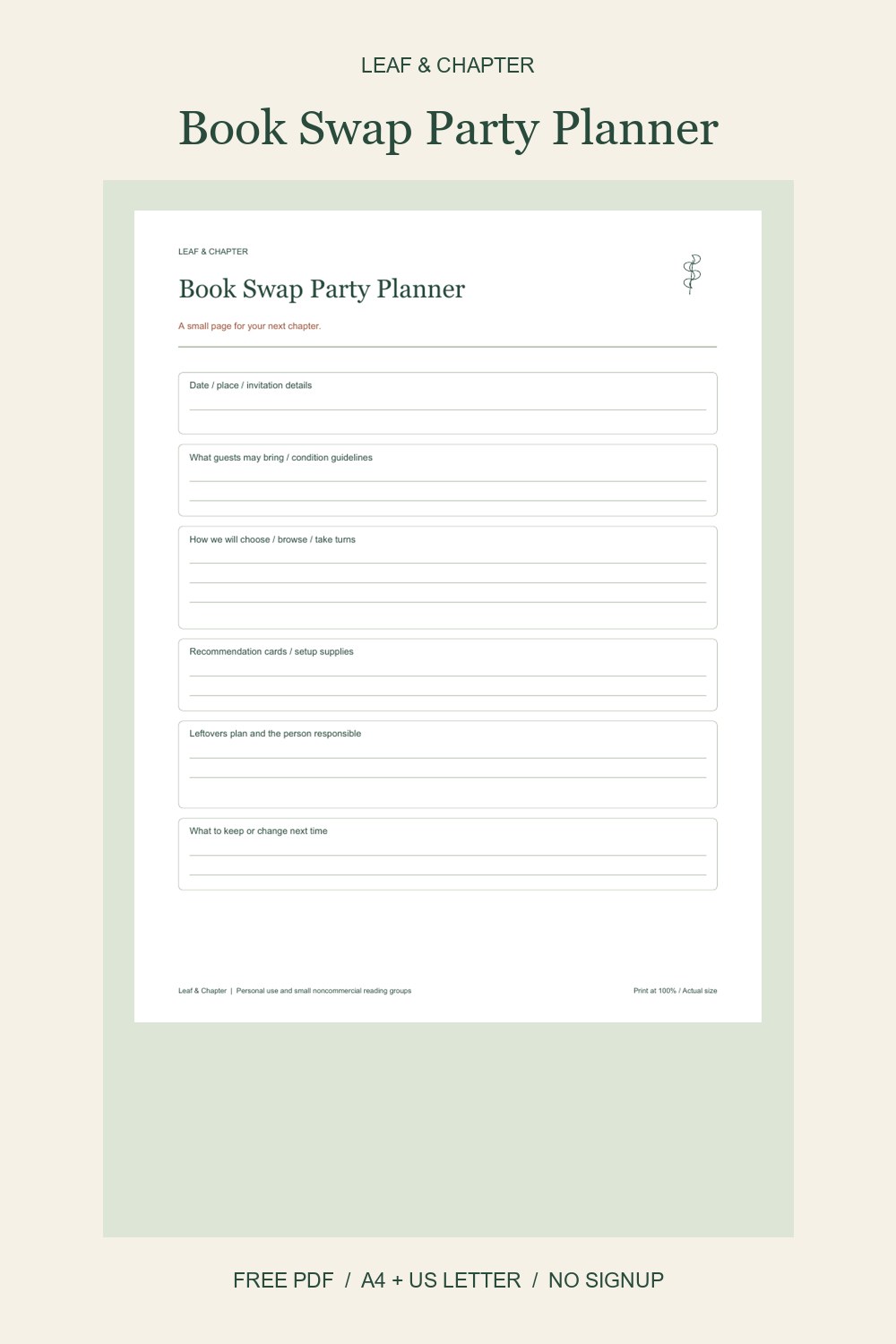
Download the planner below to record the invitation details, exchange rules, table setup, and leftover plan. Afterward, note whether the choosing rounds felt fair and whether the quantity was manageable. Use those notes if you repeat the event. A successful swap sends books toward interested readers without creating unnecessary pressure for the host or guests.
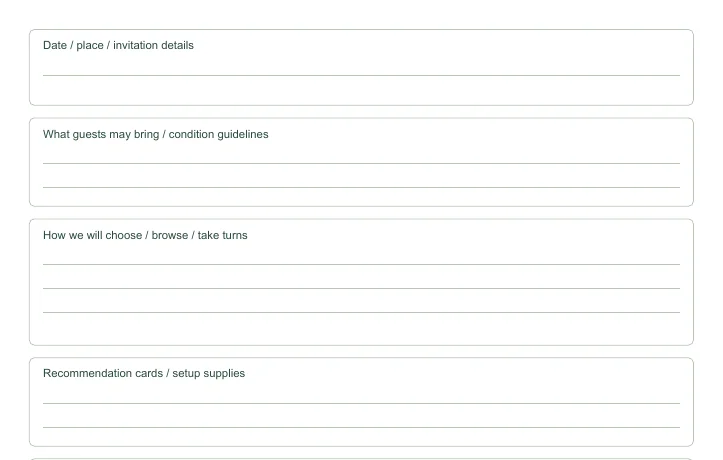

Book Swap Party Planner
Choose the paper size that matches your printer. Both PDFs are free, undated, and made for personal use.
PDF format · No signup · Print at 100% / Actual size
Need a hand? Read the printing guide. These are print-and-write pages, not fillable forms. Personal-use license.
Save it for your
next bookish day.
Keep a link to this page so the printable is easy to find again.
Save to Pinterest ↗A few questions before you print
How many books should each guest bring?
Set a small limit that fits your space, such as one to three books. State it in the invitation so expectations are consistent.
Can guests take more books than they bring?
Yes, if your announced rules allow it. You might open remaining books to everyone after the initial choosing rounds.