Decide what kind of evening you want
Choose between a shared read-aloud, quiet individual reading, or a mix of the two. A short shared beginning followed by separate books is often an easy arrangement. Write the plan in a sentence so everyone knows what to expect. You do not need a full evening to make the idea worthwhile. Pick a length that feels comfortable for the people involved, and allow anyone to pause earlier. Keep the plan focused on spending time around books rather than completing a chapter or reaching a reading target.
Let each person have a real choice
Offer a small selection of books and let people bring their own. Different formats can sit together: picture books, comics, novels, poetry, and audiobooks do not need separate permission. If you are reading aloud, choose something the listeners want to hear rather than a book chosen only for its reputation. For a shared family choice, read a sample first. Consider the interests and ages of the participants, and check unfamiliar material before the evening. A book that suits one person may not suit everyone at the table.
Prepare the space with fewer moving parts
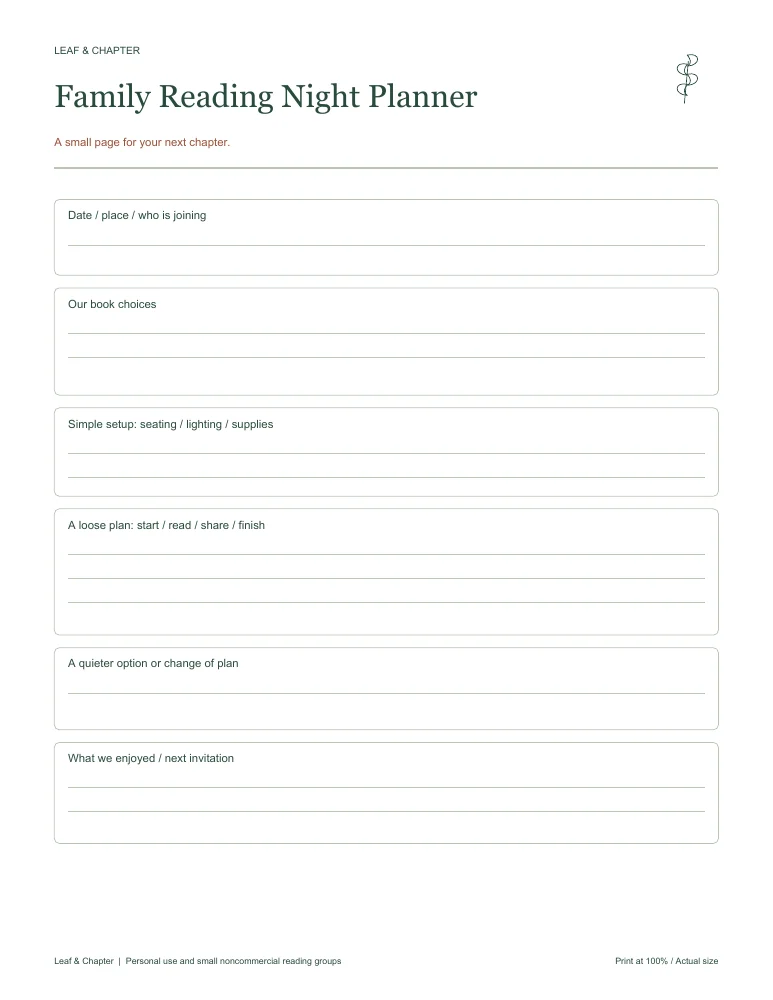
Choose a spot with enough light and comfortable seating. Put books, a few bookmarks, and any needed glasses or headphones within reach. If you include a snack, select something easy to manage around paper and agree on where it will be eaten. You can make the evening feel special without a themed display or a shopping list. Use what you already have. Write any small preparation tasks on the planner so they are done before people settle in, rather than interrupting the first few pages.
Use a loose sequence instead of a strict schedule
Plan an opening moment, a reading stretch, and an optional closing conversation. The opening might be showing the books everyone chose. The reading stretch can include quiet time, reading aloud, or listening. For the closing, ask one easy question: what caught your attention, or which part would you like to share? Avoid asking everyone to summarize the plot or prove they listened. Someone may prefer to show an illustration, read a favorite line from their own copy, or simply say they would like more time with the book.
Plan for different levels of interest
Have an alternative quiet activity available for anyone who does not want to keep reading. A person can stay nearby without being required to finish a story. If a read-aloud loses its audience, stop at a natural point and save the rest for another time. Let listeners ask questions, but do not turn every page into a discussion if others want the story to continue. Write a note afterward about the arrangement that worked best. That makes the next evening easier without labeling anyone as a reluctant participant.
Keep the next invitation small
After the evening, ask whether people would like to do something similar again. You might repeat the same setup, try a different book, or visit the library together first. Avoid promising a weekly tradition before you know whether that frequency fits. Record a favorite moment and one adjustment, such as better seating or a shorter shared story. The planner is useful when it saves effort next time. It does not need a complete record of every page read, and it should not become another task for the family to maintain.
Print and fill only the helpful parts
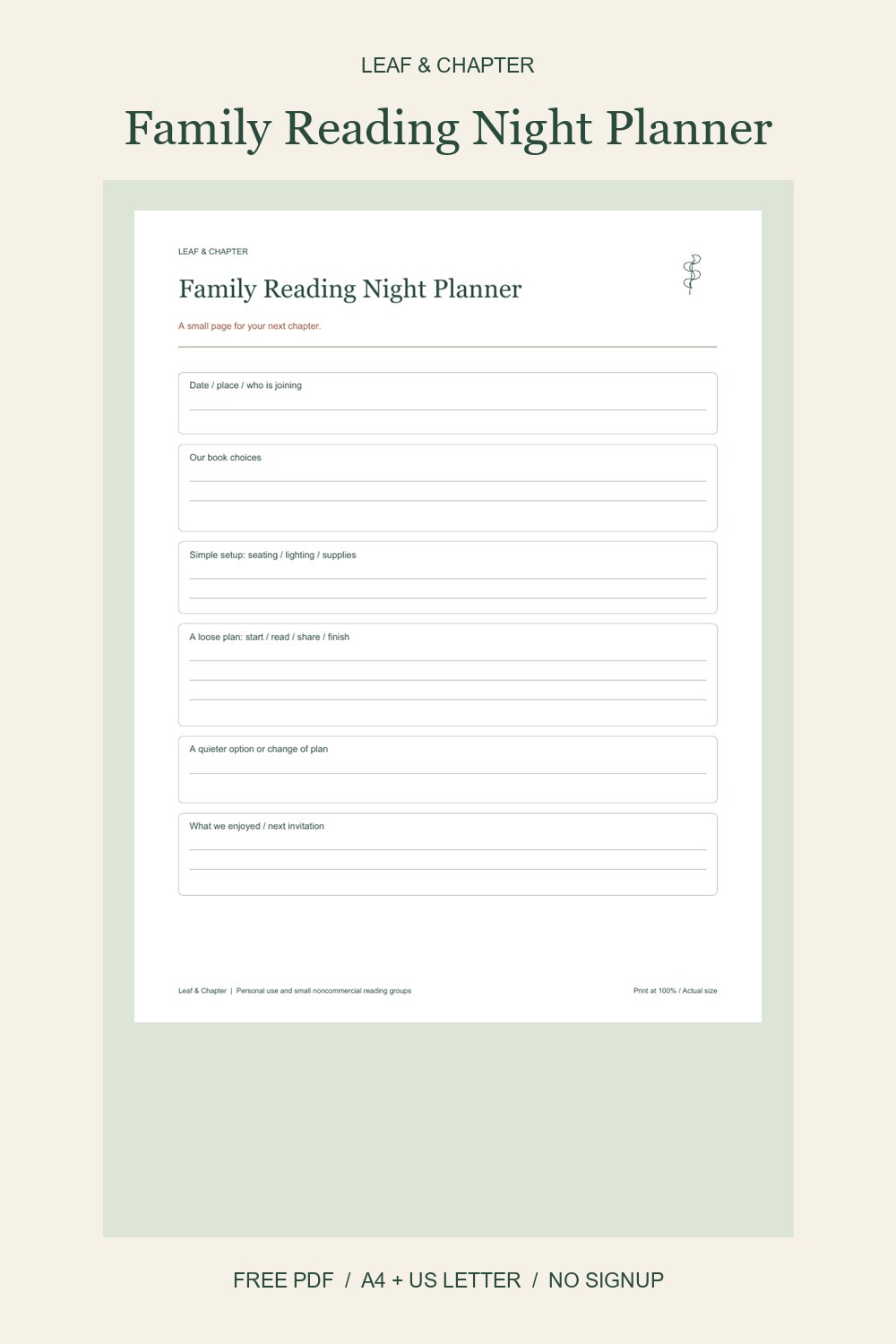
Choose your paper size and print one copy. Use the spaces for book choices, simple preparation, the loose sequence, and a brief note afterward. Leave any field blank if it does not help your evening. Keep the sheet with the books or on a nearby clipboard so the plan is easy to see. For several families meeting together, agree on the basic setup in advance while keeping individual book choices open. A clear, flexible invitation is more useful than a detailed timetable nobody wants to follow.
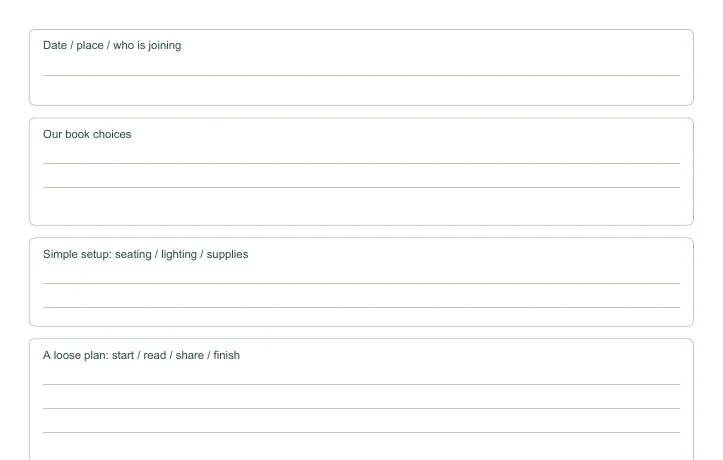

Family Reading Night Planner
Choose the paper size that matches your printer. Both PDFs are free, undated, and made for personal use.
PDF format · No signup · Print at 100% / Actual size
Need a hand? Read the printing guide. These are print-and-write pages, not fillable forms. Personal-use license.
Save it for your
next bookish day.
Keep a link to this page so the printable is easy to find again.
Save to Pinterest ↗A few questions before you print
Does everyone need to read the same book?
No. You can combine a short shared story with individual reading, or keep the whole evening focused on separate books.
What if someone wants to stop early?
Allow a pause or a quiet alternative. Adjust the next plan around what the group enjoyed rather than requiring everyone to read for the same amount of time.