Use the library account as the source of truth
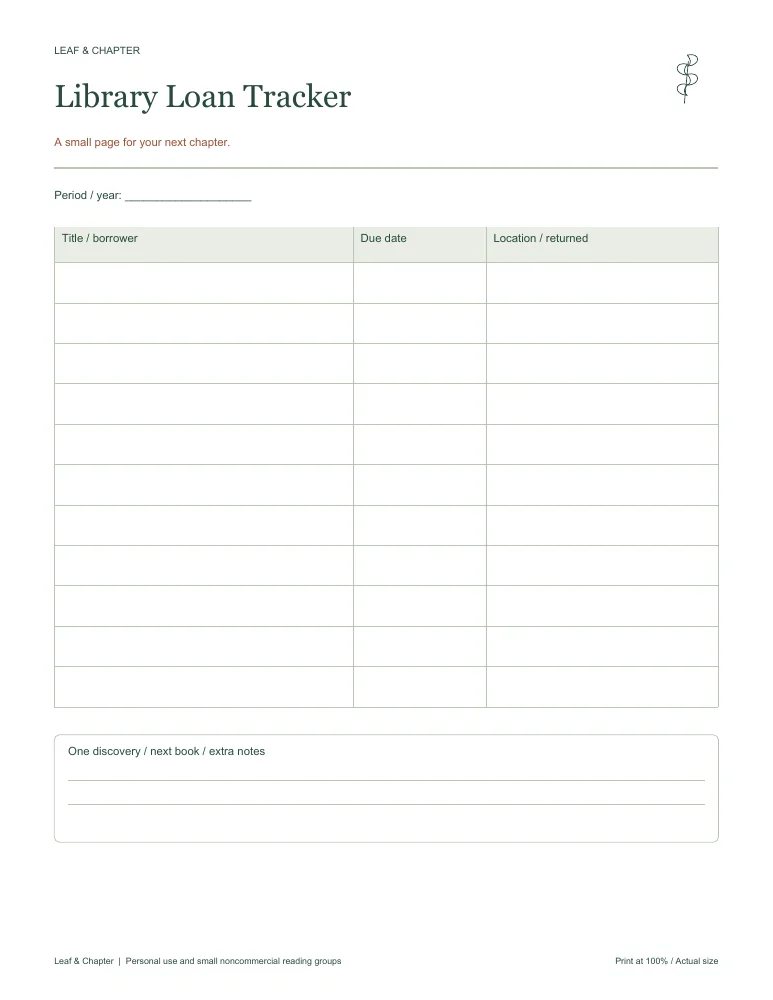
Copy the title, borrowing date, and due date from the library's current receipt or account. Do not rely on a remembered loan period, because books, digital items, and special collections can have different terms. If a loan renews, update the date on your sheet. The printable is a convenient overview, while the library's account remains the place to confirm the official status.
If your household uses several cards, add the borrower's initials or another simple identifier. You do not need to write full card numbers or account passwords on the page. Keep those details elsewhere. A shared tracker works best when every entry clearly identifies the item and the account responsible for it without exposing information that is unnecessary for planning a return.
Record where each physical item is
A due date is helpful, but it cannot tell you which bag holds the missing book. Use the notes space for a location if items tend to travel: bedroom shelf, school bag, work tote, or return basket. Update the note when you move the item. This is especially useful when several people borrow books at once and similar covers make a quick glance unreliable.
Set aside one return spot near the place where you leave home. Finished books can move there as soon as you are done with them. Check that spot before a library trip, then compare the items with the tracker. You do not have to turn every loan into a household procedure. One visible place and one short check can solve much of the practical confusion.
Plan around the earliest date
Once a week, scan the due-date column and identify the earliest return. Decide whether to finish, renew where available, or return the item. Do not assume renewal is automatic or guaranteed. Holds and library policies may affect it. If you renew successfully, change the tracker only after the account confirms the new date. That keeps a hopeful plan from looking like a completed action.
For a digital loan, note whether it returns automatically and whether you still want to finish before access ends. A book can return without creating a physical task, but the deadline may still matter to your reading plans. If you need the title again, check the borrowing platform's options rather than assuming you can immediately borrow another copy. Availability can change between visits.
Keep holds separate from active loans
A hold is a future possibility, not a book already in your possession. Write it in a separate note or clearly mark it as a hold so it does not get mixed into the due-date list. When it becomes available, check the pickup deadline and decide whether it fits your current reading time. If several holds arrive together, you may need to postpone or decline one according to the library's options.
When you return a physical item, mark the action and check the account later if you need confirmation. A return-drop receipt can be useful where offered. If the account still shows the item after the expected processing period, contact the library with the details you have. The tracker can help you recall when you returned it, but it does not establish that the library has checked it in.
Build a short routine around the printable
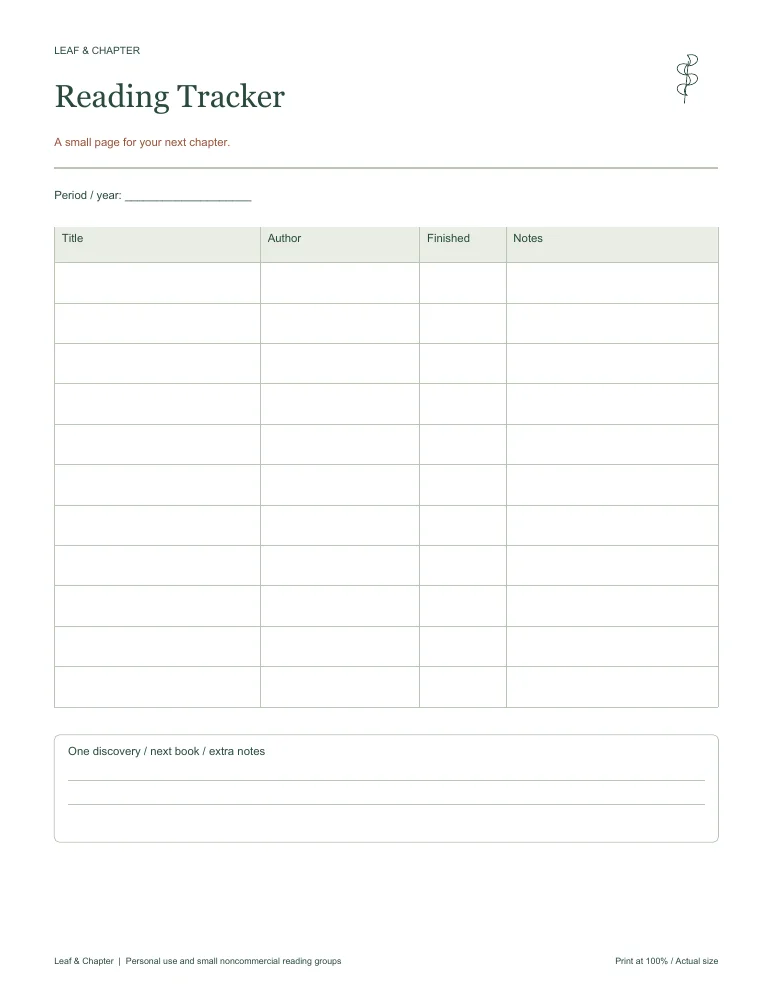
Print a page and enter only the loans that are currently active. Include the due dates you have verified and any locations worth noting. Put the tracker with your library bag or reading journal. Choose one regular moment to check it, perhaps before your weekend plans or before a routine library visit. A weekly review can be brief when all the useful information is already together.
Cross out or mark returned items so you can still read the title and date if a question comes up. Start a new sheet when the old one becomes difficult to scan. If you want a reading history, transfer finished titles to a separate reading log rather than keeping the loan page crowded forever. Each sheet then has a clear purpose: helping you manage what is borrowed right now.
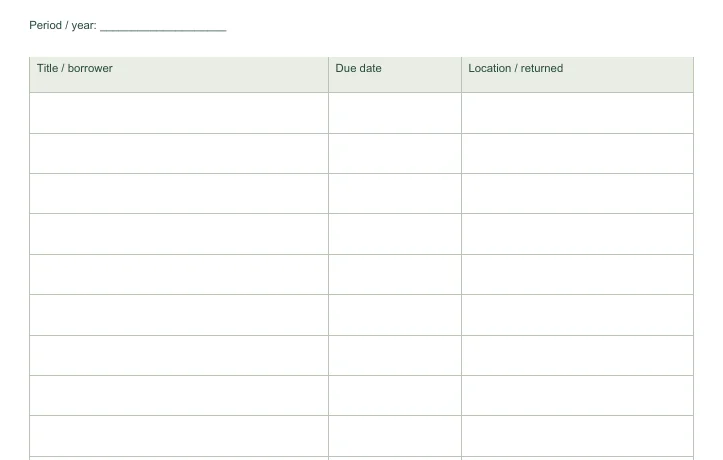

Free Library Loan Tracker
Choose the paper size that matches your printer. Both PDFs are free, undated, and made for personal use.
PDF format · No signup · Print at 100% / Actual size
Need a hand? Read the printing guide. These are print-and-write pages, not fillable forms. Personal-use license.
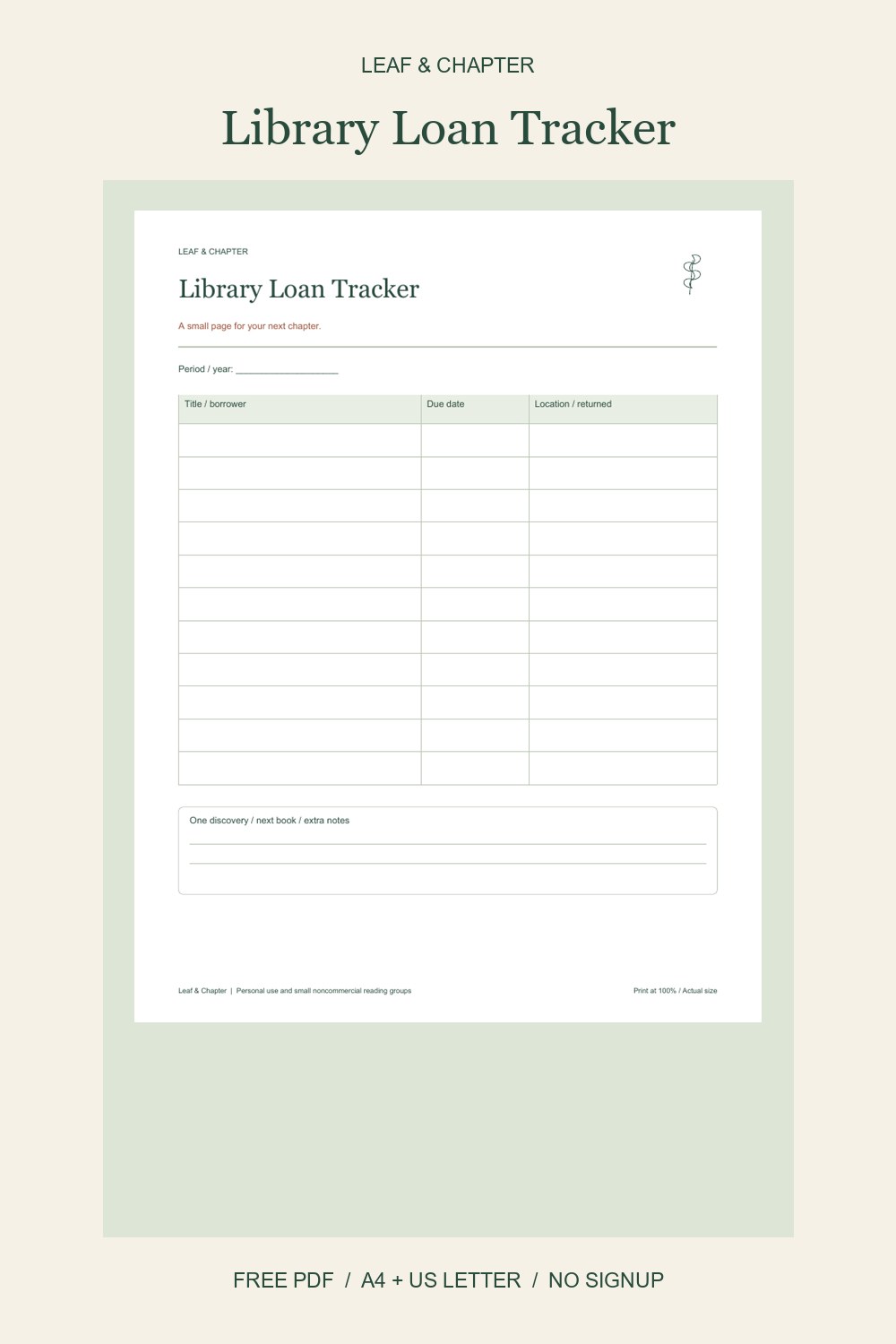
Save it for your
next bookish day.
Keep a link to this page so the printable is easy to find again.
Save to Pinterest ↗A few questions before you print
Can this replace library reminders?
Treat it as an additional overview. Keep official reminders and check the library account for current due dates, renewals, and return status.
What if several family members use it?
Add initials or another simple borrower label, and agree on one place for finished physical books. Avoid writing card numbers or passwords on the shared sheet.