Begin with the actual list
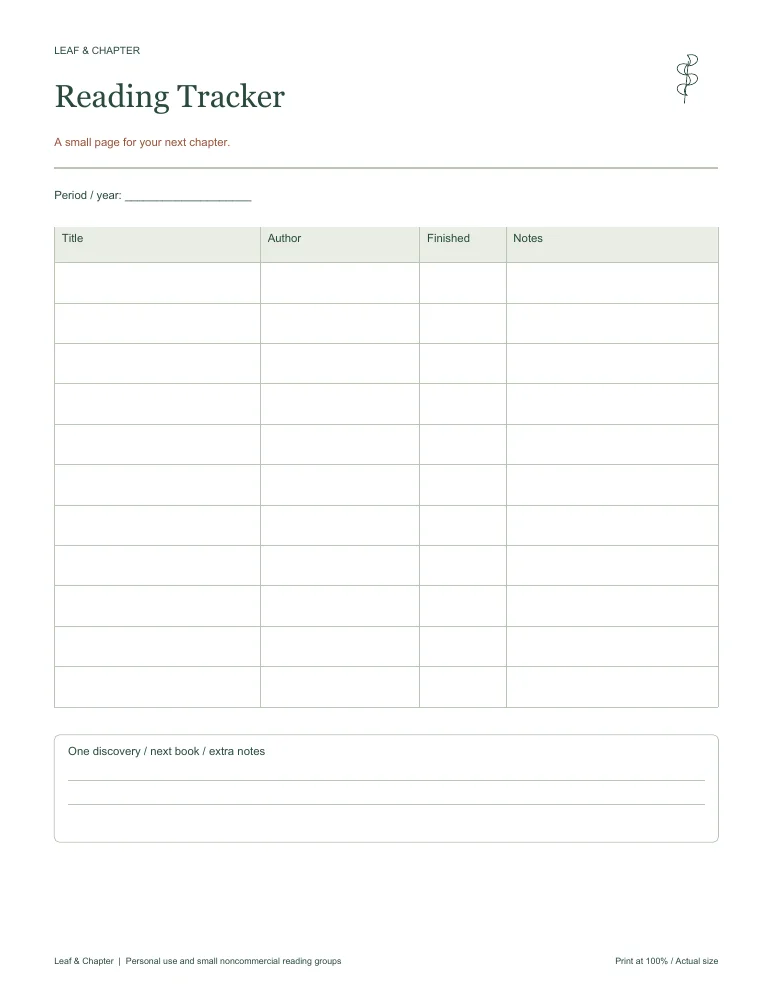
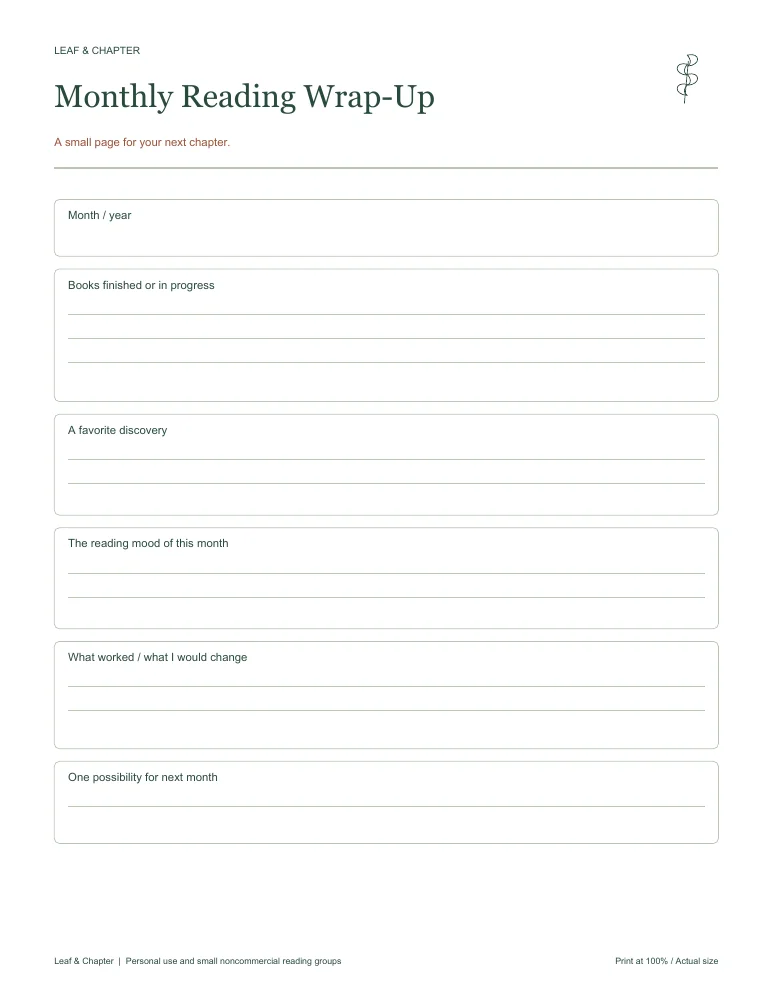
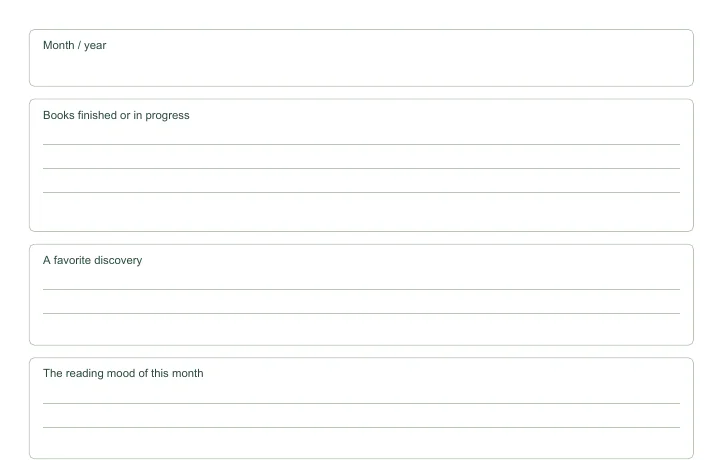
Write the month and year, then list the books you finished. Use your reading tracker if you have one, or begin with the titles you remember. Include the author when similar titles might be confusing later. If you did not finish a book, note what you were reading or leave the completed list empty. A wrap-up does not require a minimum number of entries before it can be useful.
Keep totals in perspective. Three short books and one long book do not represent the same reading experience, and a busy month might leave little quiet time. If you record a count, let it describe the month rather than evaluate you. The more interesting information often lives in the notes: a surprising discovery, an author you want to revisit, or a book you kept thinking about after returning it.
Pick favorites with a specific question
Instead of asking which book was objectively best, choose a question that suits what you read. Which book would you recommend first? Which setting can you still picture? Which ending invited the most discussion? You can pick different books for different questions. This makes the page more revealing than forcing every kind of book into one ranked list.
If you read only one book, you can still identify a favorite moment or idea. If none stood out, write that honestly. Not every month produces a new favorite. Avoid choosing a title only because you think a wrap-up ought to sound enthusiastic. A useful record includes ordinary reading months as well as the ones that make you eager to talk.
Notice what shaped the month
Write a few lines about the circumstances around your reading. Perhaps travel made audiobooks useful, a project sent you toward nonfiction, or a difficult week made familiar stories appealing. These notes give the list context. They also make it easier to understand why your preferences seemed different from the month before. Keep the note as personal as you are comfortable with, especially if you plan to share the page.
Look for one pattern without turning it into a permanent label. Enjoying two mysteries does not mean every future book must be a mystery. Finding one dense book tiring does not mean you dislike nonfiction. A monthly pattern can simply guide the next choice. Try 'I wanted shorter chapters this month' rather than announcing a new rule about the kind of reader you are.
Choose a small direction for next month
After looking back, choose one next step. You might finish your current book, request a title by an author you enjoyed, or leave space for a library discovery. A wrap-up can point toward the next month without becoming a full schedule. If you want a detailed goal, keep that on a separate planner so the reflection page does not become a list of future obligations.
Check practical commitments before choosing. A book-club meeting, an expiring loan, or a long journey might affect the next title. Then leave a few choices open. Reading can be more enjoyable when a plan makes starting easier but still allows a change of mood. Write down a possibility, not a promise, unless a firm deadline serves a real purpose.
Keep the reflection short enough to repeat
Print the page in your preferred size and fill it out near the end of the month or during the first few days of the next. Five or ten minutes is plenty for a useful record. Begin with titles, choose one memorable detail, and add one sentence about the month's reading mood. You can write more when you have something to say, but a concise page is still complete.
Store the wrap-ups together and reread several at the end of the year. They may show changing interests, recurring authors, or a favorite book you almost forgot. If you miss a month, resume with the current one instead of creating a catch-up project. The routine should leave you with a record you enjoy, not another backlog. A few thoughtful notes can preserve a month better than a perfectly filled sheet written reluctantly.

Free Monthly Reading Wrap-Up
Choose the paper size that matches your printer. Both PDFs are free, undated, and made for personal use.
PDF format · No signup · Print at 100% / Actual size
Need a hand? Read the printing guide. These are print-and-write pages, not fillable forms. Personal-use license.
Save it for your
next bookish day.
Keep a link to this page so the printable is easy to find again.
Save to Pinterest ↗A few questions before you print
What if I did not finish any books?
Record what you started, paused, or enjoyed in shorter reading. You can also note that the month had little reading time. An empty finished list is valid.
Do I need a rating for every book?
No. A memorable detail or brief recommendation can be more useful. Use ratings only if they help you understand your own reactions.