Decide what you want from the challenge
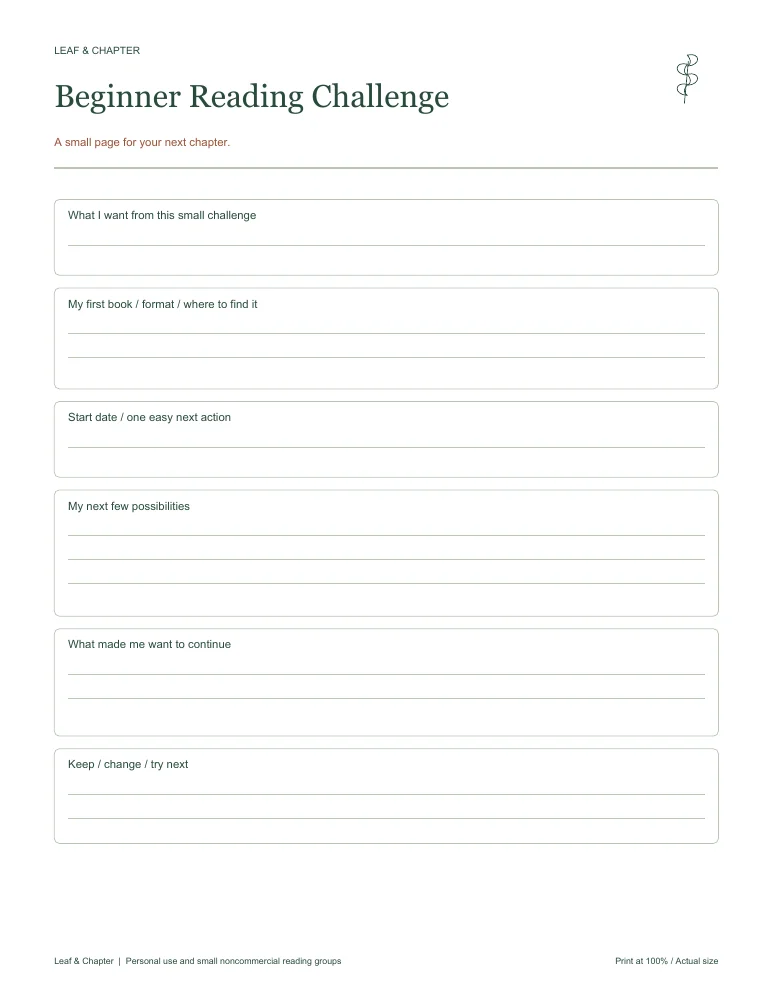
Write a simple intention before selecting books. You might want to try fiction again, explore a subject, make better use of the library, or find a pleasant alternative for a quiet evening. That intention helps you avoid choosing a challenge just because its number sounds impressive. Keep the first round small enough that you can see the next step. One book and a few notes can be a complete beginning. You can expand after you know which parts of the experience you would like to repeat.
Choose an inviting book instead of a respectable one
Look for a subject, setting, or kind of story that already interests you. Read the description and a sample rather than choosing solely from a famous title or a long list of recommendations. A short book may feel approachable, but length is only one part of the experience. Dense writing can take longer than a lively novel with more pages. Ask a librarian for a few options based on what you enjoy watching, listening to, or reading in other forms. Use those preferences as helpful clues, not strict rules.
Choose a format that fits your days
Print, ebooks, audiobooks, comics, and graphic novels are all possible starting points. Think about when you are likely to use the format rather than which one seems most traditional. A print book may suit an evening chair; an ebook may be convenient when you already carry a device. Audio can fit some routines, provided listening is practical and appropriate for the activity. You can switch formats or combine them. The challenge is about finding a reading experience you want to return to, not defending one method as the correct way.
Make the first step easy to begin
Put the selected book somewhere accessible and choose a small reading window. You do not need to decide how many pages you will finish for the whole month. Start with enough time to meet the voice and opening situation, then see whether you want more. If you like goals, make the first one about beginning rather than finishing quickly. Mark the start date on the printable and write the next practical action, such as collect library hold. A concrete step is easier to follow than a broad promise to read more.
Give yourself permission to change books
If the first choice feels wrong, try to identify why. Is it the pace, the topic, the writing style, or simply the moment? You can stop and choose another book without restarting the whole challenge. Keep a short note so the next suggestion is better informed. Avoid using one disappointing choice to judge your ability to enjoy reading. Books differ enormously. A recommendation that suits someone else may still be a poor introduction for you. Sampling several openings can be part of finding a good match rather than evidence that you failed.
Notice what made you want to continue
After a reading session or a finished book, record one useful observation. Perhaps short chapters were convenient, a character caught your interest, or the narrator made the story easy to follow. These details tell you more than a total alone. When choosing the next book, keep one successful feature and change one other element if you want variety. You can also reread something familiar. A beginner challenge does not require constant novelty. It should help you recognize the choices and circumstances that make reading appealing on your own terms.
Use the printable as a quiet guide
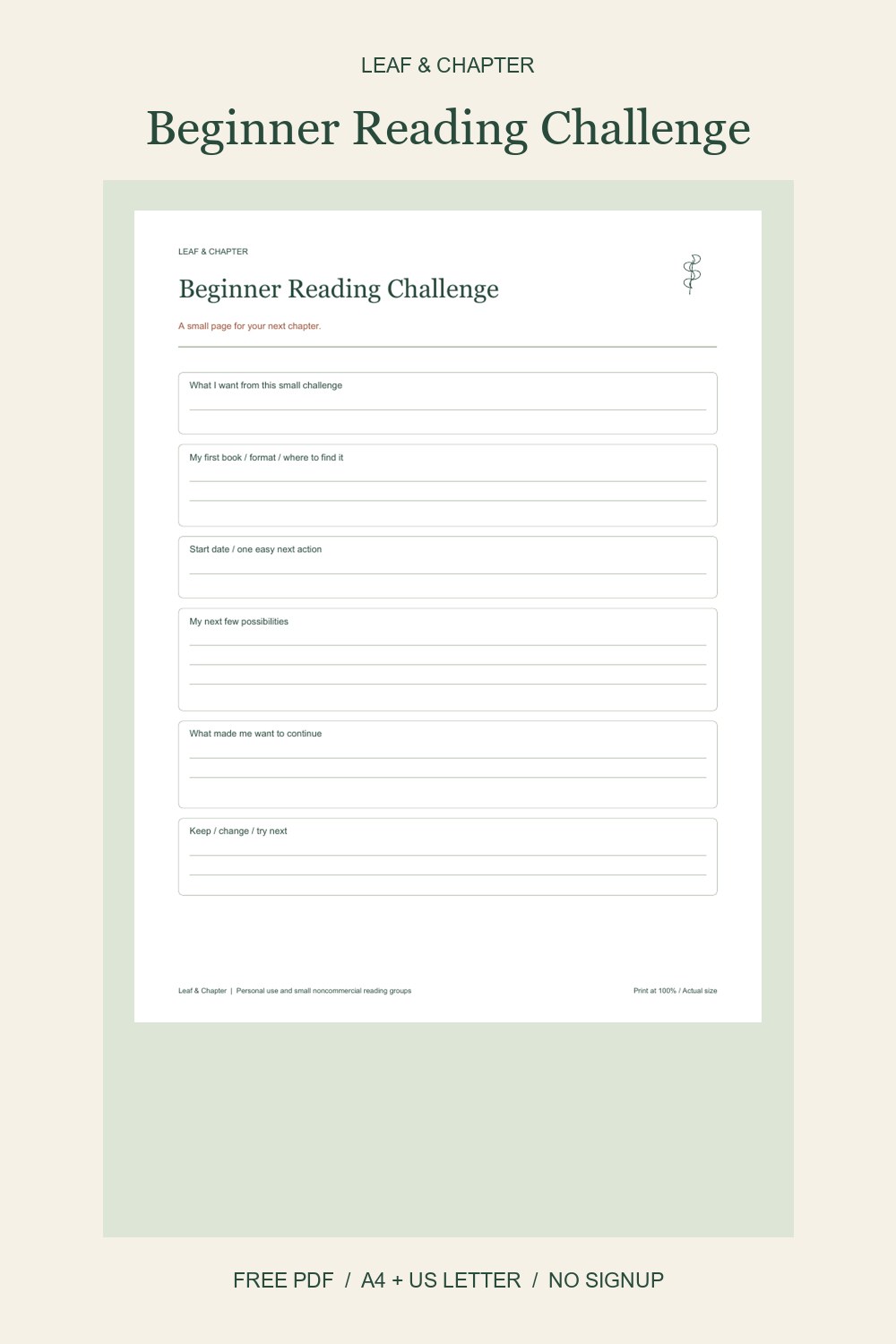
Print the undated sheet in the paper size you need and check the print preview. Fill in only the next few choices rather than a year's worth of titles. Leave room to change plans in pencil. At the end of the first round, decide whether you want another small challenge, a reading log, or no tracker at all. The page has done its job if it helped you choose and begin. You do not have to keep using a system once ordinary curiosity is enough to lead you to another book.
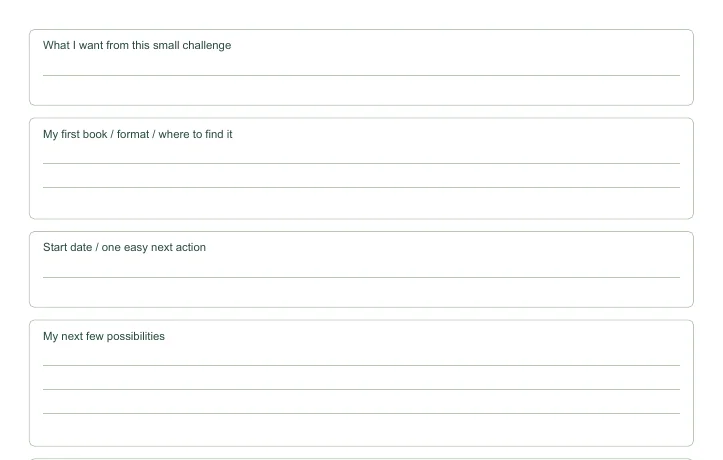

Beginner Reading Challenge
Choose the paper size that matches your printer. Both PDFs are free, undated, and made for personal use.
PDF format · No signup · Print at 100% / Actual size
Need a hand? Read the printing guide. These are print-and-write pages, not fillable forms. Personal-use license.
Save it for your
next bookish day.
Keep a link to this page so the printable is easy to find again.
Save to Pinterest ↗A few questions before you print
How many books should a beginner challenge include?
Start with a number that feels manageable, including just one. Expand only if the first round makes you want to continue.
Do I have to choose short books?
No. Choose an appealing book with a readable sample. Length matters less than whether the format, pace, and subject suit you.