Choose a reason before a number
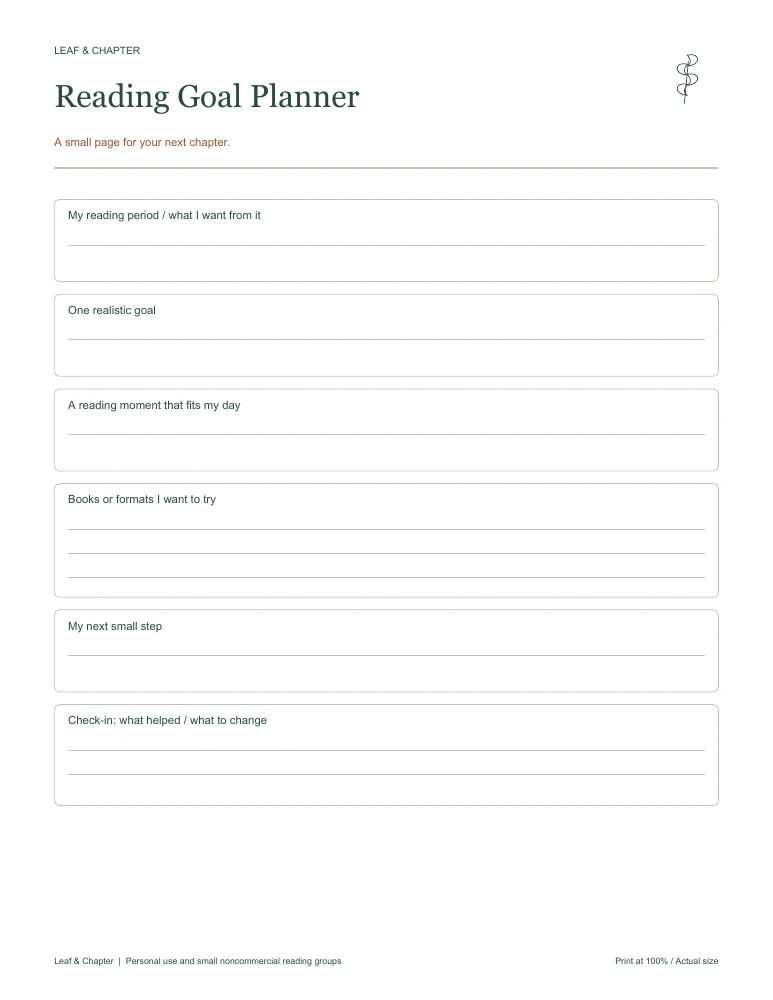
Ask what you want more reading to bring into your days. Perhaps you want a quiet evening routine, a way to explore a subject, or enough preparation to join a book-club conversation. Write that reason in plain language. It will help you choose a useful goal rather than borrowing somebody else's impressive total. A count can be motivating, but it is only one way to describe progress.
Try a goal based on an experience or topic if book totals feel restrictive. You could explore three unfamiliar authors, finish one book you already own, or read a few essays each weekend. Keep the goal specific enough that you can recognize completion. 'Read more' gives little direction. 'Read one chapter after dinner on two evenings this week' gives you something you can actually attempt.
Find the time before filling the calendar
Look for a reading opportunity that already exists. That might be ten minutes before bed, a quiet lunch break, or an audiobook during a routine journey when listening is appropriate. Choose one or two opportunities first. Planning seven new daily sessions can look tidy on paper while being unrealistic in practice. A small routine that survives an ordinary week is a better starting point than a schedule that requires everything else to go perfectly.
Different books ask for different kinds of attention. A difficult nonfiction chapter may need a quiet place and more time than a familiar novel. Match the book to the available slot. If a session repeatedly fails, change its timing, length, or material before deciding that you simply lack discipline. The planner is a tool for making adjustments, not evidence against you.
Break a larger goal into one next action
If your aim is to finish a particular book, the next action might be finding a copy, reading the introduction, or setting aside a short session. If your aim is to try a new genre, begin with one title that appeals to you rather than making a long research project out of the choice. Write the action in the planner using a verb. 'Borrow,' 'choose,' and 'read' are easier to act on than vague intentions.
You can estimate a pace without treating it as a deadline. For example, dividing a book into a few comfortable sections can show whether a club meeting is close enough to require a different plan. If the estimate does not fit your time, choose a smaller goal or allow more time. Avoid racing through a book merely to keep a box checked when the point was to enjoy or understand it.
Leave room for changing circumstances
Build in a review point after a week or two. Ask what worked, what got in the way, and whether the goal still interests you. A missed session might mean the slot was poorly chosen. A repeatedly postponed title might mean you want a different book. Write the adjustment in a short note and continue. You do not have to restart the entire plan whenever a day changes.
If you use a book-count target, check it against the kinds of books you want to read. A season of long novels may call for a smaller total than a season of short collections. Rereading, listening, and abandoning a poor fit can all be part of a thoughtful reading life. Decide your own counting rules, then keep the notes honest rather than bending choices around a number.
Use the printable for the next week first
Print one page, write one goal, and add the smallest action that would move it forward. Include a realistic reading opportunity and a date to review the plan. Leave extra spaces empty until they serve a purpose. A page filled with ambitions is not necessarily a better plan. The value comes from making the next choice easier when you have a little time and a book nearby.
At the review point, record a concrete observation. 'Lunch was too noisy' is useful because it suggests a change. 'I am bad at routines' does not. Keep the observation about the situation, then choose an adjustment. Over several weeks, the planner can help you build a reading rhythm that suits your life. Some weeks will hold several chapters. Others will hold a few pages. Both can tell you something useful.
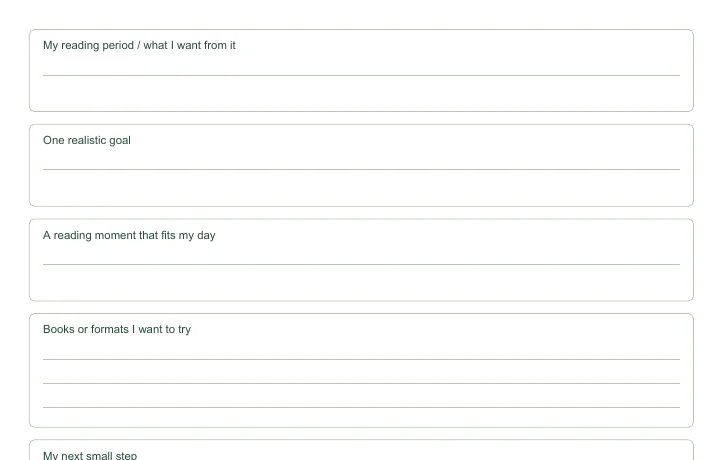

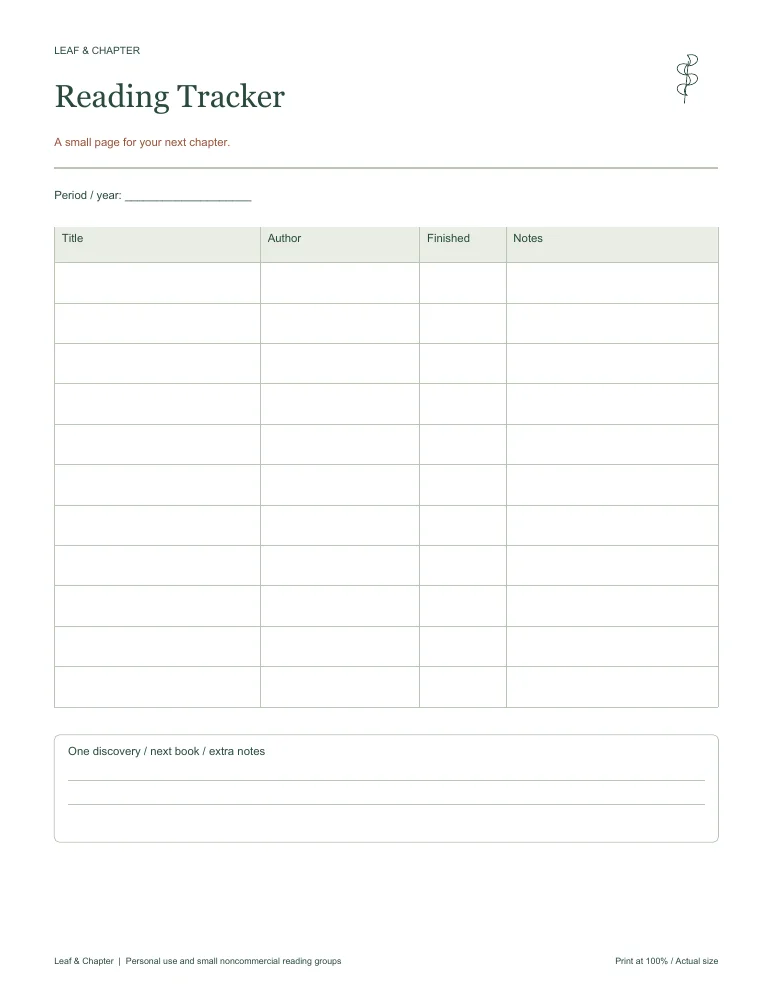
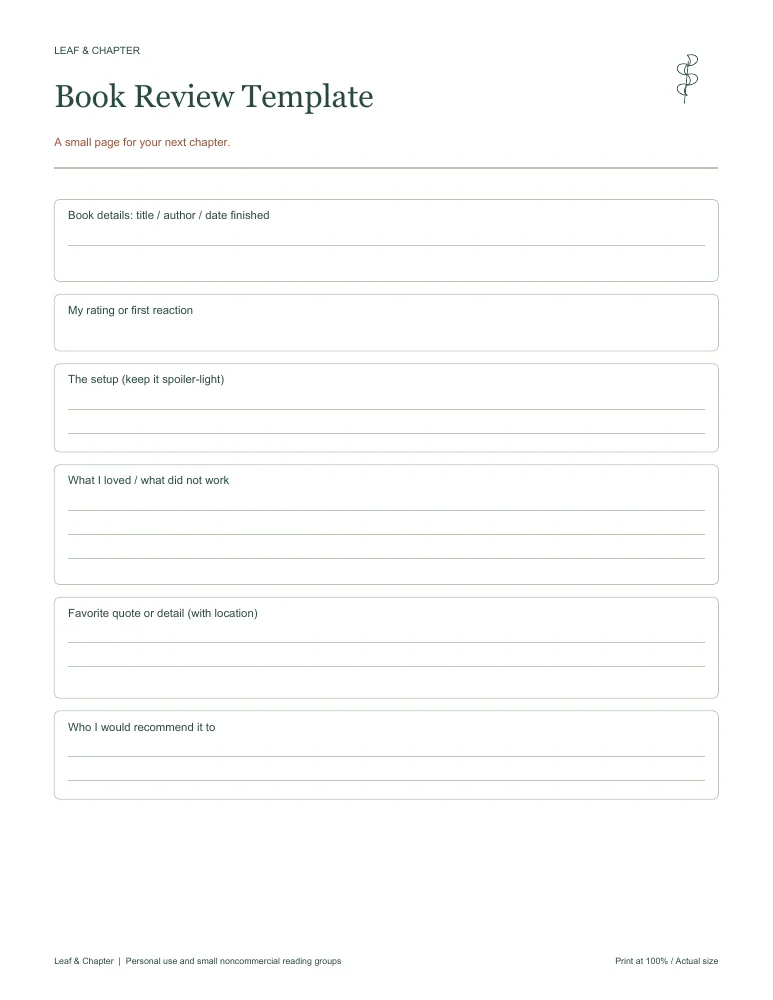
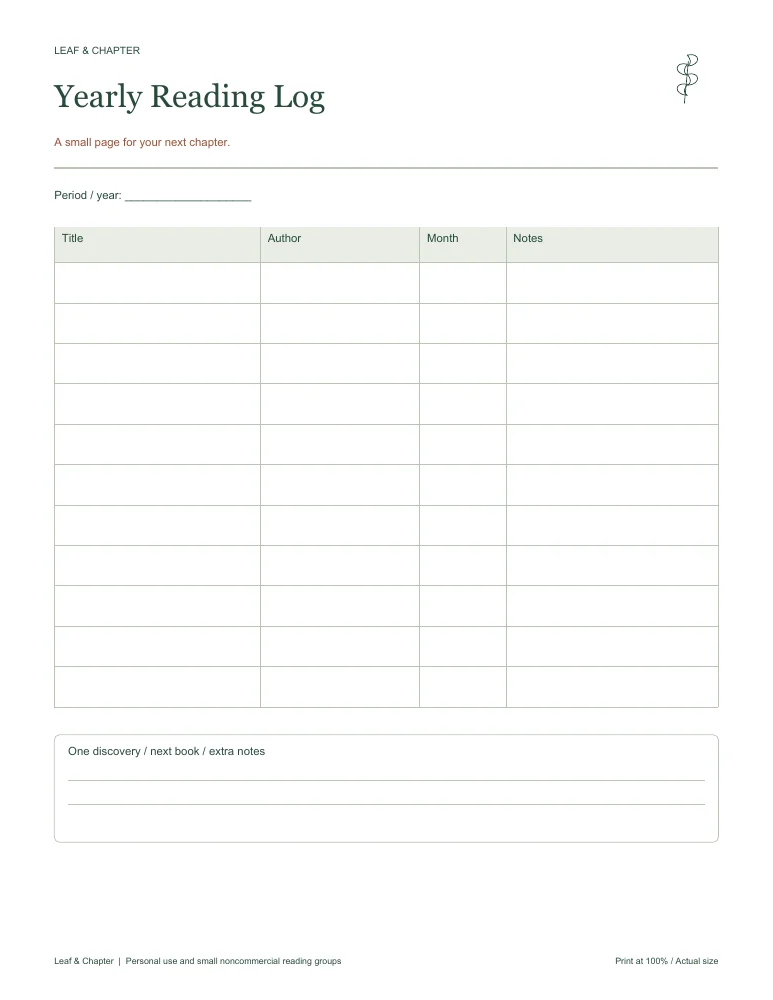
Free Reading Goal Planner
Choose the paper size that matches your printer. Both PDFs are free, undated, and made for personal use.
PDF format · No signup · Print at 100% / Actual size
Need a hand? Read the printing guide. These are print-and-write pages, not fillable forms. Personal-use license.
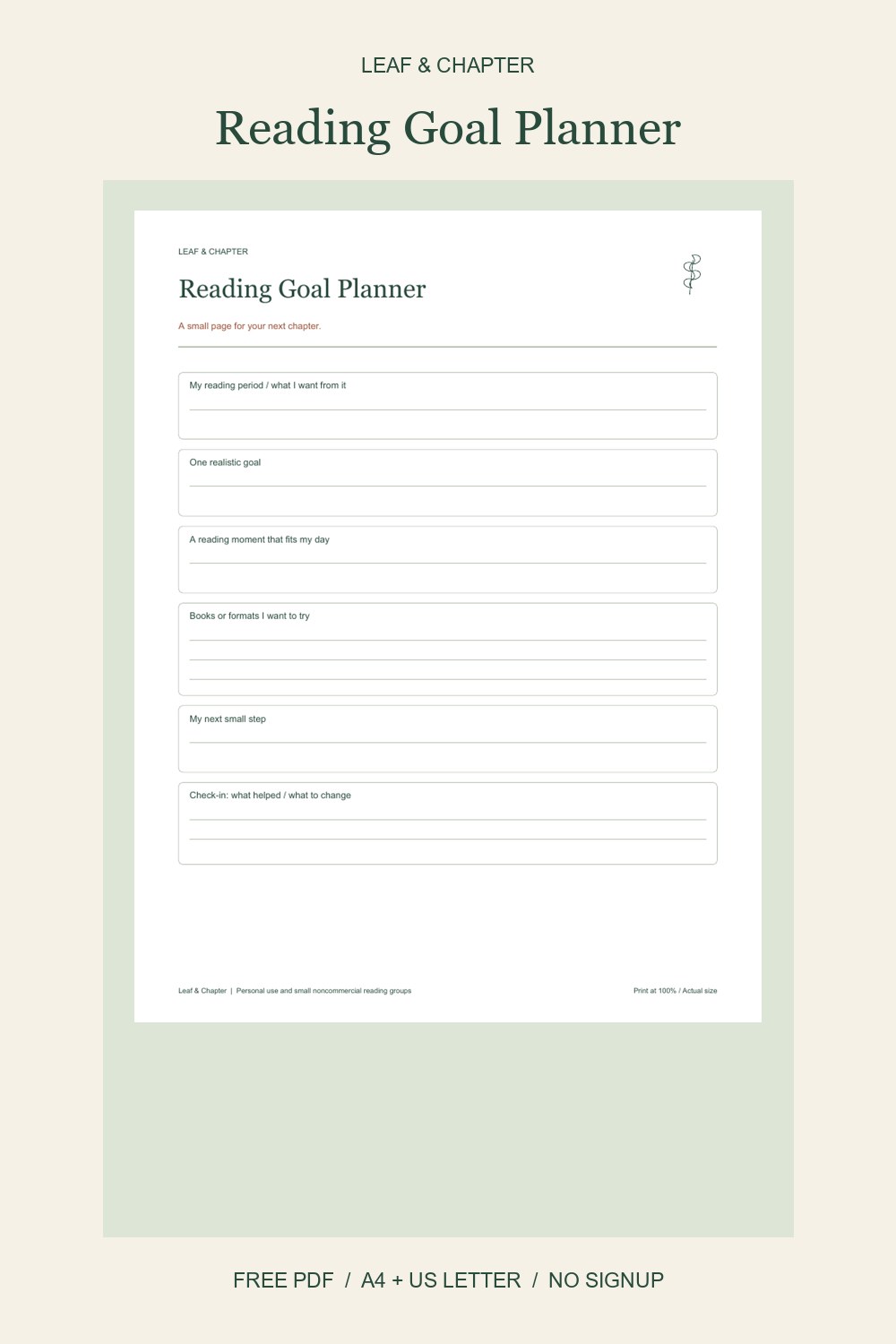
Save it for your
next bookish day.
Keep a link to this page so the printable is easy to find again.
Save to Pinterest ↗A few questions before you print
Do I need an annual book target?
No. You can plan reading sessions, explore a topic, or work toward one specific book. Choose a goal that serves your reason for reading.
What should I do if I miss the goal?
Review the time, the book, and the size of the next action. Adjust one of those before setting another target. A missed plan is information you can use.