Choose what a reading mark means
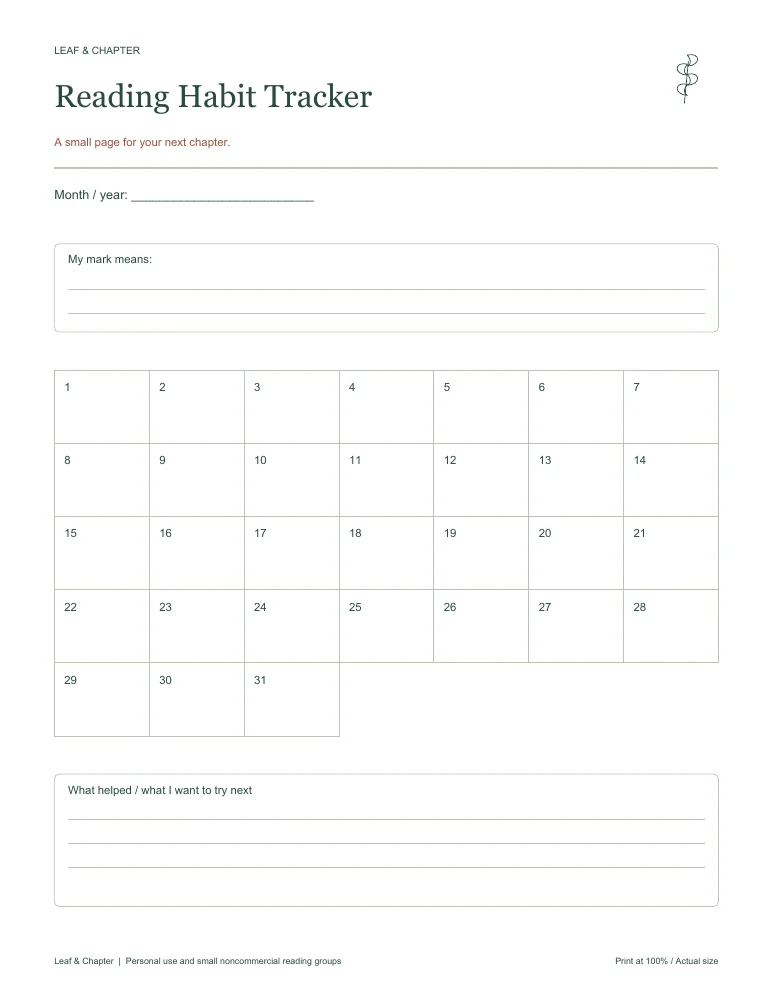
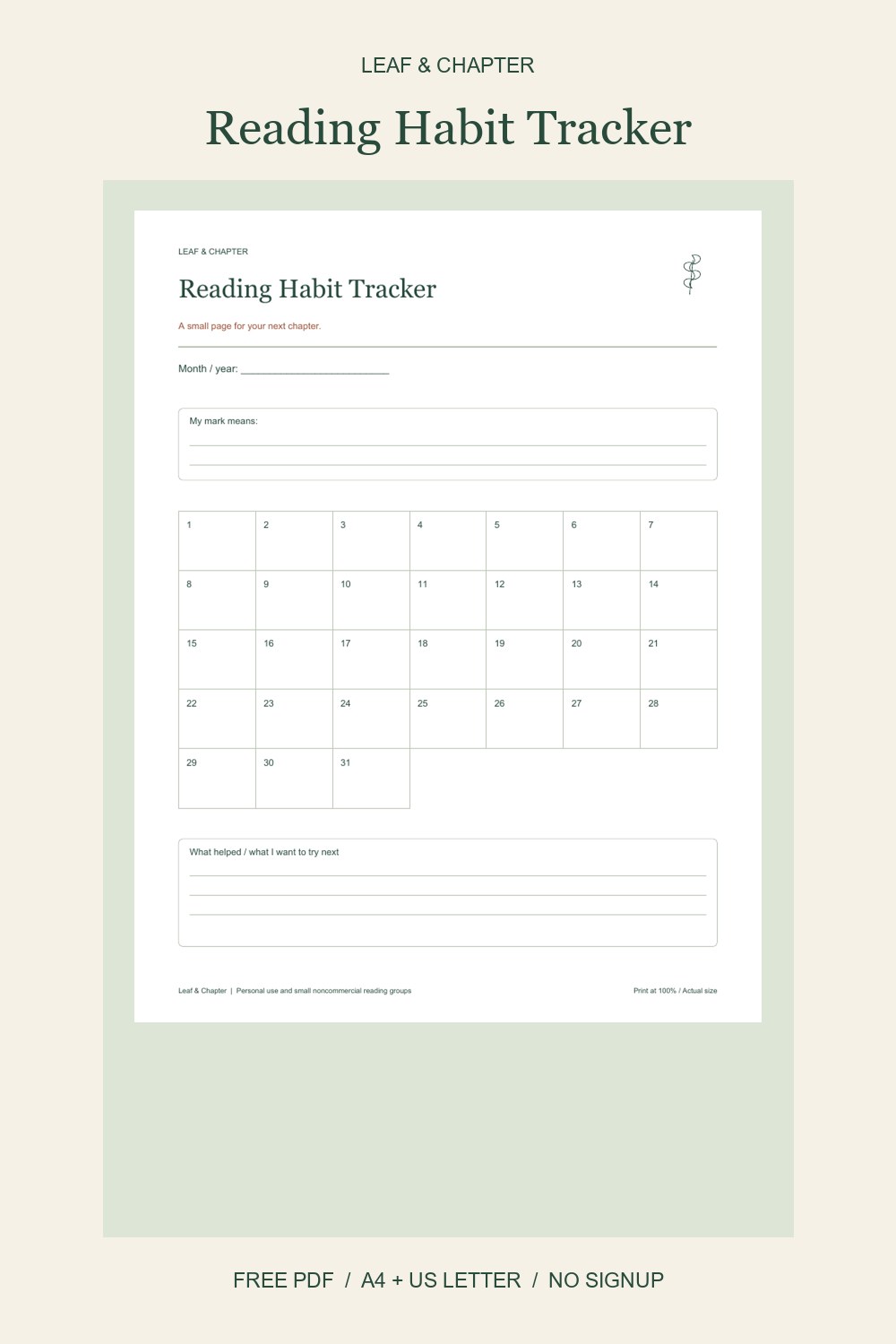
Decide what you want to record before filling the first space. A mark might mean that you opened a book, listened to an audiobook, finished a chapter, or spent a little time reading. Use a definition that is easy to remember and fits your purpose. If you want to notice whether reading happened at all, avoid attaching a demanding page target. You can write the definition at the top of the sheet. That way a short but enjoyable session counts without a negotiation about whether it was enough.
Connect reading to an ordinary moment
Look for a moment that already exists in your day, such as sitting down after dinner or waiting for a regular appointment. Keep the book where that moment happens, as long as the location is practical. For audio, make sure the next chapter is easy to find. Choose one moment to try rather than adding several new sessions at once. If that time repeatedly fails, move it. The tracker is useful because it makes the mismatch visible, not because it asks you to persist with a routine that does not fit.
Keep the marks simple
A check, a dot, or a little color is enough. You might use one symbol for print reading and another for audio if format is part of what you want to understand. Avoid a large key with more symbols than you can remember. The page should take seconds to update. If you forget a day, leave it blank or add the mark later when you remember clearly. There is no need to reconstruct every session. A slightly incomplete record can still show whether your planned reading moment is realistic.
Give blank spaces a neutral meaning
An empty square means you did not record reading that day. It does not explain why. You may have been busy, chosen another activity, or simply forgotten the page. Try not to turn a blank into a verdict on your commitment. If you want context, add a short weekly note rather than an explanation beside every empty space. Travel week or book not grabbing me may be enough. Those notes help you change the setup without making the tracker a daily report of everything that interrupted your plans.
Review the pattern after a useful interval
After a week or two, look for practical clues. Do you read more often with a shorter book? Does audio fit some days better? Is the planned time consistently crowded? Choose one adjustment and try it for the next stretch. You might keep a different format nearby, move the book, or choose a more appealing title. Do not assume that a fuller tracker is always better. If you enjoyed three longer sessions and ignored the daily plan, a few weekly reading windows may suit you more naturally.
Let the book matter more than the tracker
If you are reading only to preserve a streak, pause and ask whether the record is still useful. You can track by week, stop marking for a while, or replace the page with a simple reading log. A routine should help you return to books you want to read. It does not need to absorb every day of the month. At the end of the sheet, write one observation you would like to keep. A useful insight about time or format is a better outcome than a perfectly colored grid.
Set up the printable for easy use
Print the PDF that matches your paper and check that all the boxes fit within the margins. Write the month or tracking period at the top, since the sheet is undated. Place it inside your journal or beside the book rather than somewhere you rarely see. Keep a pen nearby if that makes updates easier. When you start a new sheet, carry over only the rules that helped. You can change your definition, symbols, and frequency without treating the earlier record as something you must beat.
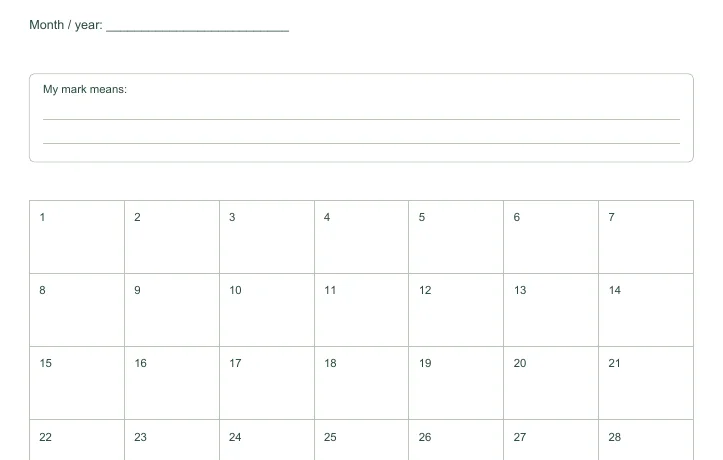

Reading Habit Tracker
Choose the paper size that matches your printer. Both PDFs are free, undated, and made for personal use.
PDF format · No signup · Print at 100% / Actual size
Need a hand? Read the printing guide. These are print-and-write pages, not fillable forms. Personal-use license.
Save it for your
next bookish day.
Keep a link to this page so the printable is easy to find again.
Save to Pinterest ↗A few questions before you print
Do audiobooks count?
They can. Define your tracking rule before starting and use it consistently enough that the record remains useful to you.
What if I miss several days?
Leave the spaces blank and continue when you want to read. You can also switch to weekly tracking if daily marks feel unhelpful.