Begin with the first thing that comes to mind
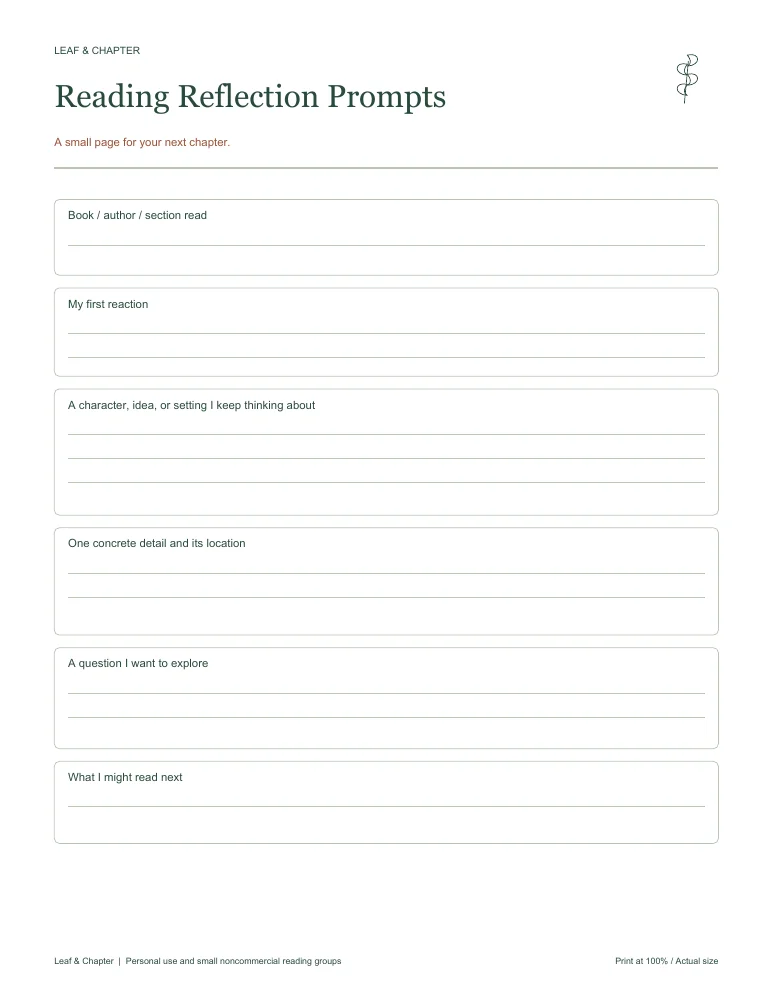
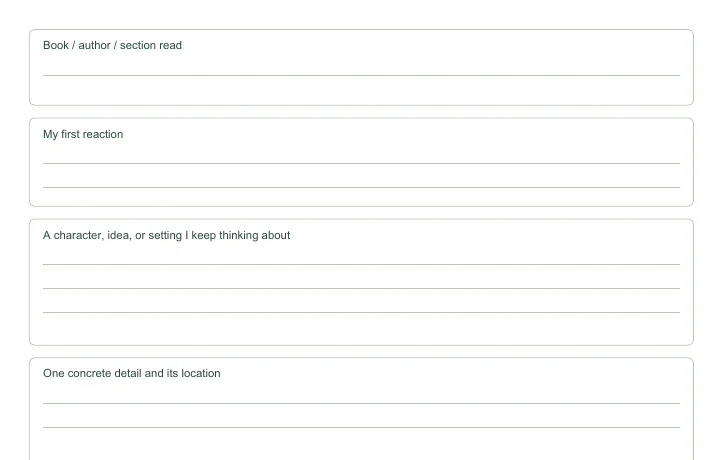
Before looking at the prompts, write a word, a scene, or a feeling you associate with the book. That first response is a useful starting point because it comes from your experience rather than a question someone else supplied. Then choose a prompt that helps you explain it. If your response is mixed, keep it mixed. You can admire the setting and dislike the pacing at the same time. Reflection is more useful when it records those distinctions instead of compressing everything into a single score.
Choose only the questions that fit
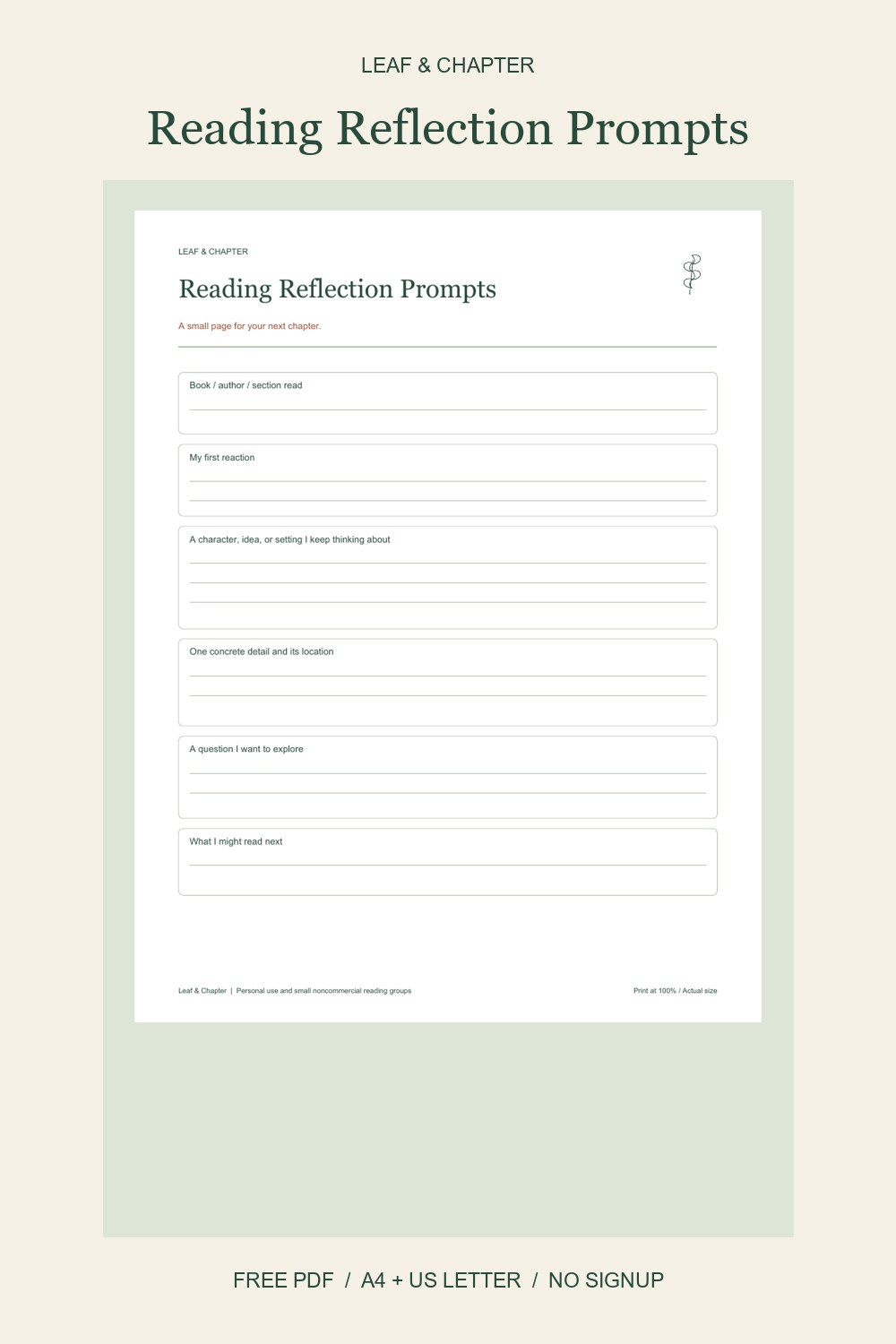
You might explore a character's decision, a setting that felt vivid, a passage that changed the tone, or an idea you wanted to discuss. Not every prompt will suit every book. A memoir, a collection of essays, and a plot-driven novel ask different things of the reader. Skip any question that makes you invent a response. Two thoughtful answers are enough for a useful entry. You can return later if something else occurs to you, but there is no requirement to fill the sheet simply because the spaces are there.
Keep a concrete detail beside each reaction
If you write that a character felt convincing, note the action or conversation that gave you that impression. If the middle felt slow, identify where your interest shifted rather than making the observation too broad. You do not need long quotations. A chapter reference or a brief description is often enough to find the moment again. When recording a short quotation for your personal notes, include the page or section in your edition. The aim is to give future you a clear reminder, not to recreate the book on the worksheet.
Separate your response from a general judgment
Try phrasing some notes as what worked for you. A complex structure may be something you enjoyed, while another reader may prefer a clearer timeline. This distinction is particularly helpful before a book-club discussion. It lets you describe your experience without assuming the group should share it. You can still be direct about a disappointment. Explain the feature and its effect on your reading. Specific language gives others something to respond to and often creates a more interesting conversation than deciding whether the book was simply good or bad.
Use reflection during reading when it helps
You do not have to wait until the end. A brief note after a section can capture a question or prediction before the story resolves it. Mark unfinished-book notes clearly so you can distinguish your first impression from your later response. Avoid stopping after every chapter if that interrupts a book you are enjoying. A sticky note or a quick phrase can hold the thought until you have a natural pause. The reflection page should support your reading rhythm rather than make every session feel like a worksheet exercise.
End with a useful next question
Ask what the book made you curious about. You might want another work by the author, a different perspective on the subject, or a conversation with someone who read it differently. You can also note whether you would recommend it and to whom. Do not force a lesson or a personal transformation if neither was part of the experience. Some books offer entertainment, company, or a memorable atmosphere. Recording that honestly is enough. A reflection can end with an open question rather than a neatly resolved conclusion.
Keep the pages easy to revisit
Print the PDF in your chosen paper size and add the title, author, and date before writing. Store finished pages together in a folder or reading journal. You can use one page per book, or reserve fuller reflections for books you particularly want to remember. If you bring a page to a club meeting, use it as a prompt rather than reading every answer aloud. Over time, the collection can reveal recurring preferences and questions. Let those patterns inform future choices without requiring every new book to match them.

Reading Reflection Prompts
Choose the paper size that matches your printer. Both PDFs are free, undated, and made for personal use.
PDF format · No signup · Print at 100% / Actual size
Need a hand? Read the printing guide. These are print-and-write pages, not fillable forms. Personal-use license.
Save it for your
next bookish day.
Keep a link to this page so the printable is easy to find again.
Save to Pinterest ↗A few questions before you print
Do I need to answer every prompt?
No. Choose the questions that help you describe this particular book. A few specific notes can be more useful than a fully filled page.
Can I use the page before finishing?
Yes. Label early impressions and questions so you can revisit them after the ending without confusing them with your final response.