
1. Choose winter reading bingo prompts that fit your life
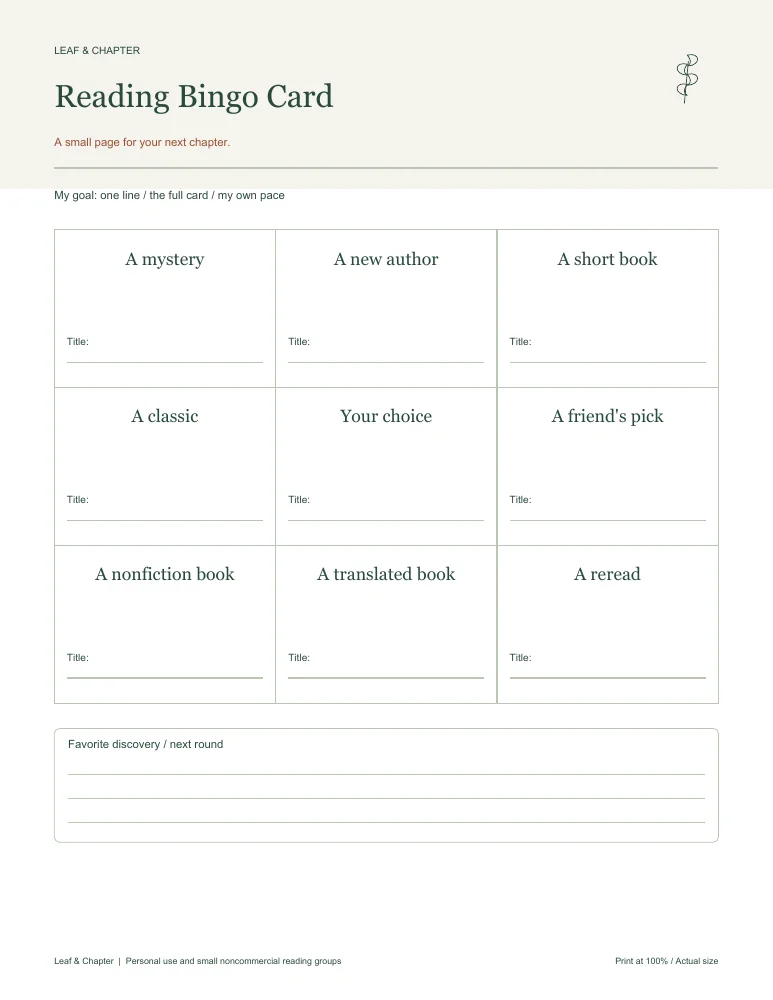
Start with the existing Reading Bingo Card, an undated three-by-three card with nine prompts and spaces for titles. Pick one row, column, or diagonal that looks appealing rather than treating all nine squares as an assignment. A line has three squares. You can also use the card as a menu and choose prompts wherever they appear. Before reading, decide whether one title may count for more than one square. Allowing overlap keeps a busy month light; using a different title for each square offers more variety but takes more time.
Give the prompts a winter interpretation that suits your mood. A mystery might be an absorbing choice for a long evening, while a short book could fit between holiday plans. Other ideas include a familiar reread, a story set somewhere cold, a book that feels comforting, an audiobook for suitable listening time, a library discovery, an author new to you, or a book you already own. These are suggestions for adapting the activity, not a claim that each appears on the printed card. Snowy settings are optional, and a bright adventure can be just as welcome in winter.
The card comes in botanical, minimalist, and ink-saving styles, with A4, US Letter, and A5 sizes. Botanical can make a journal feel decorative; minimalist leaves a quieter visual page; ink-saving reduces decoration for repeated copies. Actual ink use and print quality depend on your printer and settings. Choose a page size that matches your paper and leaves handwriting comfortable, or consult the printing guide before making several copies.
2. Use the blank spaces without buying books
Write a candidate lightly in a title space only when you have one in mind. Leave other spaces blank for a book that turns up later. The card's Your choice prompt can hold something especially useful for this month, such as a book already beside your bed. If another printed prompt does not appeal, write a substitute beside it or on a small slip rather than forcing a fit. You can also leave a square unused. The point is to make choosing easier, not to manufacture a reason to acquire a stack.
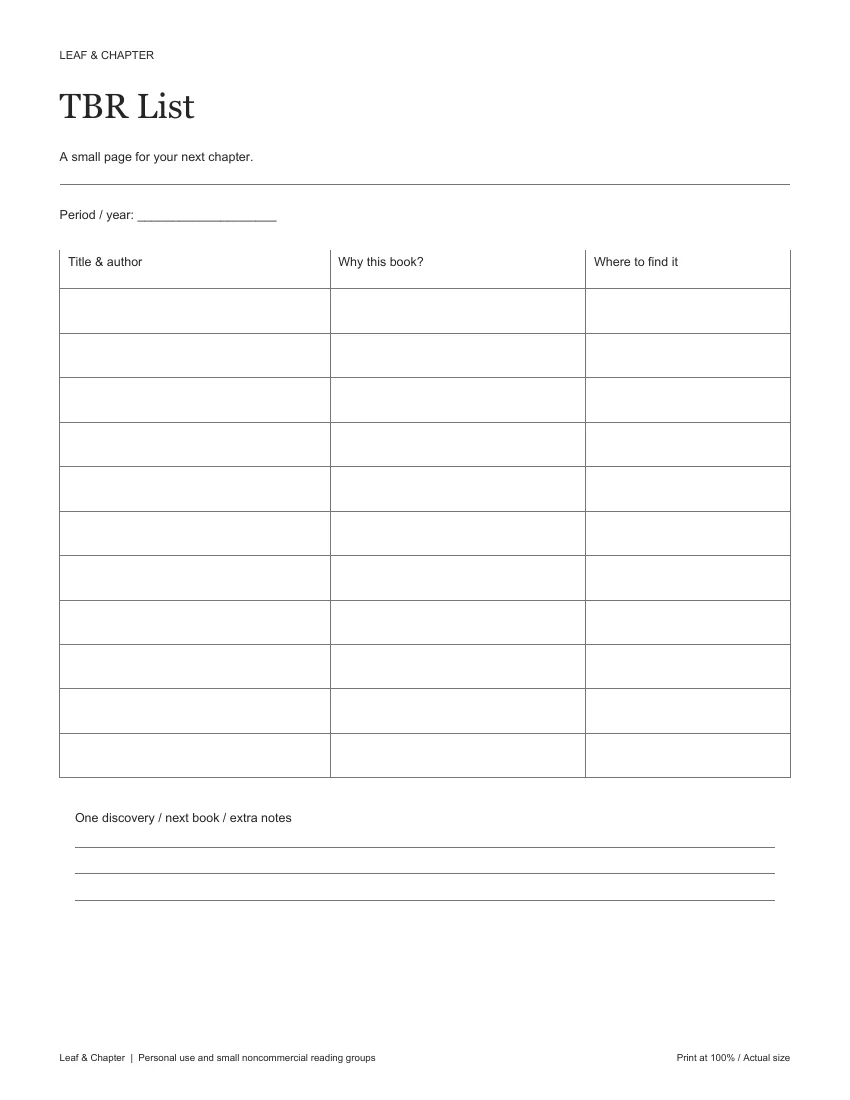
Pair the card with the TBR list printable for a quick shelf search. Its title, author, why, and where fields help distinguish interest from access. For example, write that a friend's description of the humor caught your attention in why, and already own paperback in where. A second row might note an appealing subject and check library. Circle a few possibilities with different moods, then return to the bingo card and pencil in only the one you want to start.
Borrow from your household with permission, revisit a favorite, or browse your library's physical and digital collections. Samples and short works can help you decide whether a voice appeals before you commit. If you are planning Christmas gifts, a bingo prompt might inspire a conversation about someone’s reading tastes, but buying a book is never necessary for your own board. A borrowed or owned title can make the activity immediately accessible, while an open square protects space for an unexpected find.
3. Mix formats and reading lengths
Build a route around the time and attention you actually have. A graphic novel might suit a quiet afternoon, essays can be read in separate sittings, and a novel might wait for a less crowded weekend. An audiobook can accompany an appropriate task, while an ebook may be convenient when you are away from your shelves. Decide for yourself whether rereads, short works, and listening count, and note your rule in the card's margin. There is no need to compare the effort involved in different formats.
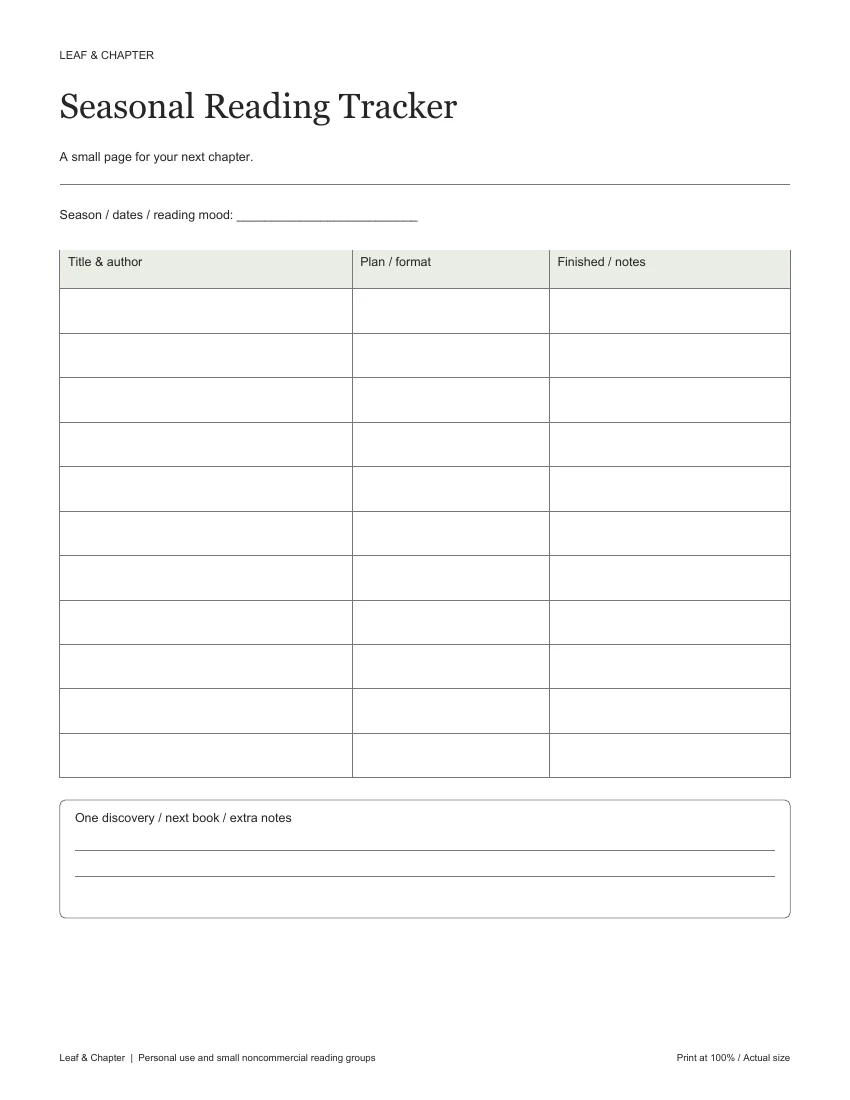
Use the Seasonal Reading Tracker to hold a small, flexible plan alongside the bingo card. Write Winter and your chosen month above the table or in the margin; the tracker is undated and has no dedicated season-name box. In Title & author, list a few possibilities. In Plan / format, add a practical cue such as print / quiet evening or audio / available now. Leave rows empty for discoveries, and use Finished / notes for a brief observation after reading.
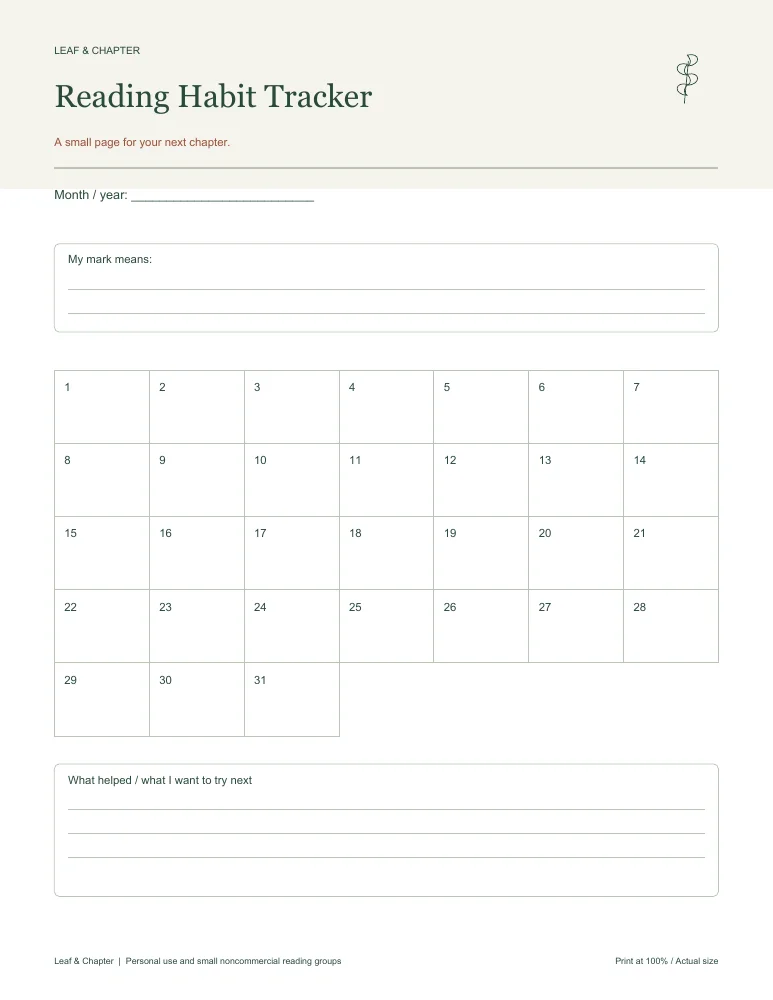
A loose goal could be to try one inviting prompt, enjoy a line, or simply notice which formats fit the month. If you want to observe when reading happens, the Reading Habit Tracker offers a month field, a place to define a mark, numbered boxes, and reflection space. A mark could mean spending some time with any book or audiobook. Blank boxes are neutral, not evidence of failure; cross out dates that do not exist in your chosen month.
4. Plan around library availability
Treat a hold as a possibility, not a promise that the book will arrive when your chosen square needs it. Check the catalogue for the format you want and note where each candidate might come from on your TBR list. In the seasonal tracker's Plan / format column, a short note such as ebook / on hold or paperback / borrowed keeps access visible. Add a due date there if it matters to your plan. Availability can change, so confirm current details with your library rather than assuming a saved title is ready.
For each inviting prompt, keep an easy alternative. If a new author's novel has a wait, try another available title by that author, ask a librarian for a few suggestions, or select an owned book for a different square. If the hold arrives after your reading month, read it then if you still want to. You can carry it forward without carrying forward the whole board.
A simple library visit can combine all four resources without making them all mandatory. Bring the TBR list or a photo of it, check a few candidates, and choose one book that appeals now. Back home, write the title on the bingo card when finished, or keep a shortened title there and the full details on the seasonal tracker. Use the habit tracker only if noticing reading moments interests you. Each sheet has a different job, and using just one is fine.
5. Adapt the board for a family
Family bingo is optional and can be adapted to ages, interests, access needs, and schedules. Share one card as a source of ideas, or give each willing reader a copy to interpret differently. A child might choose a picture book for a prompt while an adult chooses a novel; a shared read-aloud or listened-to story can count if that works for your household. No one needs to finish at the same pace, and a person who would rather observe or do something else can opt out.
Agree on a gentle way to mark the board. You might write a shared title in a square after reading together, or let each person keep their own notes. If a prompt is confusing or unappealing, replace it with a choice such as a book with an interesting cover. Keep the conversation about what people noticed or enjoyed rather than who completed more squares. Avoid prizes or privileges tied to book counts; a pleasant shared reading time does not need to be earned.
For a low-preparation session, put a few already-owned or borrowed books within reach and invite everyone to browse. Someone can read aloud, someone can look independently, and someone can choose not to participate. If Christmas planning makes the month busy, shorten the session or leave the board until another day. Blank spaces can remain blank, and a family board can end with a favorite moment rather than a completed line.
6. Make a book-club version
For a club, share the same prompts while letting members choose their own titles. This gives everyone a common starting point without requiring the same format, library access, or reading speed. At a meeting, invite each person who wants to share to name a prompt and explain what drew them to their choice. A member who did not read a bingo title can still suggest an appealing prompt, discuss an older favorite, or simply listen.
Alternatively, the group can choose one book and decide together which prompts it fits. Agree beforehand whether that title may occupy several squares. Overlap makes the board suitable for a single shared selection; separate titles create more variety but can demand more individual time. Neither method needs a contest. Keep a shared list of possible prompts in meeting notes, and let people substitute a prompt when the original does not fit their interests or access.
Make discussion concrete with questions that do not depend on finishing: What made this format convenient? Did the prompt lead you toward a title you already owned? Would you choose the same kind of book in another season? If your club exchanges Christmas gifts, discuss preferences and budgets separately from bingo, with participation optional. The activity should help members discover reading choices, not create an obligation to purchase or complete anything.
7. Finish with a useful reflection
At the end of your chosen month, look at the card without grading it. A completed line may be satisfying, but so can one good discovery or the decision to stop a book that was not working for you. Use the card's Favorite discovery / next round area for a title or prompt you would welcome again. If a square remained open, consider whether its prompt was uninteresting, its candidate unavailable, or the month simply had other priorities. You do not need to explain every blank.
On the seasonal tracker, use Finished / notes for a brief observation such as good in short stretches or wanted something lighter. The habit tracker's reflection space can hold one practical adjustment, such as keeping an audiobook ready or moving a print book to a comfortable chair. If the records feel like extra work, stop using them. A useful system makes the next choice clearer; it does not require a complete account of your leisure time.
Carry forward only what still interests you. An unread library candidate can stay on the TBR list with an updated where note, while a prompt that no longer appeals can disappear. For a fresh month, reuse the same undated resources rather than looking for a special winter worksheet.
A small checklist before you begin
- Choose a month and print the existing bingo card in a size that suits your paper.
- Circle an inviting line of three prompts, or select individual squares as a menu.
- Write your overlap and format rules in the margin, including whether rereads or audio count.
- Check your shelves and library, then pencil in one available candidate while leaving other spaces open.
- Optionally record format and access notes on the seasonal tracker or TBR list.
- At month's end, note one discovery or adjustment and carry forward only choices that still appeal.
Choose the version that fits your day
| Option | Works well for | Keep in mind |
|---|---|---|
| Solo prompt menu | Choosing a book by mood without committing to a full line. | Leaving spaces open is useful; resist turning every prompt into a shopping list. |
| Three-square line | A simple shared shape for a flexible monthly goal. | Decide whether one title can fill multiple squares before you begin. |
| Family shared card | Optional read-alouds and different ages contributing in their own ways. | Avoid comparing reading speeds or tying rewards to book counts. |
| Book-club prompt set | A discussion built around different titles, formats, and discoveries. | Make room for members who have not finished a book or cannot access a particular title. |
The free pages used in this guide
These are existing, undated resources. Open a resource page to choose its PDF, style and paper size; the lifestyle photograph above is an illustration.
For the starting card and its flexible counting options, visit the Reading Bingo Card. Keep possible titles and their sources on the TBR list, or gather a few seasonal choices and short notes in the Seasonal Reading Tracker.
A few useful questions
Can I use a winter bingo prompt for a book without a winter setting?
Yes. Winter can describe when you read, the mood you want, or the time you have available. A sunny setting, familiar reread, or practical nonfiction title can fit just as well as a snowy story.
What if my library hold arrives after the month ends?
Leave the square open, substitute an available book, or return to the prompt later. Note the hold on your TBR list or seasonal tracker so you can reconsider it when it arrives, without extending an unwanted deadline.
How do I change a printed prompt without making a new card?
Write a substitute beside the square or on a small slip, then use the title space for the book you choose. You can also ignore that square. The suggested winter prompts are adaptations, not a separate downloadable board.
Can a shared read-aloud count on more than one person's card?
Yes, if the participants want it to. Agree on the approach before marking the cards, and let each person decide whether to record the shared title. Different family members can also choose different prompts or opt out.