
1. Choose a book swap party format before invitations
Start with the experience you want guests to have. A relaxed browsing table gives people time to inspect covers and talk about their reading tastes. A turn-based exchange adds structure when several guests might want the same title. A themed swap, such as mysteries or books with memorable settings, can make a small collection feel cohesive, but a general-interest table gives guests more freedom to contribute.
For a straightforward turn-based party, ask guests to draw numbers, select one book each in that order, and reverse the order for the next round. Alternatively, give a token for each eligible book contributed and announce when tokens can be exchanged. Tokens suit uneven contributions, while equal turns are easier to explain. Neither method guarantees that every reader finds an appealing book, so say that browsing and passing are both welcome.
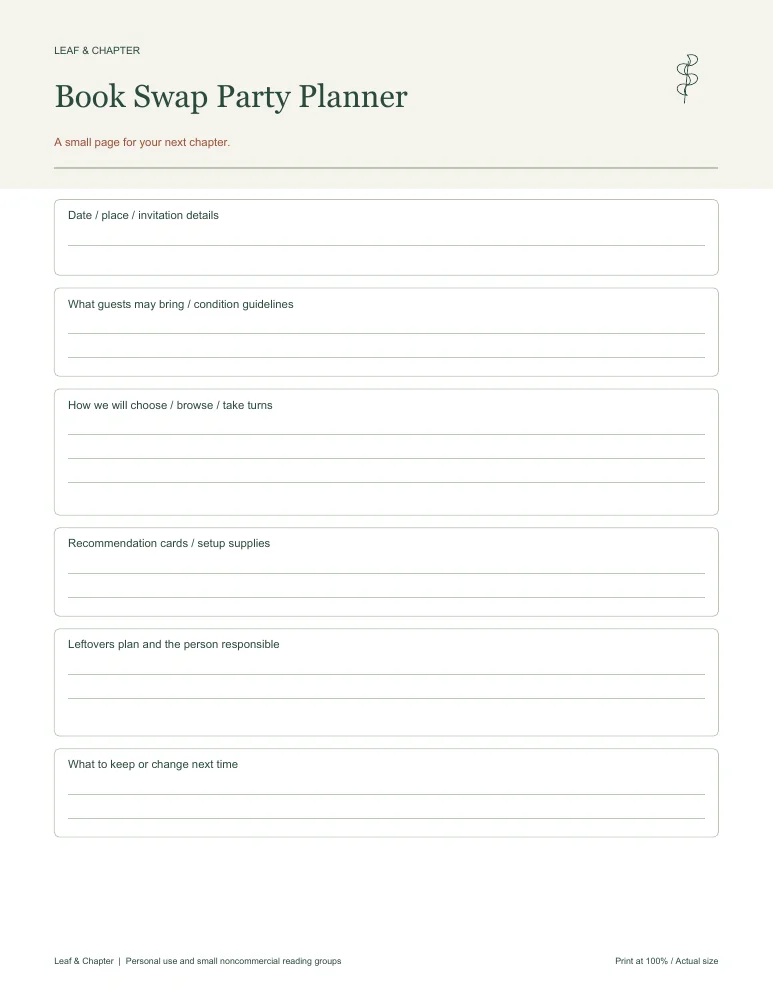
Use the existing Book Swap Party Planner to organize the invitation, supplies, choosing rules, and cleanup. Write a short invitation that names the audience, contribution limit, condition guide, and selection method. For example, invite guests to bring up to two adult books they own and explain that choosing will happen in announced rounds. Mention whether someone without a book can participate using a spare contribution.
2. Set a clear condition and quantity guide
Ask for clean, complete, readable books with ordinary wear. A creased spine or a penciled name may be acceptable; missing pages, heavy staining, or a strong odor may not be. Decide whether highlighting is welcome and tell guests in advance, especially if the collection includes nonfiction. The aim is a useful shared standard, not an inspection that embarrasses anyone.
Set a modest limit that matches the table and the choosing system. One to three books per person is a workable starting point; a smaller limit leaves more room to display covers, while a larger one provides more variety and creates more sorting and cleanup. Ask guests to bring books they own and are ready to give away. Library books and borrowed copies should stay out unless the owner has explicitly agreed.
If someone arrives with a book outside the guide, speak privately and offer a practical choice: keep it with their belongings or place it in a separate, clearly labeled free pile if the host has agreed to manage one. Do not put the guest on the spot by announcing a defect. Keep any separate pile outside the main choosing rounds so the rules remain consistent.
3. Write useful recommendation cards
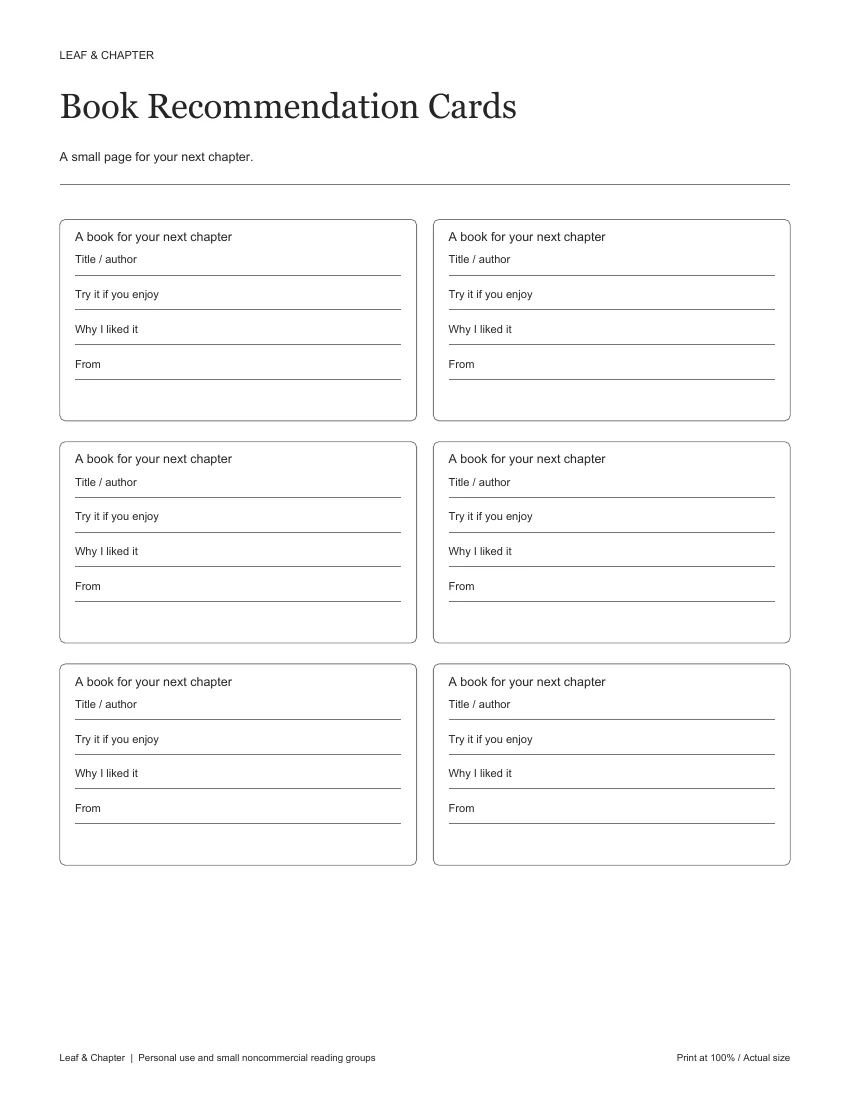
Place the existing Book Recommendation Cards beside the books, with pens for guests who want to add a note. Each card has space for a title and author, who might enjoy the book, why the recommender liked it, and who it is from. A card can sit beside a contributed copy, or guests can exchange recommendations for books that remain at home.
Specific, spoiler-free details help a browser decide. For a book a guest has actually read, a note might say it suits readers who enjoy slow mysteries with a strong sense of place, followed by a sentence about its vivid setting. Describe the opening situation or reading experience rather than revealing a twist. If someone shares a title they have not read, they can label it as a book they are curious about instead of presenting it as a personal recommendation.
Make cards optional and allow guests to leave fields blank. A guest might prefer to discuss a book quietly, or may have nothing particular to add. The cards are not lending records: if a group also lends personal copies, track borrower and return arrangements separately. A brief neutral note about potentially difficult material may be useful, but it cannot promise a complete content review.
4. Give everyone an equal browsing chance
Arrange books loosely by genre or audience, with covers visible where space allows. Put bags and already chosen books away from the available table, and separate duplicate copies so guests can see them. Before anyone selects, explain the rule aloud and give everyone a chance to browse. If guests arrive at different times, wait for the agreed start rather than allowing early arrivals to reserve favorites.
In a numbered exchange, draw the order openly and let each person take one book or pass on their turn. Reverse the order for a second round if that was announced. Passing should not require an explanation: a guest may already own the available titles or simply want to take fewer books home. Keep the initial rounds separate from any later free-for-all, and tell guests when that change will happen.
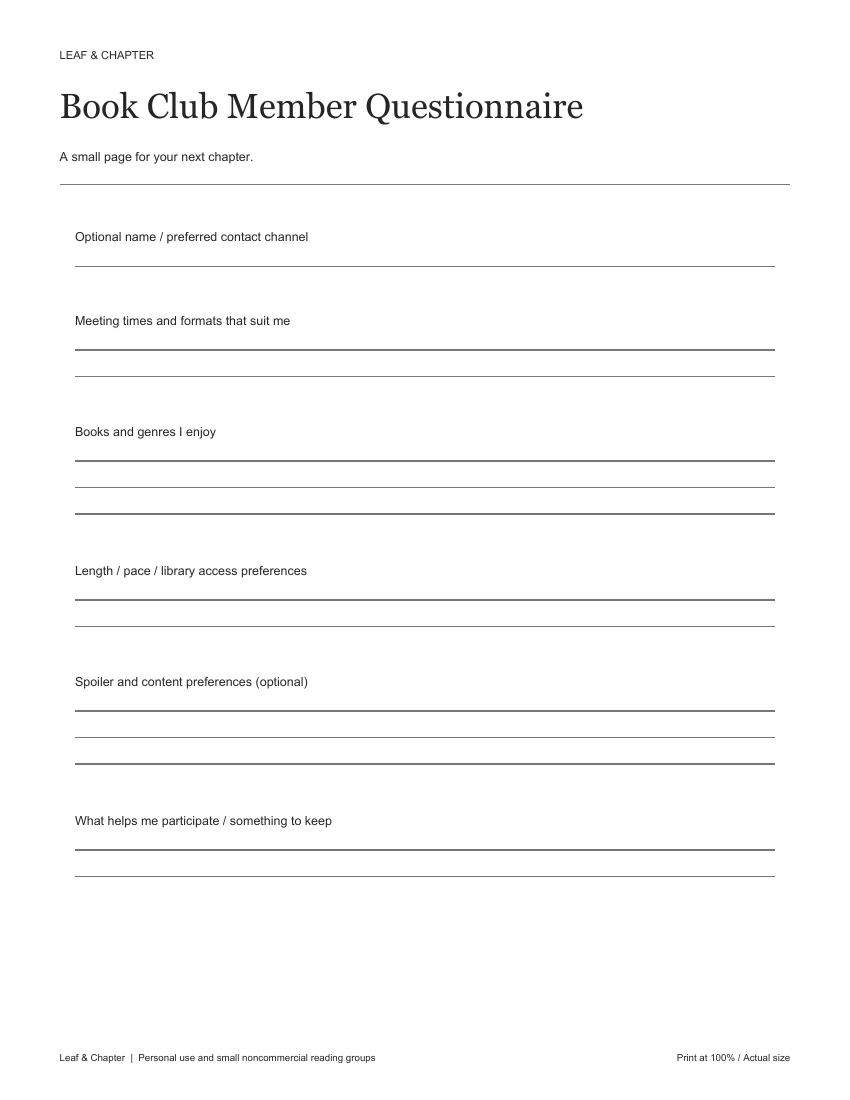
For a recurring club, the existing Book Club Member Questionnaire can help the organizer understand preferences and access needs before planning. Its questions cover genres, length, pace, meeting times, and optional spoiler and access preferences. Explain who will see responses, allow blanks, and share patterns rather than private answers. Use what you learn to arrange a more accessible event, not to assign anyone a fixed taste.
5. Handle unmatched books kindly
An unchosen book is not a verdict on its contributor. Guests may own it already, prefer another format, or be looking for a different kind of read. Avoid calling attention to whose books went first or last. Instead, invite an optional final browse and let people mention an overlooked title without making its contributor defend it.
Decide before the party whether books left after the main rounds can be taken freely, including by guests who brought fewer books or none. If so, announce that opportunity to everyone at the same time. If the event uses tokens, explain whether unused tokens have any role in this final stage. A clear transition prevents a generous gesture from feeling like a surprise rule change.
Guests may also take their own unclaimed contributions back if that is the agreed arrangement. Keep ownership identifiable in a separate host list or by arranging a simple way for contributors to recognize their copies. Do not write a name inside a book without permission, and do not assume a recommendation card establishes permission to donate it.
6. Adapt for different ages and formats
For a mixed-age gathering, create clearly labeled areas by broad audience and let families decide together which books are suitable. A family activity is optional: a child might browse with an adult, exchange one picture book, or simply listen to recommendations. Offer the same respect to someone who does not want to participate, and avoid prizes or rewards based on how many books anyone brings or reads.
For a group with varied access needs, ask in advance about practical arrangements such as room to move between tables, seating, and whether print size matters. Large-print books can have their own visible area without being treated as less desirable. Check that the venue and table layout work for the people attending, and invite private requests without asking guests to explain a diagnosis or personal history.
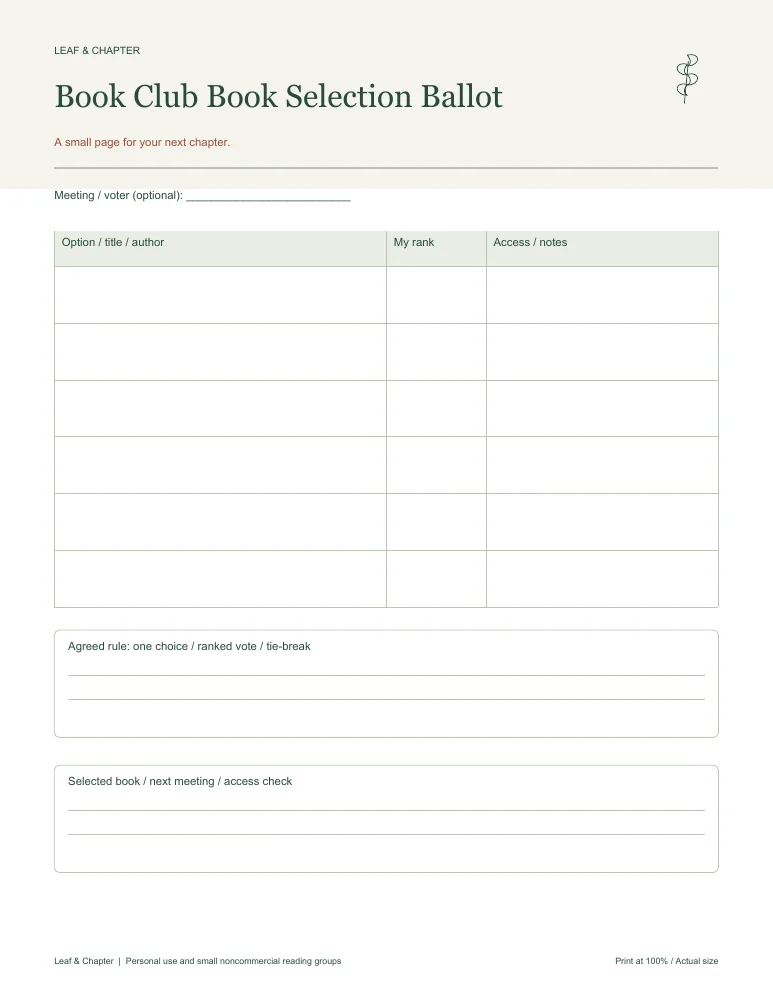
Physical books are usually the simplest items to transfer at the table. If guests want to discuss ebooks or audiobooks, use recommendation cards to share titles rather than assuming a digital purchase or library loan can be transferred. A club might also vote on a future shared read using the existing Book Club Voting Ballot. Agree on the counting and tie rules first, and check availability in the formats members need before confirming the winner.
7. Plan what happens to leftover books
Before the event, ask each contributor whether unclaimed copies should return to them or may be donated. Identify one person to coordinate any agreed donations, and make returning books the fallback if a suitable destination is not confirmed. A charity shop, school, or community shelf may have different current rules about condition, subjects, and quantities, so check directly before delivering a box.
At the end, separate books for return from books approved for donation. Confirm who will take each group and when the handoff will happen. This small closing task keeps the host from inheriting an unexpected pile and gives contributors a chance to reclaim copies that cannot be accepted. Thank everyone for sharing without treating the remaining books as failures.
Choose printable settings for the actual gathering rather than printing every resource by default. The planner, questionnaire, ballot, and cards are existing undated resources, not a new party pack. They offer botanical, minimalist, and ink-saving styles in A4, US Letter, and A5. Decorative pages add atmosphere; simpler pages can be easier to read or suit a larger batch, though ink use and print quality depend on the printer and settings. Preview the matching paper size before printing and cutting cards. See the Printing Guide for more help.
A small checklist before you begin
- Choose a swap format and write the choosing, passing, and final-browse rules before inviting guests.
- Send a contribution limit, condition guide, audience description, and start time in the invitation.
- Ask contributors whether unclaimed books should be returned or may be donated.
- Arrange separate spaces for available books, selected books, and guests' belongings.
- Print only the existing planner or cards you need, and provide pens for optional notes.
- Assign someone to return leftovers or check and deliver agreed donations.
Choose the version that fits your day
| Option | Works well for | Keep in mind |
|---|---|---|
| Numbered rounds with a reversed second round | A small group that wants a predictable order and a simple way to share early turns. | Explain passing and the number of rounds before anyone chooses; reversing order cannot guarantee equal appeal. |
| One token per eligible contribution | A group bringing different numbers of books that wants contributions reflected in initial selections. | Set a contribution limit and explain how guests without books can join. |
| Open browse after initial rounds | Giving remaining books another chance to find readers once the agreed exchange is complete. | Announce the opening to everyone together and confirm that contributors permit remaining books to be taken. |
| Recommendation exchange without physical books | Readers who use different formats or do not want to give away copies. | Label unread suggestions as possibilities, and do not imply digital purchases or library loans are transferable. |
The free pages used in this guide
These are existing, undated resources. Open a resource page to choose its PDF, style and paper size; the lifestyle photograph above is an illustration.
- Book Swap Party Planner
- Book Recommendation Cards
- Book Club Member Questionnaire
- Book Club Book Selection Ballot
Prepare the exchange with the Book Swap Party Planner, add thoughtful notes with Book Recommendation Cards, and consult the Printing Guide before making copies.
A few useful questions
What if two guests want the same book?
Use the selection order announced before browsing. The person whose turn comes first may choose it; the other guest can select another title or pass. Do not change the rule when a popular book appears.
Should guests wrap the books for a surprise exchange?
Wrapping can make discovery playful, but it prevents guests from checking condition, print size, and other details. If you use it, add a spoiler-free description and allow someone to pass or inspect a book before committing.
Can a guest attend without bringing a book?
Yes, if the invitation explains how. The host could provide spare contributions or invite everyone to browse remaining books after the initial rounds. Decide in advance so the arrangement feels welcoming rather than improvised.
How many books should each guest bring?
Choose a small limit that suits your space and selection method, then state it in the invitation. One to three books per person is an example, not a required rule. Explain whether each contribution earns a selection and how guests without books can join.