
1. Start family reading night with a small invitation
Begin by asking who would like to spend some time around books, rather than announcing a compulsory family event. Choose a place and a comfortable window that fits the people interested in joining. An invitation might offer a shared story followed by separate reading, with permission to leave or switch to a quiet activity. A household can include relatives, chosen family, friends, or whoever enjoys gathering together.
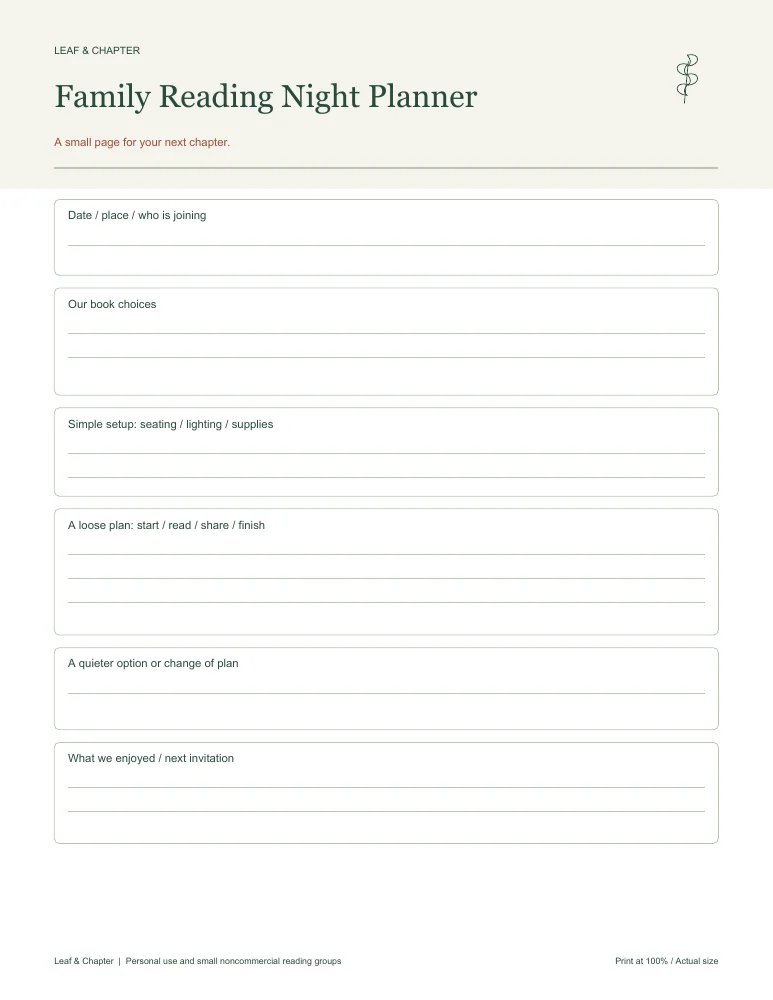
Use the existing Family Reading Night Planner to put the practical choices in one place. In Date / place / who is joining, jot down the arrangement; in A loose plan, write a short sequence such as choose books, share a story, then settle with individual choices. The boxes are reminders, not a contract. Leave uncertain details blank until the group decides, and use A quieter option to note drawing nearby or taking a break.
2. Let readers choose different books
Set out a small assortment from shelves or the library, and invite people to bring something they already want to read. A picture book, comic, novel, poetry collection, ebook, and audiobook can all belong in the same gathering. Someone may want to revisit a familiar favorite while another samples a new author. Independent choice removes the need to find one title that suits every interest and reading level.
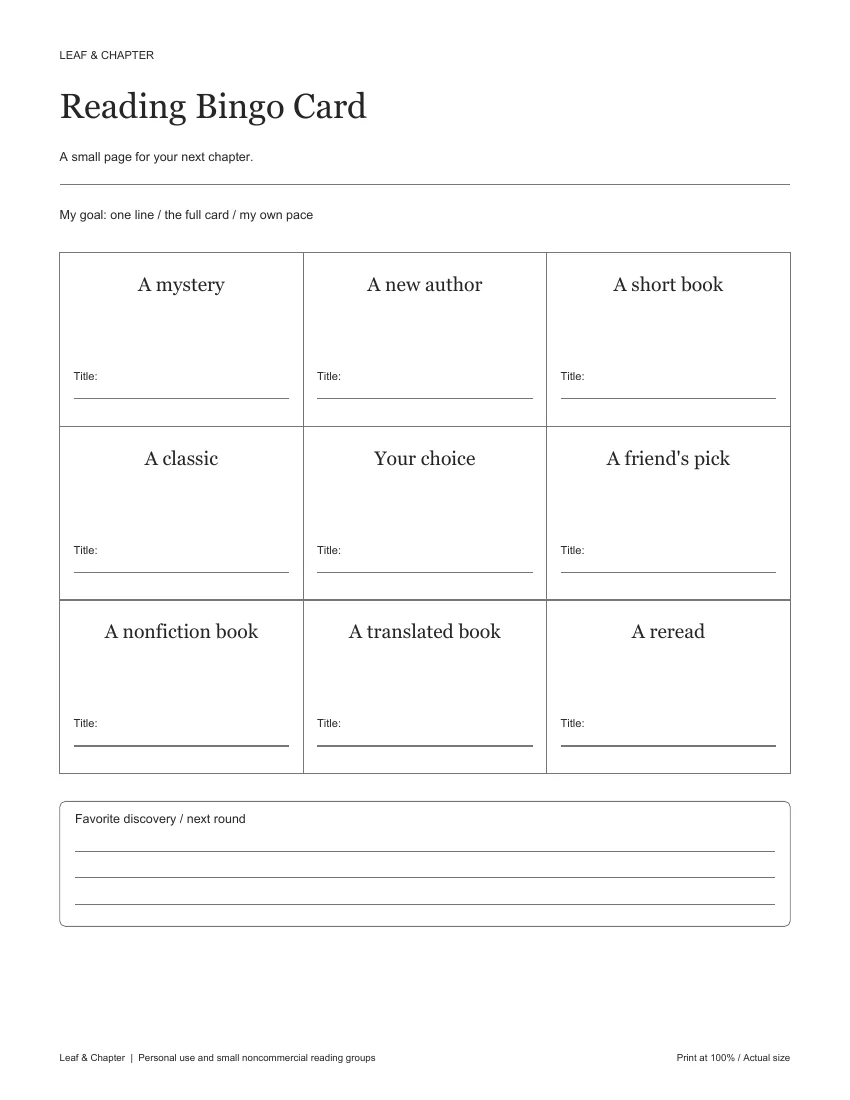
If choosing feels difficult, use the existing Reading Bingo Printable as a menu rather than a competition. Invite each person to consider an appealing prompt, then look for a suitable book among those already available. A prompt can be swapped if it does not suit the reader, and no one needs to complete the card. Add possible titles to Our book choices on the planner, or leave the box open for a spontaneous selection. A book can also be put aside if it turns out not to be enjoyable.
3. Offer a read-aloud alternative
A shared read-aloud can give the evening a gentle opening before everyone moves to their own books. Offer a few possibilities, check that the material suits the listeners, and read a sample before settling on one. A short picture book, a poem, or a natural stopping point in a longer story can work. The person reading need not perform voices or prepare questions; an ordinary speaking voice and a comfortable pace are enough.
Read-aloud time is an option, not the only legitimate way to join. Someone might listen while drawing, use headphones for an audiobook, or settle nearby with a different book. Agree on a practical arrangement for sound so a listener using audio does not disturb someone who wants quiet. If attention fades, stop at a natural point without asking anyone to explain. Save the place for another day, or choose something else next time.
5. Make one simple bookmark activity
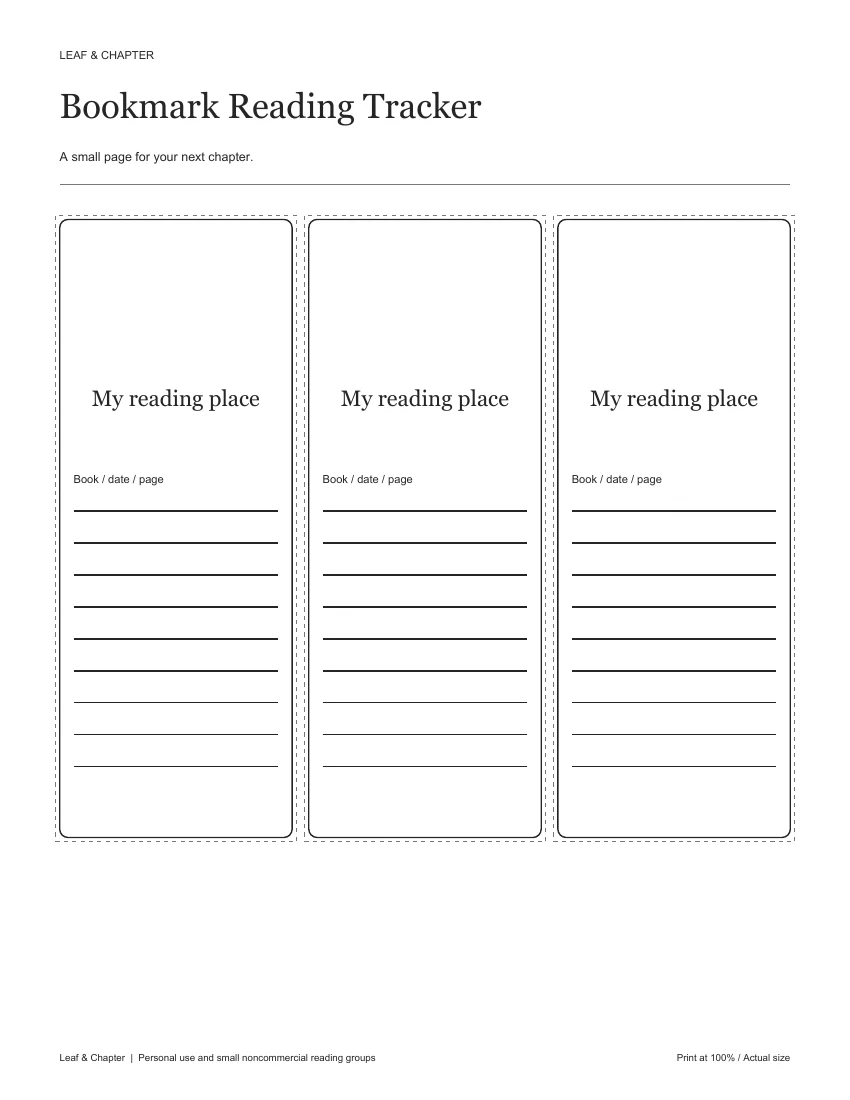
Before settling in, print and cut the existing Bookmark Reading Tracker. Each sheet has three compact trackers, so one sheet may be enough to offer a choice without making a large craft project. Put out pencils and let anyone who wants a bookmark write a book title. They can add a small decoration if there is room, or leave it plain and begin reading. The bookmark itself is useful even if its tracking spaces stay empty.
For a reader who likes a record, choose one consistent way to use the date and page spaces: note the page reached when closing the book, or record the start and end pages of a session. A listener could use chapter numbers or listening time instead, with a brief note explaining the choice. Keep entries private if preferred, and do not compare them across books or people. Gaps need no explanation; the bookmark can simply return to its place until the next session.
6. Use a flexible group record
If the group enjoys remembering its choices, keep one bingo card near the books and let different readers contribute titles to prompts that fit. Decide together whether one book may fill more than one square, and whether each person wants to add their own title. Audiobooks, graphic novels, rereads, and shared stories can all count if the group chooses. A three-square line is one possible route on the three-by-three card, but a single interesting square is also enough.
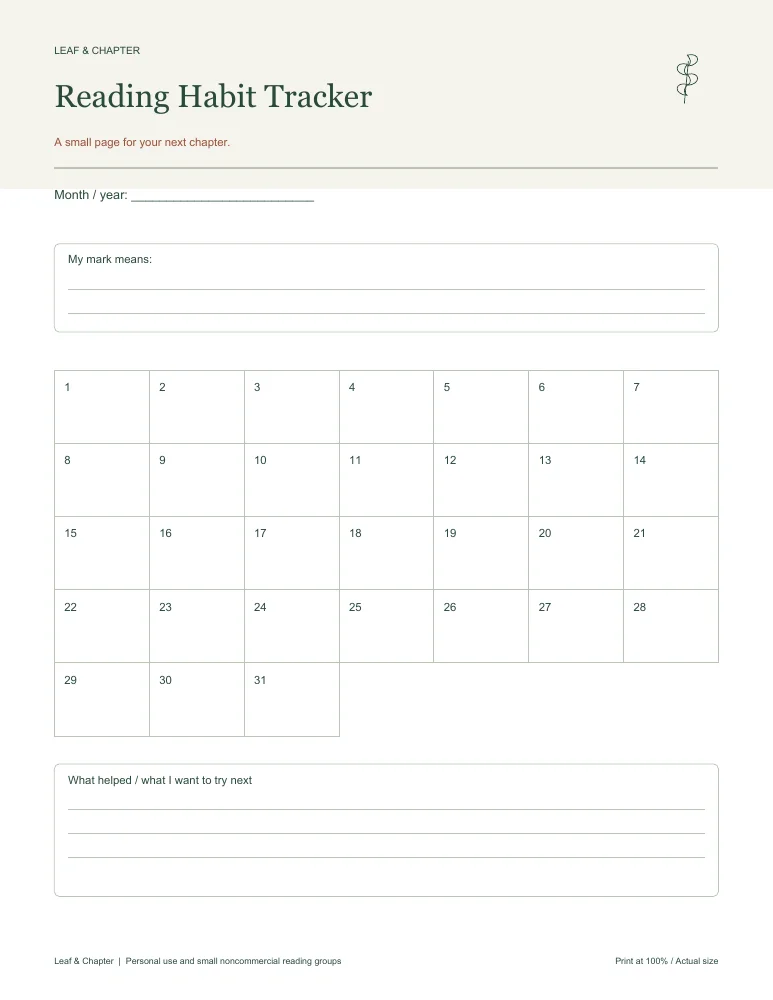
Alternatively, an adult or another interested participant can use the existing Reading Habit Tracker privately to notice whether an inviting reading window fits their routine. Define a mark as spending some time with a book or audiobook, then use the numbered boxes for dates when that happened. The page has 31 boxes, so cross out dates that do not exist in the chosen month. Blank boxes mean only that reading was not recorded. Neither the card nor the tracker needs to become a family scoreboard.
7. End while the invitation still feels good
Close when people seem ready, rather than waiting for everyone to finish a chapter. Offer a low-pressure question such as what caught your attention, and allow answers in different forms: someone might show an illustration, mention a character, or say they would rather keep reading privately. Passing is fine. Avoid asking for summaries or checking comprehension; the conversation is an invitation to share, not proof that anyone participated correctly.
Afterward, use What we enjoyed / next invitation on the planner for one practical observation. Perhaps the group preferred choosing books first, or the lamp worked better beside a different chair. Keep the planner with the books if another gathering sounds appealing, and leave the follow-up blank if there is nothing useful to note. A future reading goal might be to make space for another pleasant gathering, not to increase pages or book counts. It is equally fine to wait until someone wants to suggest one.
A small checklist before you begin
- Invite interested participants and choose a comfortable place and flexible time.
- Write a brief opening, reading, and closing sequence on the family reading night planner.
- Gather a few varied books and check any shared read-aloud for suitability.
- Set out a lamp, seating, bookmarks, and any useful glasses or headphones.
- Print and cut bookmark trackers for anyone who wants one; leave unused spaces blank.
- Offer an optional closing question and note one useful adjustment for a future gathering.
Choose the version that fits your day
| Option | Works well for | Keep in mind |
|---|---|---|
| Family reading night planner | Keeping the invitation, setup, loose sequence, and quiet fallback together. | Filling every box before asking participants what they want; a short phrase or blank space can be more useful. |
| Reading bingo card | Offering book-choice prompts or keeping an optional shared record across different readers. | Treating squares as assignments or comparing who contributed most; agree on flexible counting rules instead. |
| Bookmark reading tracker | Keeping an individual title and optional session notes inside or near a book. | Comparing page entries between readers or formats; the compact spaces are for a personal record. |
| Reading habit tracker | Privately noticing when reading fits an individual's routine over a month. | Treating blank dates as failures or using nonexistent dates in a shorter month. |
The free pages used in this guide
These are existing, undated resources. Open a resource page to choose its PDF, style and paper size; the lifestyle photograph above is an illustration.
For the practical setup, open the Family Reading Night Planner. For optional book-choice prompts, explore the Reading Bingo Printable. If you want help choosing paper and settings before printing, visit the Printing Guide.
A few useful questions
What if only two people want to join?
Two people can share a story, read separate books nearby, or try one bingo prompt. Invite others without making the gathering depend on everyone attending.
Can someone participate without reading independently?
Yes. Listening to a story, looking at illustrations, choosing a book, or drawing nearby can all be comfortable ways to take part. Ask what the person would enjoy rather than assigning a role.
Should we print every resource before the first gathering?
No. Start with the planner if it makes organizing easier, or simply gather books without printing anything. Add a bookmark, bingo card, or personal habit tracker only when its particular use appeals.
How can we keep one person's audiobook from disrupting a read-aloud?
Offer headphones, separate seats, or different parts of the evening for listening and reading aloud. Ask the people involved which arrangement is comfortable, and allow the plan to change.