
1. Give your reading slump reset permission to be small
Start by making the reset smaller than the problem feels. Instead of deciding to read every evening, choose one possible action: open a library sample, locate a book you already own, or sit with a chapter when you have a quiet moment. Stopping after that action is allowed. A reset is an invitation to experiment, not a contract to rebuild a habit on a deadline.
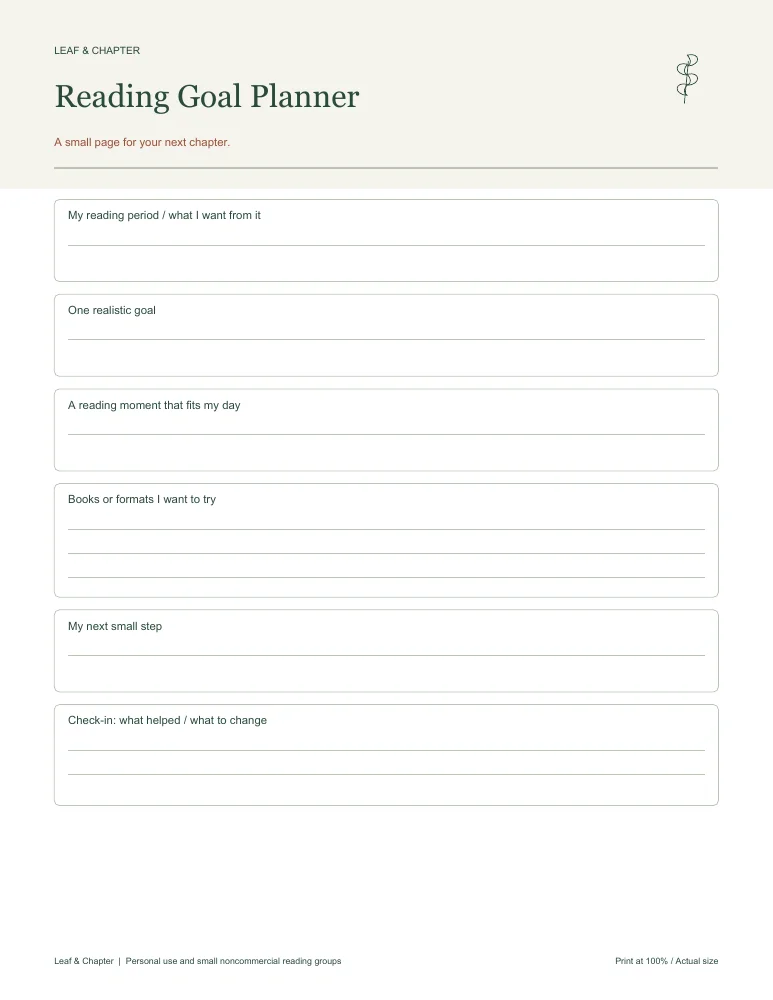
If writing helps, use the existing reading goal planner for a short, flexible plan. In period, choose a span that feels useful; in goal, try something like “find a story I want to return to.” The reading window might be a weekend afternoon, while next step could say “open the sample.” Leave books blank until something appeals, and use check-in to change the plan rather than grade yourself.
A book-count goal is optional. You might prefer a direction, such as sampling a subject or returning to a favorite author, with no number attached. If a count makes reading feel like another obligation, set it aside. If it helps you plan, keep it loose enough to accommodate longer books, rereads, listening, and changes of mind.
2. Put one unfinished book aside
An unfinished book can quietly occupy the space where another choice might go. Take it off the table or remove it from the front of your device for now. You do not have to decide whether it is permanently abandoned. It may be a good book for a different mood, an inconvenient format, or simply a poor fit. Returning a borrowed copy is also a reasonable way to make room.
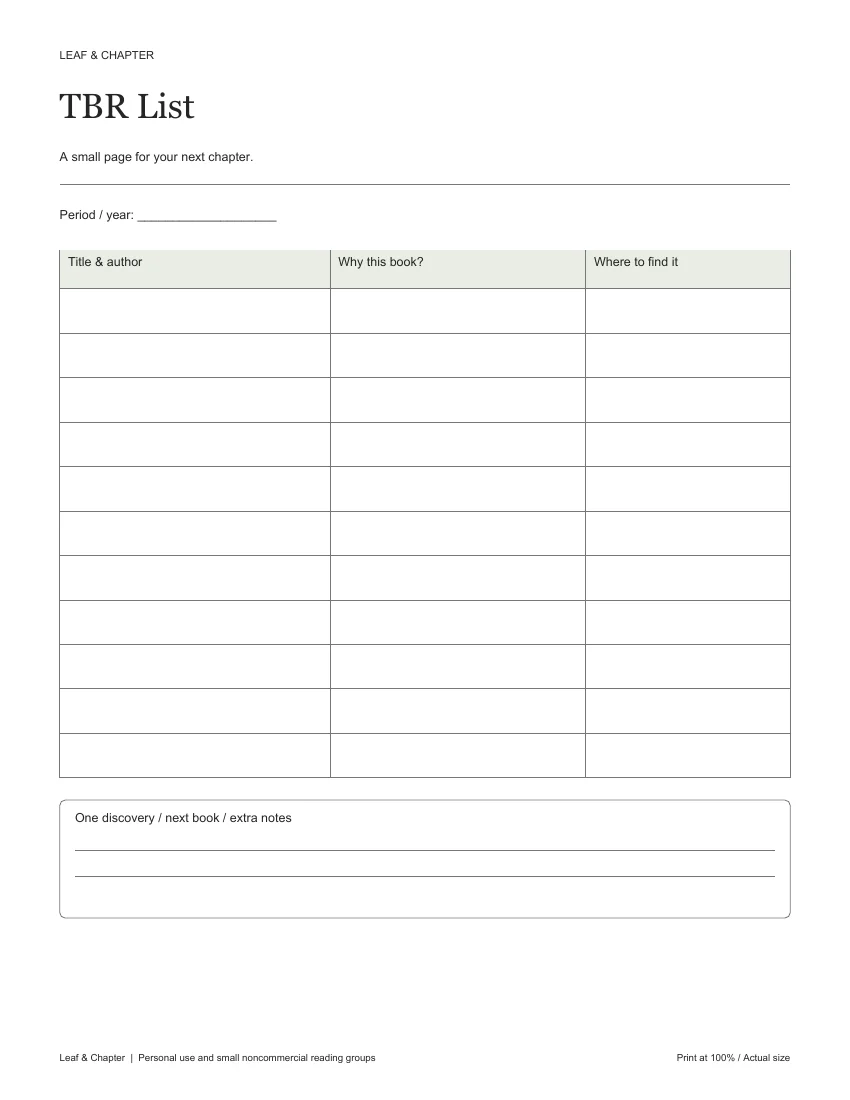
If you want to remember the decision, add a short note to your TBR list. The worksheet has title, author, why, and where fields. In why, you might write “interested in the setting; not ready for the slow opening.” In where, note where you can find it again. That preserves the possibility without asking the book to remain your next task.
For a club or shared read, separate the social plan from the obligation to finish. You could attend and say how far you got, ask whether listening is an option, or skip this discussion. If you are reading with family, invite each person to choose whether to continue; a shared activity works better when nobody has to defend a change of taste.
3. Choose a familiar format
Think about the form of reading that currently feels easiest to approach. A paperback may be pleasant if you want a break from screens; an ebook can offer adjustable text and a sample without a library trip. Audio may fit a walk or a household task, although it is less convenient if you want to pause over sentences or easily return to a particular passage. Choose for comfort, not because one format seems more serious.
Make access part of the decision. Check whether a library copy is available rather than assuming a hold will arrive when you want it. If you already own a book in a format you enjoy, put it somewhere reachable. If the format creates friction, switch: listen to a sample before borrowing the audio, or try a print copy when your attention keeps wandering on a device.
You can also choose the setting in which a format works. Headphones may make listening comfortable on a walk but awkward when you need to hear someone nearby. A larger print page may give your eyes a rest from a small screen, while an ebook may be easier to carry. These are practical tradeoffs, not rules about the correct way to read.
4. Try a short work or a reread
A short story, individual essay, poem, or short graphic work offers a smaller entry point than a long novel. Look for something whose subject or voice interests you, rather than choosing solely by length. Read an opening or sample first: a brief work can still be dense, unsettling, or simply not what you want today. You are allowed to stop before the end.
A reread offers a different kind of ease. Pick a book or section whose atmosphere you remember enjoying, even if you cannot recall every detail. Knowing the general shape can make it easier to settle in without tracking a new cast. Alternatively, revisit a favorite essay rather than committing to the entire collection. A reread is a complete reading choice, not a lesser substitute for something new.
Afterward, pause before searching for a similar title. Was the pleasure in the humor, the clear structure, the illustrations, or the familiar voice? Naming one feature gives you something more useful to look for than “another short book.” If nothing stands out, leave the question open and try a different format or activity instead.
5. Reduce the choice pile
Turn a crowded TBR into a temporary shortlist of up to three distinct possibilities. For example, choose a familiar mystery, an essay collection on a subject you already enjoy, and a novel with a setting that intrigues you. Different moods make the comparison easier than three nearly identical books. Check access, then read a little from whichever opening attracts you; the shortlist does not establish an order.
The existing TBR list printable helps you capture why each title is there and where you might get it. “Friend mentioned warm dialogue” is more useful than “recommended”; “check library” is more accurate than assuming a copy is available. Circle your current candidates and leave the rest of the list alone. Remove an old suggestion if the reason no longer interests you.
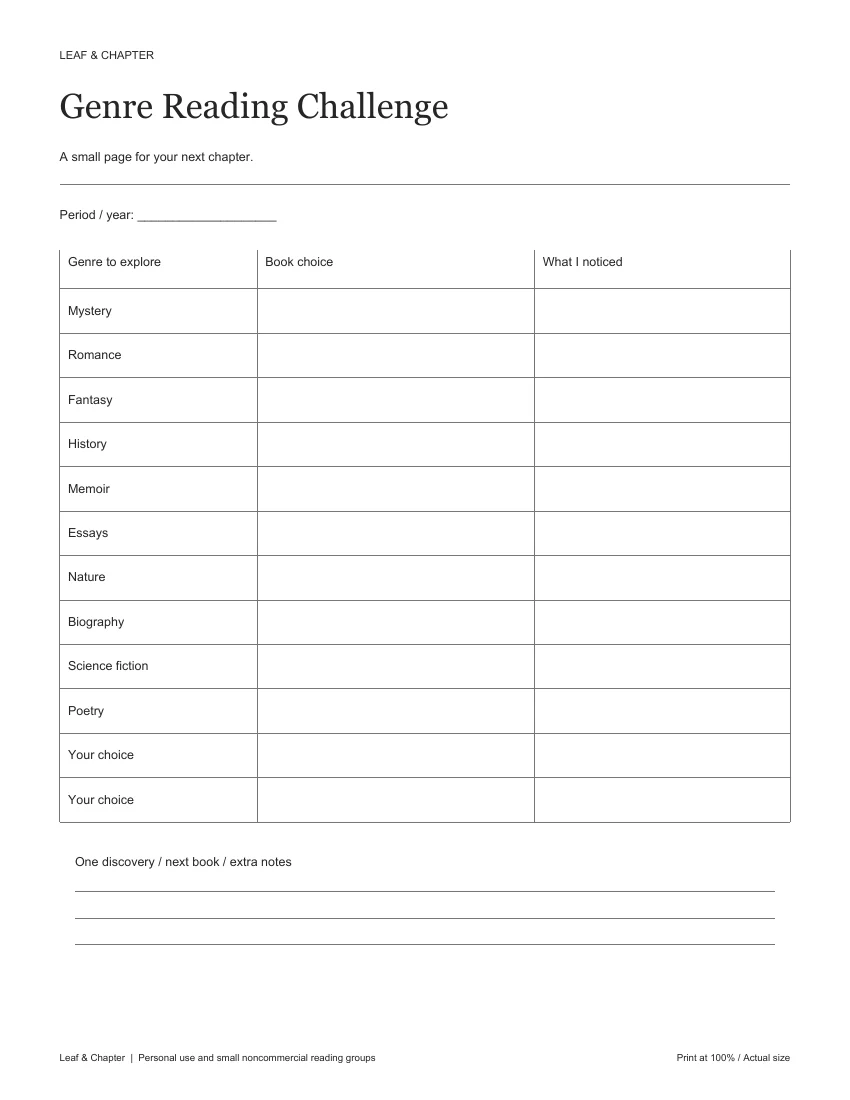
If all your choices look alike, borrow an idea from the existing genre reading challenge. Its printed rows include Mystery and Memoir, with Your choice rows for other categories. Put a possible title in Book choice and use What I noticed after sampling. Try a bridge from something familiar, such as a mystery with a historical setting. Leave other rows blank; this is a way to explore, not a requirement to complete every genre.
6. Make one comfortable reading cue
Pair reading with something that already happens, rather than creating an elaborate routine. Place a book beside your afternoon tea, keep an ebook sample ready for a bus ride, or leave a paperback by a comfortable chair. The cue is simply a reminder that the option exists. If the moment arrives and you would rather rest or talk to someone, nothing has gone wrong.
Adjust the surroundings to the book and your needs. A lamp and a bookmark may make print easier to return to; headphones and a saved listening position can help with audio. Keep the setup simple enough that preparing to read does not become a separate project. A cozy corner can be inviting, but it is not a prerequisite, and a shared or busy home may call for a portable option instead.
For an optional family version, put a few different reading choices within reach and let each person pick, listen, look at pictures, or opt out. Someone might read aloud while another person draws, if that suits the group. There is no need to compare pages or attach rewards to book counts. The point is a comfortable shared moment, adaptable to different ages, interests, and attention.
7. Notice enjoyment instead of streaks
At your next check-in, ask a more useful question than “Did I read every day?” Try “What made me curious?” or “Where did this become hard to return to?” A book can be appealing even if you opened it once, and a regular reading slot can be inconvenient even if you managed to use it. Change one thing at a time: the title, the format, the location, or the expectation.
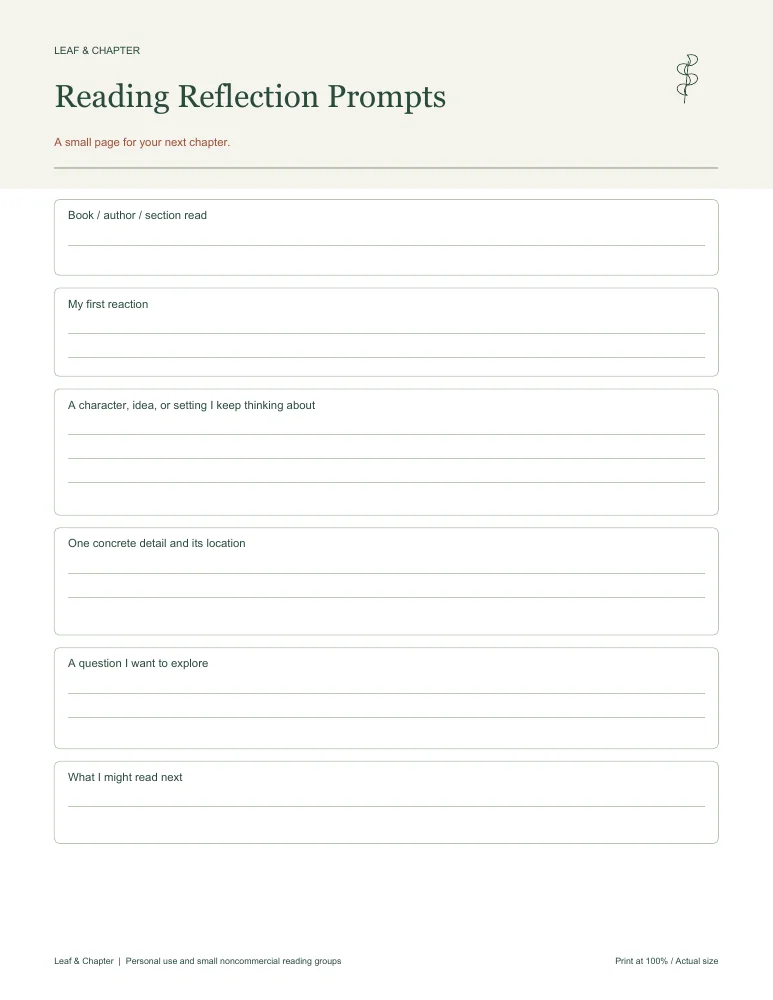
The existing reading reflection prompts can help you keep an early impression without writing a review. In Book / author / section read, identify how far you got. Use My first reaction for a sentence, then One concrete detail and its location to describe a moment that caught your attention. Leave What I might read next blank if no connection has appeared. The page is useful before finishing, and unanswered fields are fine.
If you want paper for this reset, print only the existing resource pages you will use. A4 or US Letter gives handwriting more room; A5 is easier to carry but offers less space. Botanical styling adds decoration, while minimalist or ink-saving styling keeps the page quieter. Actual ink use and print quality depend on your printer and settings; the printing guide can help with setup.
A small checklist before you begin
- Set one unfinished book aside or return it, without deciding whether you will ever finish it.
- Choose one small next action, such as opening a sample, and write it in the reading goal planner if useful.
- Select a comfortable format and check whether the copy you want is actually available.
- Circle up to three varied candidates on your TBR list and note why each interests you.
- Place one book or saved sample beside an existing daily cue, such as a chair or a bag.
- After trying a selection, note one enjoyable detail or change one part of your setup.
Choose the version that fits your day
| Option | Works well for | Keep in mind |
|---|---|---|
| Familiar reread | Returning to a known voice or atmosphere without learning a new cast. | A book you once loved may not suit your current mood; try a favorite section instead. |
| Short story or essay | Sampling a complete work without committing to a long book. | Short does not always mean easy or enjoyable; check the subject and opening. |
| Audiobook sample | Trying a story while walking or doing a compatible task. | Narration and surroundings affect the experience, so test the sample before borrowing. |
| Genre bridge | Exploring something different while keeping a familiar feature, such as a historical setting. | One book cannot represent an entire genre; leave unused challenge rows blank. |
The free pages used in this guide
These are existing, undated resources. Open a resource page to choose its PDF, style and paper size; the lifestyle photograph above is an illustration.
For a closer look at choosing from a crowded list, visit the TBR list printable. If you want to experiment with a different shelf, try the genre reading challenge. To capture a specific response without writing a formal review, explore the reading reflection prompts.
A few useful questions
What if I cannot choose even from a three-book shortlist?
Make access the tiebreaker: open the candidate you already have or can sample immediately. If its opening does not interest you, close it and try another later. You can also put the whole shortlist away; choosing nothing today is a valid outcome.
Can I use the genre challenge without turning the reset into homework?
Yes. Choose one printed category or a Your choice row, then sample a title with a feature you already like. Add an observation only if it helps you choose again. The remaining rows can stay empty.
Should I finish my current book before starting a reread?
No. You can pause the current book, read both at different times, or decide not to return to it. A brief note about where you stopped and what interested you can make a later decision easier.
Which printable should I start with if I only want one page?
Choose the TBR list if too many options are the problem, the goal planner if finding a practical window is harder, or the reflection prompts if you want to understand what you enjoy. Use the genre challenge when you want a gentle change of shelf. None is required.