1. Build a TBR jar from books you can access
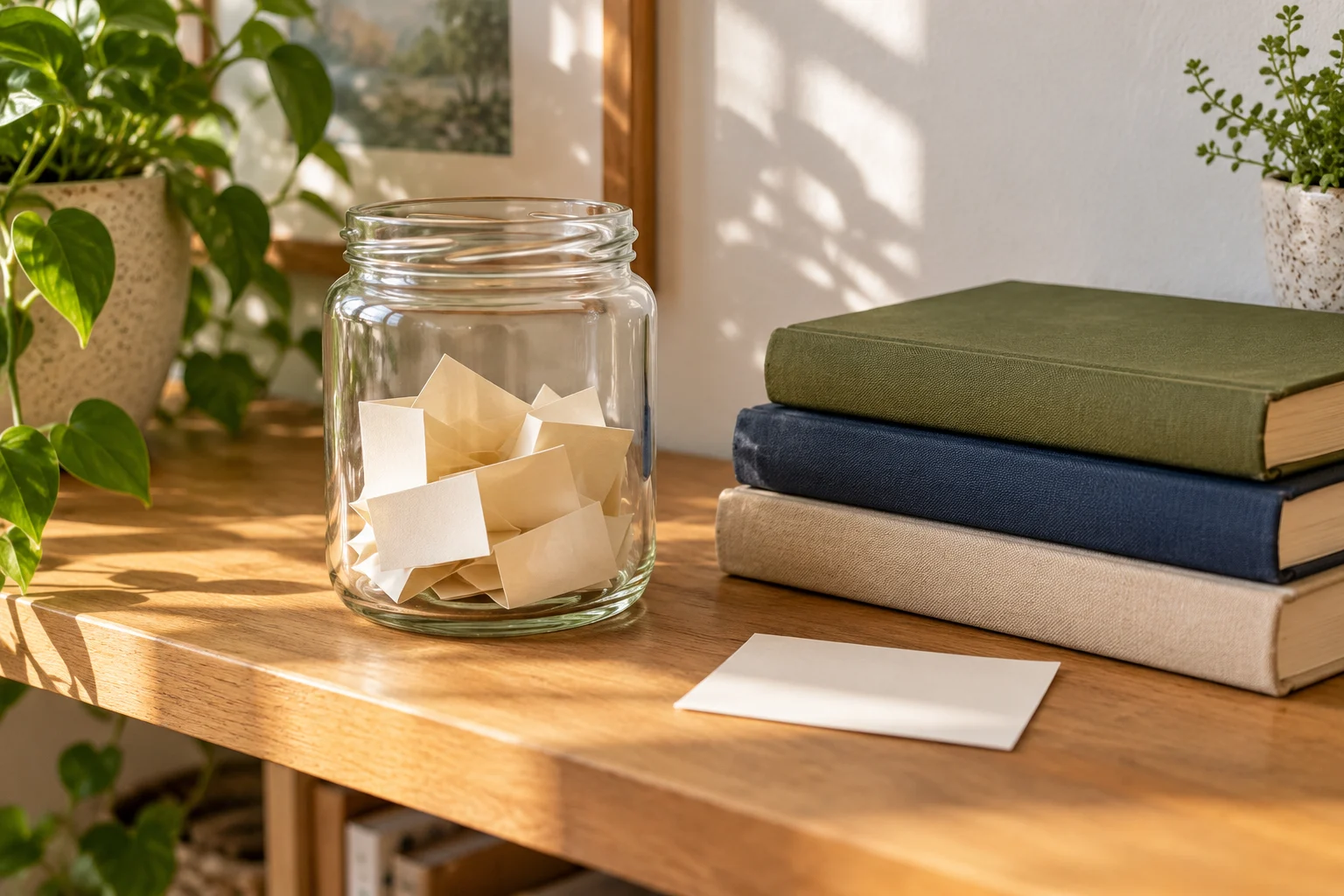
Start by gathering a small selection from your shelves, ebook library, current loans, or other sources you can check easily. Write each title and author on a separate scrap of paper, fold the slips, and place them in a container. Include genuinely different options: perhaps a familiar mystery, an essay collection, and a novel with a setting that interests you. A jar full of books you feel obliged to read merely hides the same difficult decision inside folded paper.
Check that a book is actually available before treating it as an immediate choice. A title on a library wish list is not the same as a loan waiting on your device. You can keep uncertain titles in a separate envelope labeled “check access,” then move them into the jar when they are ready.
2. Choose title slips or mood prompts
Title slips work well when you already have appealing books nearby: draw one and you have a specific place to start. Mood prompts offer more freedom. Write “something funny,” “a short book,” “a place I want to visit,” or “a story with a mystery,” then browse what you own or consult your list. A prompt may take longer to turn into a book, but it can feel less restrictive when your energy or interests change.
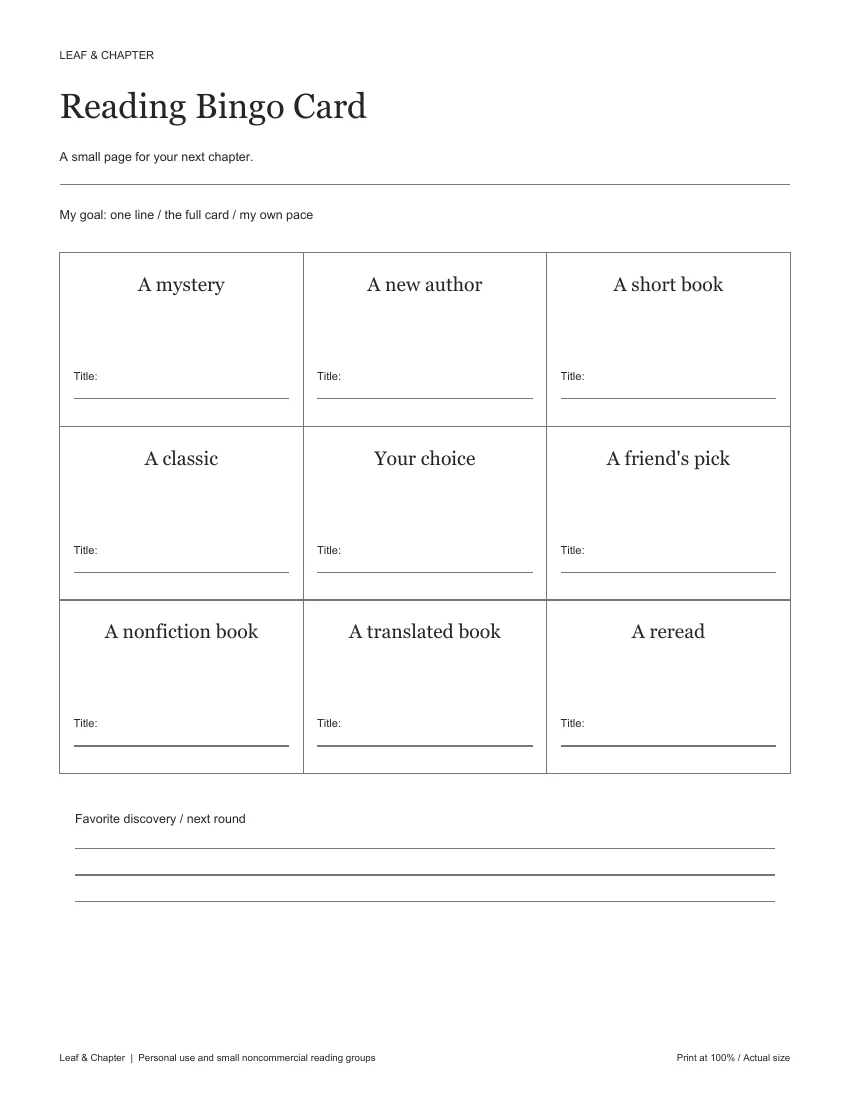
For a hybrid jar, mark title slips with a small T and prompt slips with a P, or use differently colored scraps. Draw from either group according to what would help: a title when you want the decision made, a prompt when you want room to browse. Borrow ideas from the existing reading bingo printable, such as a mystery or a new author, without treating a whole card as a requirement. Its preview shows a real printable resource; the slips are something you make yourself.
3. Keep library timing in mind
A surprise draw is less useful if the book has to be returned before you can reasonably start it. Keep current loans together and note their return dates on the slips, or place them in a separate library envelope. When a hold becomes available, decide whether it belongs in the immediate-choice group or whether you would rather return or pause it according to your library’s policies. Check your account for the actual date and renewal options rather than assuming either.
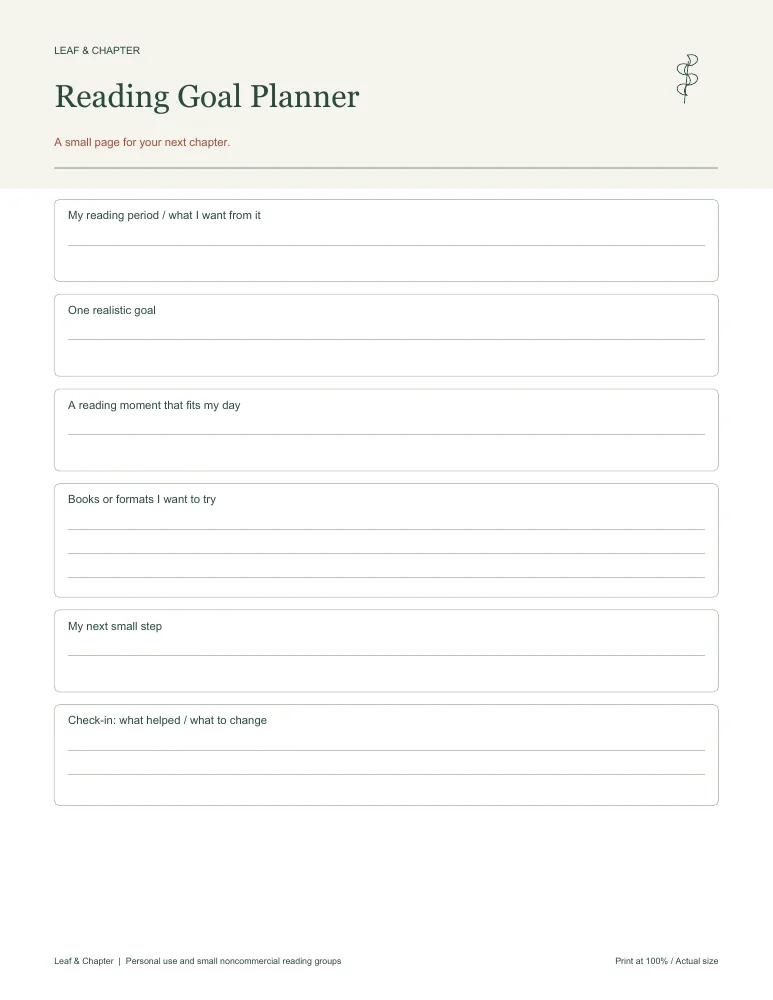
If you draw a title that is not currently available, set the slip aside and draw again. You might check the catalogue later or add the title to a longer list; you do not need to spend the whole reading window searching. For a specific loan you do want to prioritize, the existing reading goal planner can hold a period, a realistic reading window, and one next step. Its check-in is a place to revise the plan, not a test of commitment.
4. Create an easy veto rule
Agree with yourself before drawing that a slip is an invitation, not an assignment. One simple rule is to draw up to three options and choose whichever appeals. Another is to draw once, then browse freely if the result feels wrong. The first preserves some surprise while narrowing the choice; the second makes the jar quicker but leaves more decisions to you. Either way, you can put an unwanted slip aside without explaining why.
A draw can also reveal what you want instead. If “a short book” makes you wish for a long, immersive novel, follow that preference. If you begin a selected book and it does not suit you, stop or return to it later. When reading feels stale, try a familiar format, a reread, or a brief sample rather than making the jar harder to satisfy. Taking a break from reading is an equally acceptable choice; this is ordinary leisure advice, not treatment.
6. Pair the jar with a short list
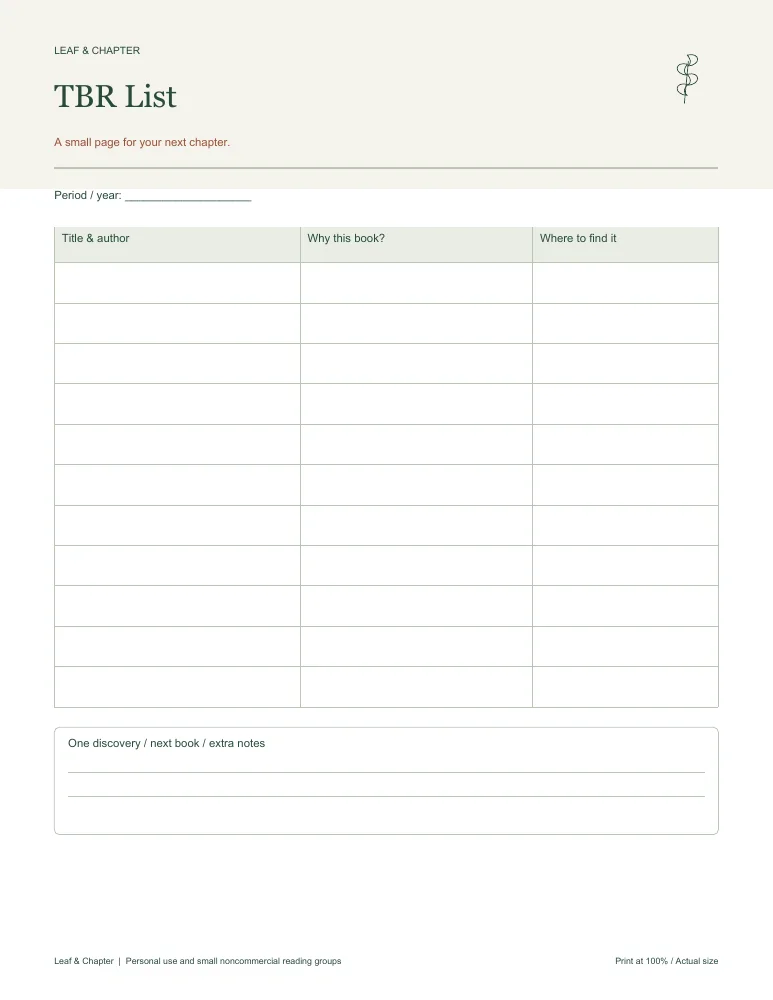
Use the existing TBR list printable as the jar’s reference sheet. Its title and author fields identify each book; “why” records what interested you, and “where” records a likely source. For example, a slip might say “owned mystery,” while the list preserves the title, author, and note that a friend praised its setting. Leave any field blank until you have useful information. A penciled mark beside a few current possibilities makes the page easy to scan after a mood prompt.
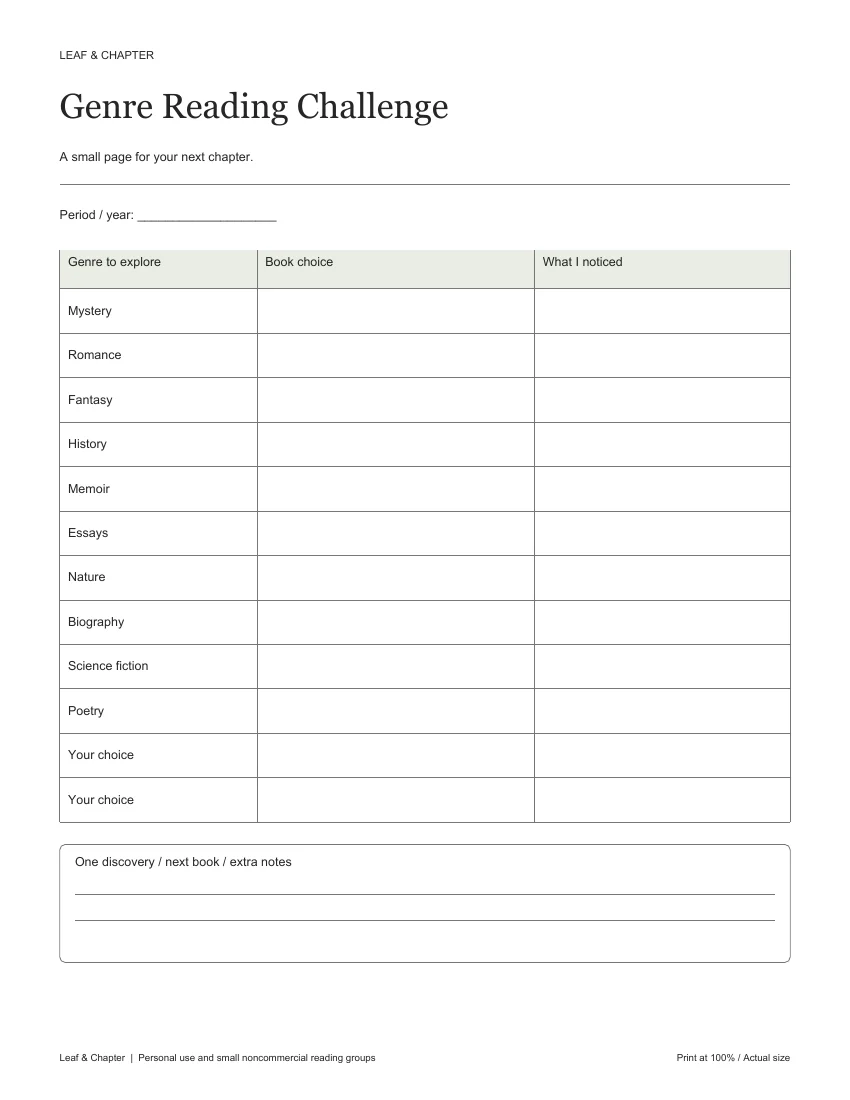
The existing genre reading challenge adds a different kind of record. Draw a genre prompt, choose an accessible title, and later use “What I noticed” for a practical observation such as “liked the character scenes more than the puzzle.” You can leave other rows untouched. These linked resources, together with bingo and the goal planner, are existing undated printables shown in the four resource previews; the jar activity combines them without requiring a new seasonal PDF.
7. Refresh the jar when it stops helping
Empty the jar whenever draws begin to feel repetitive or burdensome. Sort the slips into options that still appeal, titles to check for access, and ideas you can let go. Return only the first group to the container; keep the second elsewhere if you want to revisit it. Remove a book you finished, stopped, returned, or no longer want. There is no need to replace every discarded slip, and an empty jar can simply mean it is time to browse without one.
Choose print formats for how you will use the supporting pages. A5 is compact for a library bag but leaves less handwriting room; A4 or US Letter offers more space if it matches your paper. Botanical styling adds decoration, while minimalist or ink-saving styling offers a quieter look. Actual ink use and print quality depend on your printer and settings. Print only the pages you want, reuse them while they remain useful, and consult the printing guide if sizing needs adjustment.
A small checklist before you begin
- Collect an empty cup or envelope and scraps of paper for slips.
- Choose a few appealing books and check which ones you can access now.
- Write titles and authors on slips, or make prompts such as “something funny.”
- Set aside library loans with their return dates visible.
- Pick a veto rule, such as drawing up to three slips and choosing one.
- After choosing a book, remove its slip or set it aside and revise the jar when needed.
Choose the version that fits your day
| Option | Works well for | Keep in mind |
|---|---|---|
| Title slips | Choosing quickly from books already available to you. | Outdated availability or titles that no longer interest you. |
| Mood prompts | Matching a choice to your current curiosity or energy. | Extra browsing time if the prompt is too broad. |
| Library-loan envelope | Keeping return dates visible without putting every loan in the main jar. | Assuming a renewal is available without checking your account. |
| Shared prompt jar | An optional group activity where each person chooses their own book. | Prompts that do not suit everyone’s access, interests, or reading format. |
The free pages used in this guide
These are existing, undated resources. Open a resource page to choose its PDF, style and paper size; the lifestyle photograph above is an illustration.
Keep your wider possibilities manageable with the TBR list printable, find adaptable slip ideas in reading bingo, or use the genre reading challenge to note what you discover.
A few useful questions
What can I use if I do not have a jar?
A mug, small box, envelope, or bowl works just as well. Fold the slips so you cannot immediately see the writing, and choose a container that is easy to empty when you want to refresh the options.
Should I put unavailable books in the jar?
Keep them in a separate envelope or on your TBR list until you check access. That way, the main jar remains useful when you want to start reading now, while interesting possibilities are not lost.
What if I keep vetoing the same type of prompt?
Remove or rewrite it. For example, replace “try an unfamiliar genre” with “try a mystery with a setting I like.” Repeated vetoes can show that the prompt is too broad or simply not appealing right now.
Can I use the jar without tracking a reading goal?
Yes. The slips alone are enough. A planner can be helpful for a particular loan or a reading window, but you can leave it out and choose books whenever you feel like it.